Sunday, April 27, 2008

Serial Endosymbiosis and Intelligent Design


AUTHOR: Allen MacNeill

SOURCE: Original essay

COMMENTARY: That's up to you...

It's very gratifying to see Lynn Margulis finally getting the recognition that she deserves. As the most effective exponent of the serial endosymbiosis theory (SET) for the origin of eukaryotes, Lynn's work provides an excellent example of how ID should (but currently doesn't) proceed. During the late 1960s, Lynn published a series of revolutionary papers on the evolution of eukaryotic cells, culminating in her landmark book Symbiosis and Cell Evolution, in which she carefully laid out the empirical evidence supporting the theory that mitochondria, choloroplasts, and undulapodia (eukaryotic cilia and flagella) were once free living bacteria (purple sulfur bacteria, cyanobacteria, and spirochaetes, respectively).

Her theory was greeted with contempt and scorn by almost all evolutionary biologists (sound familiar?), who believed at the time that all eukaryotic cellular organelles evolved by gradual elaboration of invaginations of the plasma membrane. But Lynn didn't give up, or continue to simply restate her original theory (sound familiar?). Instead, she continued to do extensive field and laboratory research, publishing hundreds of papers and dozens of books in which she presented the accumulating empirical evidence supporting her theory. With time, other researchers (encouraged by the success of her field and lab research) began to test her hypotheses themselves, and discovered yet more empirical evidence supporting her theory.

And so today, Lynn Margulis's SET has become the dominant theory explaining not only the origin of eukaryotes, but also the origin of evolutionary novelty at dozens of different levels in biology (see her book, Acquiring Genomes for a comprehensive review). So well accepted has her work become by evolutionary biologists that finally, after almost four decades, creationists and ID supporters have begun to attack her theories. As she said at our Darwin Day celebration at Cornell this past February, no greater affirmation of one's "having arrived" as a major theorist in evolutionary biology could be imagined.

The point here is that, if ID wants to become accepted as part of evolutionary biology in the same way that Lynn Margulis's SET has become accepted, then ID supporters have to do the same thing she did: get out in the field and get your hands dirty, and get into the lab and do the same thing. Her ideas were just as unorthodox and unacceptable in 1969 as ID is now. However, she didn't put all of her effort into public relations and political propaganda. No "Symbiosis Institute" dumped millions into the production of deliberately distorted press kits and one-sided propaganda films. Legions of self-appointed experts whose only exposure to biology was in high school classes or what they read on Answers in Genesis or Uncommon Descent bloviated on SET and declared themselves experts after a week of superficial study of articles on Wikipedia.

No, Lynn and her colleagues did the hard work of finding the empirical evidence that eventually carried the day and established her SET as one of the bedrock foundations now worthy enough of respect as to earn the ire of the creationists and IDers. Her ideas are still radical, and still raise the blood pressure of many evolutionary biologists. Her dismissal of the "modern evolutionary synthesis" in particular is not popular among many evolutionary biologists, who are largely still mired in paradigms that are at least four decades of out of date. She has said some things about the "modern synthesis" that have brought smiles to the faces of the creationist quote-miners. The difference between her and them is that they can't even begin to claim any credibility in science; their "work" is entirely parasitic on hers, and deserves nothing but contempt.

When the history of evolutionary biology in the 20th century is written (I hope to contribute to it myself, if I live long enough), the work of Lynn Margulis will rank right up there with the work of Fisher, Haldane, Wright, Dobzhansky, Mayr, Simpson, Stebbins, Gould, Lewontin, Kimura, Williams, Hamilton, Trivers, and the two Wilsons. And unless and until IDers decide that it's finally time to stop doing agitprop and start doing science, they and the creationists will at best be a trivial footnote.

Comments, criticisms, and suggestions are warmly welcomed!

--Allen

Labels: , , , , , , ,

Tuesday, March 13, 2007

Scientists Say Darwin's 'Tree of Life' Not The Theory Of Everything


ARTICLE: physorg.com

AUTHOR: Lisa Zyga

COMMENTARY: Allen MacNeill

First the news item, followed by some commentary:

****************************************************

There is only one figure in On the Origin of Species, and that is a tree diagram. As Darwin’s model for the theory of evolution, he used the Tree of Life (TOL) to clearly and visually explain the interrelatedness of all living things, implying that from one common ancestor (the root) sprung branches, which produced smaller offshoots as genetic progeny, etc.

In this model, similarities between species reveal a common ancestor, and differences result from (and explain) Darwin’s main catalysts: competition and natural selection, which generate improvement in future generations. As a simile, the TOL served a vital purpose for introducing the theory of evolution to the community in an understandable way. Although there is no external evidence to support the idea that evolution is inclusively hierarchical, many evolutionists believe the TOL provides an accurate general representation of the history of life, which could potentially be completely reconstructed by knowing the relevant data.

In recent times, however, a minority of biologists and evolutionists have questioned the accuracy of the TOL hypothesis, including W. Ford Doolittle and Eric Bapteste. In a recent paper in the Proceedings of the National Academy of Sciences, “Pattern Pluralism and the Tree of Life Hypothesis,” the scientists investigate the shortcomings of the TOL, as well as propose alternative models that would better explain how to classify the history of evolving life forms.

Much of the initial concern over TOL was provoked by biologists studying the complex relationships among prokaryotes, the most primitive life forms that include bacteria and archaea. Prokaryotes have a much simpler DNA structure than eukaryotes (all other life forms). Because of this, prokaryotes often transfer their DNA via processes such as lateral gene transfer as opposed to vertical gene transfer (direct transmission form parent to progeny) which is the basis for the “phylogenetic” (evolutionary relatedness) TOL scheme.

“Surely a tree is the right model for most multi-cellular animals and plants,” Doolittle explained to PhysOrg.com. “Thus the TOL is great for fossils and museums and dinosaurs and most of visible life, over the last billion years. But unicellular eukaryotes and prokaryotes represent the bulk of the biomass and diversity of life on earth, as well as the first two-thirds of its history.”

In their paper, Doolittle and Bapteste highlight research that shows other causes of genetic modification, suggesting that evolutionary history is more complex than described by the TOL. For example, recombination, gene loss, duplication, and gene creation are a few of the processes whereby genes can be transferred within and between species, causing variation that’s not due to vertical transfer. These transfer methods give results that don’t fit on the TOL, including species that cannot be traced to a common ancestor.

While such diverse methods might appear to obviously point to a more complex nonhierarchical evolutionary scheme, Doolittle and Bapteste explain that the TOL thinking persists due to confusion between the roles of “process” and “pattern.” The above methods are processes and are widely accepted by modern evolutionists, whereas the TOL is a pattern that, as Doolittle and Bapteste explain, has been ingrained in biologists’ minds from early education as a single, unifying model. As the researchers explain of the current biology scene, “We may be process pluralists, but we remain pattern monists.”

If this combination of thinking seems to clash, Doolittle and Bapteste suggest that the Western philosophical tradition of thinking in universal patterns has caused biologists to cling to classification without realizing it. The authors point out that many algorithms used to study evolutionary hierarchies impose or extract the TOL structure due to their intrinsic design. TOL is a paradigm that has stuck. But Doolittle sees ways to alter this mentality.

“Sure we can [re-train Western thinking]. That's what ‘postmodernism’ is about,” he said. “I would agree that the need to classify might be built in, but the coupling of this practice to a specific theory about what classifications are ‘natural’ is surely not.

As an alternative to the TOL, the scientists suggest that relationships among life forms may be represented by whatever model fits for a certain purpose, a certain taxonomic group, or a certain scale. In contrast to pattern monism, they call this belief “pattern pluralism.” While parts of evolution certainly are tree-like, other parts may be nets or webs or other complex models. Most importantly, however, there seems to be no “theory of everything” in evolution, no metanarrative to unify all life forms.

“In 2006, our understanding of evolution at the molecular, population genetic, and ecological levels is rich and pluralistic in character,” the scientists conclude, “and does not require (or justify) a monistic view of the phylogenetic pattern.”

As for any blow to Darwin’s ego, the scientists point out that he never wrote about reconstructing the tree in an attempt to relate every living thing, but rather used the model as a general guide.

“I'd like to think he would adjust,” Doolittle said about Darwin. “After all, his theory was developed before there was any understanding of genetics and when bacteria were still believed to be spontaneously generated.”

REFERENCES CITED:
Doolittle, W. Ford, and Bapteste, Eric. “Pattern pluralism and the Tree of Life hypothesis.” PNAS, February 13, 2007, vol. 104, no. 7, 2043-2049.

****************************************************
COMMENTARY:

Ford Doolittle has been saying this for many years, and has been joined by Lynn Margulis, who has argued that the concept of "species" does not apply to prokaryotes.

But, that's not what I want to talk about. What I want to talk about is how "intelligent design theorists" quote-mine and otherwise distort reality to the point of outright lying. Why do I say this? Because former lawyer and professional propagandist, Casey Luskin, has a postat Evolution News, propaganda outlet for the Discovery Institute in which he says

"By invoking insufficient data, horizontal gene swapping, rapid evolution, and other ad hoc explanations, Darwinists reveal that neo-Darwinism is trying explaining away the data; it is not explaining the data. Perhaps the inability to construct robust phylogenetic trees using molecular data stems from the fact that common descent is simply wrong."

And the alternative? Why, magic of course. All of the living forms on Earth today were created, all at once, on Tuesday 25 October 4004 BC at 9 AM...or some other time in the past, exact date unspecified. Because, of course, that is the only alternative to common descent. Either you and your siblings are the offspring of your parents (i.e. common descent) or you aren't, and if the latter is true, then you must all have been created separately, not by your parents, but rather by God...excuse me, the Grand Omnipotent Designer. And with your memories of your childhood already inserted into your minds, so that the jarring discontinuity of your separate creations would not disturb you too much...would lead you, in fact, into the damning conclusion that you were, in fact, the offspring of your parents, and thus consign yourself to everlasting torment in the lake of fire.

Or not. You see, this is what the kind of egregious propagandizing of the folks of the Disco Institute leads to. Not discussion of the science of biology on its merits, on the basis of reason and evidence, but pure assertions without any alternatives at all (not that they want you to read in public, anyway).

I'm tired (our new baby is keeping Leah and me awake at night), and so I'll sign off now. But damn, people like Luskin just make me want to scream sometimes...

"Against stupidity, the gods themselves contend in vain."
- Friedrisch Schiller

--Allen

Labels: , , , , ,

Thursday, November 23, 2006

Hypothesis: First-Degree Inbreeding Facilitates Chromosomal Speciation


AUTHOR: Allen MacNeill

SOURCE: Original essay

COMMENTARY: That's up to you...

Happy Thanksgiving!

To help you enjoy the holiday, let me offer you a hypothesis that I have been working on to explain the origin of species in animals. The inspiration for this hypothesis was a debate at Uncommon Descent in which I have been embroiled for the past few days. The debate began with a discussion of the possibility of "virgin birth" in humans. The poster, DaveScot (not his real name) started out with a description of meiosis that contained an egregious error: that the first division of meiosis results in two diploid daughter cells. As every introductory biology student knows, this is incorrect: the first division of meiosis produces two haploid daughter cells in which the chromosomes are still double-stranded. The second division of meiosis is essentially a mitotic division, separating the sister chromatids in the double-stranded chromosomes of the first-division daughter cells.

The debate moved on, eventually centering on the subject of the chromosomal basis for speciation. I mentioned that speciation is the result of genetic isolation, and that in many cases (but not all) it is associated with chromosomal fission, fusion, inversion, and translocation events. For example, one of the main differences between humans and other great apes is that humans have one less pair of chromosomes; 46 instead of 48. Recent genomic research has shown that this difference is the result of the fusion of two of the chromosomes of great apes to form the human chromosome #2. This led to the following question from one of the participants in the debate:

"Wouldn't this fusion event have to occur within at least two members- one male, one female- of the same population in order for it to have any chance of getting passed on?"

To which I answered:

No. All that would need to happen to make this possible would be for two first-degree relatives carrying the translocation to mate and have offspring. First degree relatives (i.e. parents and offspring or full siblings) can easily have the same chromosomal mutation (i.e. a fusion/fission/translocation/inversion), as they would inherit it from a single parent. If they were to mate with each other (a not uncommon event among non-humans...and even among some humans), they would be able to produce fertile offspring carrying the same chromosomal mutation.

Yes, it is true that first degree mating carries with it the possibility of reinforcement of recessive lethal alleles. However, as many geneticists and evolutionary biologists have repeatedly pointed out, this is actually beneficial to the population within which such reinforcement happens, as the alleles are removed from the population as a result.

In other words, mating between first degree genetic relatives within a small, isolated population would have the effect of both removing deleterious alleles from the population and allowing chromosomal mutations to spread throughout the population, especially if such mutations were at all beneficial (although they would diffuse almost as well if they were selectively neutral, as would probably be the case given that no change in overall genetic information would have occurred).

Furthermore, the hypothesis that I have presented above squares very well with the currently prevailing theory of speciation: that of peripatric speciation, as first proposed by Ernst Mayr. According to Mayr's theory, speciation occurs most often in small, isolated populations on the periphery of large, panmictic populations. There is abundant natual history evidence that this is the case, especially in animals.

However, no one has yet explained how peripatric speciation would come to be associated with the kinds of chromosomal changes that we have been discussing. My hypothesis – that first-degree inbreeding facilitates chromosomal speciation – is an attempt to reconcile those two observations.

In a large, panmictic population, selection would tend to eliminate individuals who mate with first-degree relatives as a result of decreased viability due to inbreeding depression and the increased frequency of expression of homozygous lethal alleles.

However, in very small, isolated populations individuals who occasionally mate with first degree relatives (i.e. "facultative first degree inbreeders") could easily have a selective advantage of individuals who avoid mating with first degree relatives (i.e. "obligate outbreeders").

Males in particular would tend to loose less as the result of mating with first degree relatives, as their parental investment in offspring is lower (i.e. they can waste gametes and even zygotes by mating with their first degree relatives, without significantly decreasing their reproductive success).

However, even females can cut their losses by mating with first degree relatives if the likely alternative is failure to mate at all due to unavailability of non-relatives. This would especially be the case in small, isolated populations, which are exactly the kind of populations in which speciation is most likely to occur.

The effects described above would be facilitated by increased genomic homogeneity, such as would result from genetic bottlenecks and founder effects. This is because close inbreeding intensifies genomic homogeneity and decreases genetic variation, especially in isolated populations with decreased gene flow from other populations.

This hypothesis – that first degree inbreeding facilitates chromosomal speciation – immediately suggests a series of predictions, all of which are empirically testable:

• The frequency of mating between first degree relatives should be inversely correlated with effective breeding population size. That is, the smaller the effective breeding population, the greater the frequency of mating between first degree relatives (i.e. “first degree inbreeding”).

• The increased frequency of “first degree inbreeding” in such populations should be more pronounced in males. That is, males should be more likely to attempt mating with first degree relatives, especially in small, isolated populations.

• The frequency of “chromolocal mutations” (that is, chromosomal fission/fusion/inversion/translocation mutations) should also be inversely correlated with effective breeding population size. That is, the smaller the effective breeding population, the greater the frequency of viable “chromolocal mutations.”

• Peripatric speciation events should be correlated with small population size, chromolocal mutations, and first degree inbreeding.

• Speciation resulting from chromolocal mutations should be much less common in large, panmictic populations.

• First degree inbreeding should also be much less common in large, panmictic populations.

• The success rate of artificial (i.e. facilitated/forced) first degree mating should be directly correlated with the degree of inbreeding. That is, the more inbred a population, the more successful artificial first degree inbreeding should be.

• Paleogenomic analysis should find close correlations between genetic bottlenecks, founder events, and peripatric speciation events and the frequency of chromolocal mutations and genetic homogeneity (resulting from first degree inbreeding).

• Relatively large changes in phenotype resulting from chromolocal effects should be more common in small, isolated populations.

• Speciation should be easier (and therefore more frequent) among asexually reproducing eukaryotes, such as plants and parthenogenic animals (among whom aneuploidy is largely irrelevant).

Let me stress two things about the foregoing:

• What I am suggesting is, at this stage, merely a hypothesis, but one that generates a series of immediately testable predictions.

• The hypothesis is, of course, based on the idea that incest (i.e. first degree inbreeding) is the most likely explanation for the diffusion of chromolocal mutations throughout small, isolated populations of animals. Let me stress as strongly as possible that I am NOT advocating incest, I am simply pointing out that first degree inbreeding would facilitate the kind of chromolocal mutations that are often correlated with species differences in animals. The same is also true for plants, of course, but in plants we don't call it "incest," we call it "self-pollination."

I would like to also add at the end of this presentation that my reading of John Davison's papers in which he details his "semi-meiotic hypothesis" for the origin of species were an indirect inspiration for my own efforts. While his hypothesis would work, its most significant drawback is that it requires an almost unlimited number of independent "reinventions" of the same mechanism (i.e. semi-meiosis) for speciation that results from chromolocal effects to be the basis for speciation throughout the animal kingdom. Not impossible, but extremely unlikely.

By contrast, my "first degree inbreeding hypothesis" does not require independent "reinventions" of semi-meiosis at all. The only thing it requires is that first-degree inbreeding occur in small, isolated populations of animals, an easily testable prediction that does not require elaborate genetic mechanisms to produce the predicted outcome: that is, genetic isolation and subsequent speciation.

I am a little perplexed at why no one has yet proposed this mechanism, given the fact that it is already used as the explanation for speciation in plants via polyploidy. The only explanation that seems reasonable to me is that most evolutionary biologists assume that animals will always avoid mating with first-degree relatives as a result of the increased frequency of inbreeding depression and expression of homozygous lethal alleles that result from it.

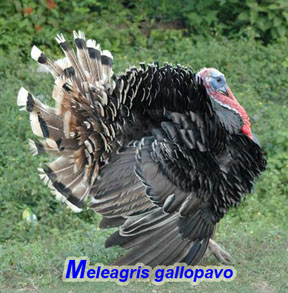
Anyway, that's my hypothesis in brief. Oh, and one more thing: why the turkey at the head of this post? To commemorate Thanksgiving, of course, but also because turkeys are known to exhibit significant numbers of parthenogenesis. That is, a significant proportion of male turkeys are the result of the development of an unfertilized egg. They are male, not female (as would be the case in parthenogenetic mammals) because males are the homogametic sex in birds; they are ZZ, whereas females are ZW (the Z and W chromosomes corresponding in function to the X and Y chromosomes in mammals). It has not escaped my notice that parthenogenesis would greatly facilitate the kind of chromosomal speciation I have outlined above. Hence, the turkey can stand as an emblem of the First-Degree Inbreeding Hypothesis for Chromosomal Speciation in Animals.

Have a great turkey day, folks!

Comments, criticisms, and suggestions are warmly welcomed!

--Allen

Labels: , , ,

Tuesday, November 14, 2006

Unraveling Where Chimp And Human Brains Diverge


SOURCE: Terra Daily News

COMMENTARY: Allen MacNeill

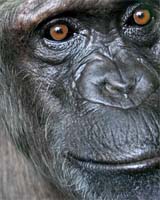
Just in time for our discussion of human-chimpanzee differences in our evolution course at Cornell, here is an article describing recent research into how human an chimpanzee brains differ. Commentary follows:

Los Angeles CA (SPX) Nov 14, 2006: Many of the human-specific gene networks identified by the scientists related to learning, brain cell activity and energy metabolism.

Six million years ago, chimpanzees and humans diverged from a common ancestor and evolved into unique species. Now UCLA scientists have identified a new way to pinpoint the genes that separate us from our closest living relative - and make us uniquely human. The Proceedings of the National Academy of Sciences reports the study in its Nov. 13 online edition.
"We share more than 95 percent of our genetic blueprint with chimps," explained Dr. Daniel Geschwind, principal investigator and Gordon and Virginia MacDonald Distinguished Professor of Human Genetics at the David Geffen School of Medicine. "What sets us apart from chimps are our brains: homo sapiens means 'the knowing man.'

"During evolution, changes in some genes altered how the human brain functions," he added. "Our research has identified an entirely new way to identify those genes in the small portion of our DNA that differs from the chimpanzee's."

By evaluating the correlated activity of thousands of genes, the UCLA team identified not just individual genes, but entire networks of interconnected genes whose expression patterns within the brains of humans varied from those in the chimpanzee.

"Genes don't operate in isolation - each functions within a system of related genes," said first author Michael Oldham, UCLA genetics researcher. "If we examined each gene individually, it would be similar to reading every fifth word in a paragraph - you don't get to see how each word relates to the other. So instead we used a systems biology approach to study each gene within its context."

The scientists identified networks of genes that correspond to specific brain regions. When they compared these networks between humans and chimps, they found that the gene networks differed the most widely in the cerebral cortex -- the brain's most highly evolved region, which is three times larger in humans than chimps.

Secondly, the researchers discovered that many of the genes that play a central role in cerebral cortex networks in humans, but not in the chimpanzee, also show significant changes at the DNA level.

"When we see alterations in a gene network that correspond to functional changes in the genome, it implies that these differences are very meaningful," said Oldham. "This finding supports the theory that variations in the DNA sequence contributed to human evolution."

Relying on a new analytical approach developed by corresponding author Steve Horvath, UCLA associate professor of human genetics and biostatistics, the UCLA team used data from DNA microarrays - vast collections of tiny DNA spots -- to map the activity of virtually every gene in the genome simultaneously. By comparing gene activity in different areas of the brain, the team identified gene networks that correlated to specific brain regions. Then they compared the strength of these correlations between humans and chimps.

Many of the human-specific gene networks identified by the scientists related to learning, brain cell activity and energy metabolism.

"If you view the brain as the body's engine, our findings suggest that the human brain fires like a 12-cylinder engine, while the chimp brain works more like a 6-cylinder engine," explained Geschwind. "It's possible that our genes adapted to allow our brains to increase in size, operate at different speeds, metabolize energy faster and enhance connections between brain cells across different brain regions."

Future UCLA studies will focus on linking the expression of evolutionary genes to specific regions of the brain, such as those that regulate language, speech and other uniquely human abilities.

COMMENTARY:

Sounds to me like the differences are probably the result of different patterns of gene regulation in humans and chimps, rather than entirely different coding regions in the DNA of the two species. In other words, we share a common set of genes for making our brains, but those genes are regulated differently in the two species. This would explain a lot: why, for example, there is so little difference between human and chimp DNA, and how the two species could have diverged so quickly from a common ancestor six million years ago (or less, as some of the archaeological data seem to indicate).

It will be very interesting to see how this story develops, as we get higher and higher resolution "maps" of human and chimp brains and the genetic mechanisms that produce them.

--Allen

Labels: , , , , , , ,