Sunday, January 25, 2009

Horizontal Gene Transfer and Intelligent Design Theory


AUTHOR: Graham Lawton

SOURCE: "Why Darwin was Wrong About the Tree of Life"

COMMENTARY: Allen MacNeill

A recent article in the New Scientist trumpeted the news that "Darwin was wrong", at least insofar as his "tree of life" was concerned. To be specific, the author stated that new discoveries in the field of horizontal gene transfer had invalidated Darwin's "tree of life", as illustrated by his diagram in the Origin of Species.

Horizontal gene transfer (especially as the result of viral transduction) has been known to occur for almost half a century. In my undergraduate genetics course at Cornell (which I took in the spring of 1972) we did a lab in which we used lambda bacteriophage to transfer genetic material from one bacterial colony to another. Ergo, none of the mechanisms of HGT described in the article in New Scientist are all that new.

Indeed, I have listed at least six mechanisms of HGT in my blogpost on the “engines of variation” located here. In that list, they are numbers 28, 29, 33, 36, 40, and 41. Most of these HGT mechanisms have been known for decades and are among the best understood mechanisms of increasing both genetic and phenotypic variation.

What is relatively new is the application of the information gained about HGT to phylogenetic reconstruction. HGT is the rule among bacteria, and apparently occurs fairly frequently among eukaryotes as well. Evolutionary biologists, and especially phylogeneticists and systematists have been using HGT data for phylogenetic reconstruction for over a decade, even among eukaryotes. So, once again this is not new.

However, there is currently a tread at Uncommon Descent to the effect that
(1) the New Scientist article is pointing out that "Darwinism" is a bankrupt theory, and

(2) that HGT is more easily explained as part of "intelligent design theory" (ID).

Does the increasing recognition of HGT and its use in phylogenetic reconstruction mean that the current theory of evolution is invalid, or that ID can explain these phenomena better? On the contrary, the more we learn about HGT the more it seems to be even more random and undirected than vertical gene transfer (i.e. genetic recombination and heredity via reproduction). To be specific, the overwhelming majority of identified HGTs are of non-coding DNA sequences that have no detectable effect on the phenotypes of the organisms in which it has occurred.

That is, almost all of the DNA sequences that have been unambiguously shown to be the result of HGT are sequences that do not code for proteins nor participate in the regulation of coding sequences. Rather, they are sequences that have “gone along for the ride”, especially as the result of RNA retroviral HGT. Such sequences are so common that they are routinely used to construct and modify genetic phylogenies, as well as to determine genetic homologies.

The vast majority of HGTs are essentially neutral genetic mutations, as first described by Motoo Kimura in his neutral theory of molecular evolution. As such, they produce an immense amount of genetic variation without producing a corresponding amount of phenotypic variation. Furthermore, when such phenotypic variation does occur, it is more often deleterious than beneficial (usually mildly deleterious, as pointed out by Tomoko Ohta in her nearly neutral theory of molecular evolution). Only very rarely are such HGTs beneficial, and then only in relatively restricted ecological and evolutionary settings.

But neutral or slightly deleterious genetic changes (such as those produced by the vast majority of HGTs) are exactly the opposite of what one would expect to see as the work of an “intelligent designer”. Such an entity would (as several of the commentators in this thread have suggested) tailor HGTs to produce adaptive (i.e. beneficial) changes in the phenotypes of the recipients of its HGTs. Either that, or the “intelligent designer” doesn’t “tailor” its HGTs at all, but rather produces them randomly, rather like a dealer in a card game. But in that case, the actions of a soi dissant “intelligent designer” would be indistinguishable from Darwinian evolution, and including any reference to its actions (and/or inferring its existence) would be unnecessary (and would therefore violate Occam’s razor).

One last point: although the vast majority of HGTs produce either no phenotypic effect or slightly deleterious phenotypic effects, a relatively small number produce phenotypic effects that are correlated with increased survival and/or reproductive success. Unlike the vast majority of HGTs, these beneficial HGTs rapidly proliferate in the populations in which they arise, in exactly the way Darwin proposed in 1859. That is, they are preserved and passed on (while deleterious HGTs are eliminated), and thereby become more common over time among the populations in which they occur.

As always, comments, criticisms, and suggestions are warmly welcomed!

--Allen

Labels: , , , , , ,

Thursday, October 25, 2007

RM & NS: The Creationist and ID Strawman


AUTHOR: Allen MacNeill

SOURCE: Original essay

COMMENTARY: That's up to you...

Creationists and supporters of Intelligent Design Theory ("IDers") are fond of erecting a strawman in place of evolutionary theory, one that they can then dismantle and point to as "proof" that their "theories" are superior. Perhaps the most egregious such strawman is encapsulated in the phrase "RM & NS". Short for "random mutation and natural selection", RM & NS is held up by creationists and IDers as the core of evolutionary biology, and are then attacked as insufficient to explain the diversity of life and (in the case of some IDers) its origin and evolution as well.

Evolutionary biologists know that this is a classical "strawman" argument, because we know that evolution is not simply reducible to "random mutation and natural selection" alone. Indeed, Darwin himself proposed that natural selection was the best explanation for the origin of adaptations, and that natural selection itself was an outcome that necessarily arises from three prerequisites:

Variety: significant differences between the characteristics of individuals in populations);

Heredity: genetic inheritance of traits from parents to offspring; and

Fecundity: reproduction, often resulting in more offspring than are necessary for replacement.

Given these prerequisites, the following outcome is virtually inevitable:

Demography: some individuals survive and reproduce more often than others, and hence their heritable characteristics become more common in their populations over time.

As I have alread pointed out in an earlier post, the real creative factor in evolution isn't natural selection per se, it's the "engines of variation" that produce the various heritable characteristics that natural selection then preserves from generation to generation. According to the creationists and IDers, the only source of such variation is "random mutations", and so there simply isn't enough variation to provide the raw material for evolutionary change.

In my earlier post on the "engines of evolution" I promised a list of the "engines of variation" that provide the raw material for evolutionary change. It's taken me a while, but here it is. This list includes "random mutation,' of course, but also 46 other sources of variation in either the genotypes or phenotypes of living organisms. Note that the list is not necessarily exhaustive, nor are any of the entries in the list necessarily limited to the level of structure or function under which they are listed. On the contrary, this is clearly a list of the minimum sources of variation between individuals in populations. A comprehensive list would almost certainly include hundreds (and possibly thousands) of more detailed processes. Also, the list includes processes that change either genotypes or phenotypes or both, but does not include processes that are combinations of other processes in the list, again implying that a comprehensive listing would be much longer and more detailed.

Anyway, here is the list of the "engines of variation", arranged according to level of structure and function (if a term is underlined, you can click on it and be taken to a definition and explanation of that term, usually at Wikipedia):

SOURCES OF HERITABLE VARIATION BETWEEN INDIVIDUALS IN POPULATIONS

Gene Structure (in DNA)

1) point mutations

2) deletion and insertion (“frame shift” / "indel") mutations

3) inversion and translocation mutations

Gene Expression in Prokaryotes

4) changes in promoter or terminator sequences (increasing or decreasing binding)

5) changes in repressor binding (in prokaryotes); increasing or decreasing binding to operator sites

6) changes in repressor binding (in prokaryotes); increasing or decreasing binding to inducers

7) changes in repressor binding (in prokaryotes); increasing or decreasing binding to corepressors

Gene Expression in Eukaryotes

8) changes in activation factor function in eukaryotes (increasing or decreasing binding to promoters)

9) changes in intron length, location, and/or editing by changes in specificity of SNRPs

10) changes in interference/antisense RNA regulation (increasing or decreasing binding to sense RNAs)

Gene Interactions

11) changes in substrates or products of biochemical pathways

12) addition or removal of gene products (especially enzymes) from biochemical pathways

13) splitting or combining of biochemical pathways

14) addition or alteration of pleiotropic effects, especially in response to changes in other genes/traits

Eukaryotic Chromosome Structure

15) gene duplication within chromosomes

16) gene duplication in multiple chromosomes

17) inversions involving one or more genes in one chromosome

18) translocations involving one or more genes between two or more chromosomes

19) deletion/insertion of one or more genes via transposons

20) fusion of two or more chromosomes or chromosome fragments

21) fission of one chromosome into two or more fragments

22) changes in chromosome number via nondisjunction (aneuploidy)

23) changes in chromosome number via autopolyploidy (especially in plants)

24) changes in chromosome number via allopolyploidy (especially in plants)

Eukaryotic Chromosome Function

25) changes in regulation of multiple genes in a chromosome as a result of the foregoing structural changes

26) changes in gene expression as result of DNA methylation

27) changes in gene expression as result of changes in DNA-histone binding

Genetic Recombination

28) the exchange of non-identical genetic material between two or more individuals (i.e. sex)

29) lateral gene transfer via plasmids and episomes (especially in prokaryotes)

30) crossing-over (reciprocal and non-reciprocal) between sister chromatids in meiosis

31) crossing-over (non-reciprocal) between sister chromatids in mitosis

32) Mendelian independent assortment during meiosis

33) hybridization

Genome Structure and Function

34) genome reorganization and/or reintegration

35) partial or complete genome duplication

36) partial or complete genome fusion

Development (among multicellular eukaryotes, especially animals)

37) changes in tempo and timing of gene regulation, especially in eukaryotes

38) changes in homeotic gene regulation in eukaryotes

39) genetic imprinting, especially via hormone-mediated DNA methylation

Symbiosis

40) partial or complete endosymbiosis

41) partial or complete incorporation of unrelated organisms as part of developmental pathways (especially larval forms)

42) changes in presence or absence of mutualists, commensals, and/or parasites

Behavior/Neurobiology

43) changes in behavioral anatomy, histology, and/or physiology in response to changes in biotic community

44) changes in behavioral anatomy, histology, and/or physiology in response to changes in abiotic environment

45) learning (including effects of use and disuse)

Physiological Ecology

46) changes in anatomy, histology, and/or physiology in response to changes in biotic community

47) changes in anatomy, histology, and/or physiology in response to changes in abiotic environment

So, next time you hear or read a creationist or IDer cite "RM & NS" as the sole explanation for evolutionary change, point out to them and everyone else that there are at least 47 different sources of variation (including "random mutations"), and at least three different processes that result from them: natural selection, sexual selection, and random genetic drift.

Comments, criticisms, and suggestions (especially additional items for the list) are warmly welcomed!

--Allen

Labels: , , , ,

Wednesday, September 12, 2007

More on Transcribed But Non-Translated RNA

On the same subject as the previous post (The Gene Is Dead, Long Live The Gene!), here is the following:

MikeGene at Telic Thoughts ( see Error Correction Runs Yet Deeper) wrote this about the new findings vis-a-vis transcribed but not translated RNAs:

According to Mats Ljungman, a researcher at the University of Michigan Medical School, as many as 20,000 lesions occur daily in a cell’s DNA. To repair all this continual damage, how does the cell first detect it? Ljungman’s research identified the logical candidate – RNA polymerase (the machine that reads the DNA and makes an RNA copy). Apparently, whenever the RNA polymerase encounters a lesion, it signals to p53, a master protein that activates all sorts of DNA repair processes.

According to the press release:

“These two proteins are saying, ‘Transcription has stopped,’” says Ljungman. These early triggers act like the citizen who smells smoke and sounds a fire alarm, alerting the fire department. Then p53, like a team of fire fighters, arrives and evaluates what to do. To reduce the chance of harmful mutations that may result from DNA damage, p53 may kill cells or stop them temporarily from dividing, so that there is time for DNA repair.


Recently, the ENCODE consortium determined that the majority of DNA in the human genome is transcribed:

This broad pattern of transcription challenges the long-standing view that the human genome consists of a relatively small set of discrete genes, along with a vast amount of so-called junk DNA that is not biologically active.


Of course, one could also argue that all this transcription simply speaks to the sloppy and wasteful nature of the cell. Yet here’s a thought. It would seem to me that Ljungman’s research now raises a third possibility: all that transcription is just another layer of error surveillance.

To which I replied:

That is a VERY interesting hypothesis. It could work like this: by incorporating large amounts of transcribed (but not translated) DNA into the human genome, the cell is essentially presenting a much larger "target" for mutation-detection by the p53 surveillance system. In essence, a cell that has been especially challenged by mutation-producing processes would be much more likely to send out the "fire alarm," since it would be much more likely to have transcription terminated and thereby triggering the p53 "stopped transcription" alarm. To extend the "fire alarm" analogy, imagine a house that is unusually likely to have a fire; perhaps it's very hot, or dry, or has smoldering fires in several locations. As the old saying goes, "where there's smoke, there's fire," and a fail-safe cancer/mutation detection system would be much more likely to detect potential "hot-cells" if there were a large amount of transcription going on.

Indeed, this would be most important in cells in which relatively little transcription of functional (i.e. protein-encoding) genes normally takes place, but which are still subject to mutation and potential cancer induction. By running the "non-coding transcription program constantly in the background, such cells could still alert the cancer/mutation surveillance system, even when they themselves aren't actively coding for protein.

Now, since transcription is itself a costly process, doing a lot of it for non-coding genes would also be costly. Cells would therefore be selected via a cost-benefit process for the amount of non-coding "surveillance transcription" they could do. that is, the more likely a cell/organism is to have a cancer/mutation event, the more valuable its non-coding/surveillance transcription system would be, and therefore the more non-coding DNA it should have. This immediately suggests a possible test of hypothesis: those cells (or organisms) that are more likely to suffer from cancer/mutation events would therefore have more non-coding "surveillance transcription" DNA sequences.

For example, since animals are much more likely to be harmed by uncontrolled cell division (i.e. cancer, induced by mutation), then one would predict that animals would have more non-coding/surveillance transcription sequences than, say, plants. Also, animals that live longer (and would therefore have a larger "window" for suffering mutations), should also have relatively large amounts of non-coding/surveillance transcription sequences.

Somebody should check this out (if they haven't already).

Nick (Matzke?) then commented:

The old C-value paradox may have some relevance here. Does the amount of non-coding/surveillance transcribed sequences correlate with the total amount on non-coding sequence? For example, do puffer fish have fewer non-coding transcribed sequences than zebrafish, or do they have the same amount of transcribed DNA with the difference in genome size being due to non-coding, non-transcribed sequence?

Encode's data would seem to argue for a close correlation between total genome size and amount of transcribed non-coding sequence. If that observation is generally applicable to other organisms, thenC value might be one way to test MikeGene's and Allen's hypotheses. The idea that transcription of non-coding DNA is another layer of mutation detection/error correction would imply that organisms with larger genomes have more mutation detection capability. Do animals with smaller genomes require less error detection because they live in less mutagenic environments? The dramatic differences in genome size among related organisms that live in similar environments would seem to argue against that hypothesis. Compare genome sizes of freshwater pufferfish and zebrafish, both of which live in freshwater streams, or look at the variation in genome size among salamanders of the genus Plethodon

To explore this issue, check out the very cool Animal Genome size database:

You can also test Allen's lifespan hypothesis. For example, zebrafish and small tetras with lifespans of 2 or 3 years have approximately the same genome size as common carp with lifespans of 20+ years.

One of the ID supporters on the list then challenged me to explain how such a complex error-surveillance system could have evolved via non-directed natural selection. This was my reply (Nota bene: the following is, of course, an HYPOTHESIS only):

Consider two virtually identical phylogenetic lines, A and B. At time zero, individuals in both lines start out with virtually no transcribable but non-coding DNA (abbreviated TNCDNA). If we assume a constant mutation rate for both lines, individuals in both lines would have essentially the same probability of dying from cancer.

Assume further that, over time, sequences of non-TNCDNA accumulate in the genomes of each line. This can happen by any one (or more) of several known mechanisms, such as gene dupilcation (without active promoter sequences), random multiplication of tandem repeats, retroviral or transposon insertions of non-TNCDNA, etc.

Then, at time one, an individual (or more than one) in line B have an active promoter inserted in front of one or more of their non-TNCDNA sequences in one or more of their cells, by the same mechanisms listed above. Now, these individuals have a lower probability of dying from the resulting cancer, since their p53-regulated surveillance systems would be more likely to eliminate the affected cells. Again, this would be a side-effect of the larger "mutation sponge" their cells would present to potentially mutagenic processes. Such individuals would therefore have more descendants, and over time the average size of all of the "mutation sponges" in the subsequent populations would increase. Natural selection in action, folks.

Now, as to the question of where the p53 surveillance system came from in the first place, proteins like p53 are common intermediates in intracellular signalling systems. Assume that the ancestor of p53 was a protein with some other signalling function. At some point, an individual that had p53 doing that other function has a mutation that changes the shape of p53 in such a way that it becomes part of a regulatory pathway that triggers apoptosis, thereby eliminating the cell. If the altered p53 no longer participates in the original pathway, and if that alteration is damaging, such individuals would be elimated, and the original function of p53 would be preserved.

However, if the altered p53 (now participating in the regulation of apoptosis) were also activated by the cells' normal "transcription termination signalling system" as described in Mike's original post, then individuals with the altered p53 would be less likely to die from cancer, and their descendants (who now produce the altered form of p53) would become more common over time.

Mike's original post notes that the research report cited the relatively recent observation that many cells actually suffer multiple mutations much of the time. This is precisely the situation that Darwin originally stated was a prerequisite for natural selection: not genetic mutations (Darwin didn't know about them), but increased heritable variation (which Darwin couldn't explain, but could point to as an observable phenomenon in living organisms). In other words, as both EBers and IDers both point out, phenotypic variations are very, very common, and so are the genetic changes with which they are correlated. Most of these variants are either selectively neutral (c.f. Kimura), nearly neutral (c.f. Ohta), or deleterious to some degree. Such changes either accumulate (if they are neutral or nearly so) or are eliminated (if they are deleterious).

But, in those relatively rare occasions when they result in increased relative survival and reproduction, they increase in frequency in those populations in which they exist. By this process of "natural preservation" (Darwin's preferred name for the process he and Alfred Russell Wallace proposed as the primary mechanism for descent with modification) results in the accumulation of both neutral and beneficial characters and the elimination of deleterious ones.

And by the way, the foregoing is why Darwin (and not Edward Blythe) is credited with the concept of "natural selection/preservation": Blythe only described the elimination of deleterious characters, and never realized that the preservation of beneficial characters could result in the origin of adaptations. Blythe, in other words, only recognized what EBers call "stabilizing selection," but missed the much more interesting and important "directional selection," which Darwin cited as the causal basis for evolution of adaptations.

Comments, criticisms, and suggestions are warmly welcomed!

--Allen

Labels: , , , , , ,

Tuesday, September 11, 2007

The Gene Is Dead: Long Live The Gene!


TITLE: Genome 2.0: Mountains Of New Data Are Challenging Old Views

AUTHOR: Patrick Barry

SOURCE: Science News

COMMENTARY: Allen MacNeill

First, an introductory comment:

In a previous post (New Definitions Of A Gene), I discussed new ideas of what genes might be according to recent discoveries in genetics and genomics. Now comes the absolutely stunning news that between 74% and 93% of the typical mammalian genome is transcribed into RNA, but not translated. This DNA accounts for almost all of what was recently referred to as "junk DNA." This discovery has shaken some of the fundamental principles of genetics, and promises to do even more to the underlying assumptions of neo-Darwinian evolutionary theory.

In particular, the "neutral theory" of Motoo Kimura and the "nearly neutral theory" of Tomoko Ohta may need to be extensively revised, if not entirely replaced. These theories are based on the assumption that the vast majority of the DNA of most organisms, especially eukaryotes, is selectively neutral (i.e. is not acted upon by natural selection). Furthermore, central to these theories is the idea that the neutrality of most of the genome is the result of its not being transcribed or translated into protein (and therefore ultimately into some component of organisms' phenotypes). However, if most of this DNA is transcribed, but not translated, then these theories (which form part of the foundation of current neo-darwinian evolutionary theory) will probably have to be revised, or even jettisoned.

Here is the text of the entire article. Pay particular attention to the various hypotheses presented for what all that transcribed but not translated RNA is doing in cells. This discovery opens up a huge new area of research, and seriously undermines the estimate of the number of "genes" mapped by the Human Genome Project:

***************************************************************************

When scientists unveiled a draft of the human genome in early 2001, many cautioned that sequencing the genome was only the beginning. The long list of the four chemical components that make up all the strands of human DNA would not be a finished book of life, but a road map of an undiscovered country that would take decades to explore.

Only 6 years later, the landscape of the genome is already proving to be dramatically different than most scientists had expected.

The established view of the genome began to take shape in 1958, just 5 years after Francis Crick and James D. Watson worked out the structure of DNA. In that year, Crick expounded what he called the "central dogma" of molecular biology: DNA's genetic information flows strictly one way, from a gene through a series of steps that ends in the creation of a protein. That principle developed into a modern orthodoxy, according to which a genome is a collection of discrete genes located at specific spots along a strand of DNA. This old view got the basics right: that genes encode proteins and that proteins do the myriad work necessary to keep an organism alive.

Researchers slowly realized, however, that genes occupy only about 1.5 percent of the genome. The other 98.5 percent, dubbed "junk DNA," was regarded as useless scraps left over from billions of years of random genetic mutations. As geneticists' knowledge progressed, this basic picture remained largely unquestioned. "At one time, people said, 'Why even bother to sequence the whole genome? Why not just sequence the [protein-coding part]?'" says Anindya Dutta, a geneticist at the University of Virginia in Charlottesville.

Closer examination of the full human genome is now causing scientists to return to some questions they thought they had settled. For one, they're revisiting the very notion of what a gene is. Rather than being distinct segments of code amid otherwise empty stretches of DNA—like houses along a barren country road—single genes are proving to be fragmented, intertwined with other genes, and scattered across the whole genome.

Even more surprisingly, the junk DNA may not be junk after all. Most of this supposedly useless DNA now appears to produce transcriptions of its genetic code, boosting the raw information output of the genome to about 62 times what genes alone would produce. If these active nongene regions don't carry code for making proteins, just what does their activity accomplish?

"What we thought was important before was really just the tip of the iceberg," says Hui Ge of the Whitehead Institute for Biomedical Research in Cambridge, Mass.

With the genome sequence in hand, exploration has moved at a brisk pace during the past 6 years. A milestone was reached in June, when a project called the Encyclopedia of DNA Elements (ENCODE) thoroughly mapped the functional regions in 1 percent of the human genome. The effort involved was staggering: Thirty-five teams of scientists from around the world worked for 4 years and compiled more than 600 million data points, the consortium reported in the June 14 Nature.

From the accumulating mountains of data, scientists are building a new picture of how the genome works as a whole. They have found mutations in nongene regions of DNA that are linked to common diseases such as diabetes and forms of cancer. And some researchers propose that DNA once labeled junk could have spawned the complex bodies of higher organisms—even the complexities of the human brain.

Second Fiddle To A Superstar

In the emerging picture of the genome's functioning, many of the key elements identified so far are molecules of RNA, a chemical cousin of DNA.

In the old central dogma, RNA had a strictly subservient role in the all-important task of making proteins. An RNA molecule is made from units of genetic code strung together, much like DNA. But while DNA has two strands twisted together into a double helix, RNA usually has only a single strand.

Protein synthesis begins when the two strands of a section of DNA unzip. Units of RNA then pair up with their counterparts on one of the DNA strands, forming a complementary messenger RNA (mRNA) molecule. The mRNA detaches and floats off to other parts of the cell, where it hooks up with machinery that transcribes its coded message into a protein.

If RNA's only job were making proteins, then nearly all the RNAs produced in cells should be transcripts of protein-coding genes. (A small fraction of RNAs serve in the protein-transcription machinery.) But in 2005, Jill Cheng and her colleagues at Affymetrix, a genomics company in Santa Clara, Calif., showed that less than half of the RNA produced by 10 of the chromosomes in human cells represented transcripts of traditional genes. In the team's experiments, 57 percent of the RNA was transcribed from noncoding, "junk" regions.

The results from ENCODE were even more striking. In the slice of DNA studied in that project, between 74 percent and 93 percent of the genome produced RNA transcripts. What becomes of this tremendous output is uncertain. John M. Greally of the Albert Einstein College of Medicine in New York says it's likely that some portion of it is made accidentally and simply discarded. But the discovery that so much of the genome is being transcribed into RNA underscores how out-of-date the central dogma has become.

Indeed, the closer researchers look, the more functions they find that RNA transcripts perform. An alphabet soup of new acronyms describes the newfound roles of RNAs. First there were short nuclear RNAs (snRNAs) and short nucleolar RNAs (snoRNAs), both of which reside inside the nucleus and help control production of other RNAs. These were joined by microRNAs (miRNAs) and short interfering RNAs (siRNAs), which can modulate the activity of protein-coding genes. In mice, about 34,000 of the RNA transcripts produced by the genome are nonprotein-coding, outnumbering the roughly 32,000 transcripts that code for proteins, according to a 2005 study by an international group of scientists called the Functional Annotation of Mouse Consortium.

These new families of RNAs add a layer of regulation that fine-tunes the production of proteins. While scientists already knew that some proteins influence the activity of other genes, "there are many more RNAs than proteins that play a regulatory role," Ge says.

Gene regulation may not sound sexy, but it's a powerful way for a cell to evolve complex behaviors using the tools—proteins—that it already has. Consider the difference between a one-bedroom bungalow and an ornate, three-story McMansion. Both are made from roughly the same materials—lumber, drywall, wiring, plumbing—and are put together with the same tools—hammers, saws, nails, and screws. What makes the mansion more complex is the way that its construction is orchestrated by rules that specify when and where each tool and material must be used.

In cells, regulation controls when and where proteins spring into action. If the traditional genome is a set of blueprints for an organism, RNA regulatory networks are the assembly instructions. In fact, some scientists think that these additional layers of complexity in genome regulation could be the answer to a long-standing puzzle.

Genome As Network

The biggest surprise in the first sequence of the human genome was how few protein-coding genes it contained.

"We humans do not have that many more genes than simpler organisms like flies or mice," Ge says. Earlier guesses of the number of genes in humans ran as high as 100,000, but the published sequence in fact contained only about 23,000. That's not much more than the roughly 21,000 genes possessed by the roundworm, a microscopic creature without a brain. If protein-coding genes are the only functional elements in an organism's DNA, where does the extra information come from that's needed to assemble and operate the complex bodies and brains of people, as compared with the simplicity of roundworms? "If we just look at the number of genes, it doesn't make sense," Ge says.

While the number of genes isn't much different in roundworms and people, the human genome is 30 times the size of the roundworms'. People have a much larger quantity of DNA beyond what codes for proteins. Since much of this "junk" DNA is being transcribed into RNA, perhaps it's responsible for much of the complexity of human bodies and brains. In fact, organisms simpler than roundworms, such as single-celled bacteria, carry little noncoding DNA and may have no regulatory RNA at all.

"Scientists have been suspecting that it is the regulatory networks that lead to this amazing complexity" in higher organisms, Ge says.

John S. Mattick of the University of Queensland in Brisbane, Australia, points to a known example of the importance of regulatory RNAs: their crucial role in fetal development. For example, most multicellular animals possess a gene called Notch that helps guide neural development. While the gene itself has much the same form in both simple and complex animals, its activity is regulated by miRNAs that are highly variable from one animal to another. Such miRNAs also influence a gene called Hox, which acts in many animals to define a fetus' body axis and the placement of its limbs.

What's more, the changes that distinguish human brains from those of chimpanzees and other apes could be due in part to evolutionary changes in RNAs that don't encode proteins. A group led by Katherine S. Pollard of the University of California, Davis identified DNA sequences shared by people and chimpanzees, but with large differences, meaning that they have evolved rapidly since the two species shared a common ancestor.

The researchers found that one of these sequences is a noncoding region of DNA that's related to brain function, they reported in the Sept. 14, 2006 Nature. Pollard and her colleagues speculate that this region produces a regulatory RNA and that changes in this RNA contributed to the evolution of the human brain.

With regulatory RNAs appearing to play such an instrumental role in animal development, it's no surprise that scientists are finding disease-associated mutations in regions of the genome formerly regarded as junk.

David Altshuler of the Broad Institute in Cambridge, Mass., and his colleagues looked for DNA mutations in 1,464 patients with type 2 diabetes. Three of the mutations that correlated with the disease were in DNA segments that don't code for proteins, the team reported in the June 1 Science. Other scientists have found mutations in noncoding DNA that link to diseases such as autism, breast cancer, lung cancer, prostate cancer, and schizophrenia.

To be sure, the specific functions of most of the noncoding DNA remain unknown. Projects such as ENCODE have focused on identifying the broad functional categories for active regions of the genome without working out the specific cellular function of each transcript, a task that will take biologists years, if not decades.

In fact, scientists debate whether some fraction of the genome's copious RNA output might do nothing at all. It may simply be that once the cellular machinery that transcribes DNA into RNA gets started, it sometimes doesn't know when to stop. On the other hand, making lots of RNA that does nothing would be a waste of a cell's energy. That's something that natural systems tend to avoid, so the fact of its production argues for at least some of this RNA being biologically active.

The Gene Is Dead

In the old view, each gene sat in splendid isolation on its segment of the genome. Other genes might be nearby, but scientists assumed that they didn't overlap each other.

Now it's clear that a single length of DNA can be transcribed in multiple ways to produce many different RNAs, some coding for proteins and others constituting regulatory RNAs. By starting and stopping in different places, the transcription machinery can generate a regulatory RNA from a length of DNA that overlaps a protein-coding gene. Moreover, the code for another regulatory RNA might run in the opposite direction on the facing strand of DNA. According to the ENCODE project results, up to 72 percent of known genes have transcripts on the facing DNA strand as well as the main strand.


"The same sequences are being used for multiple functions," says Thomas R. Gingeras of Affymetrix. That introduces complications into the evolution of the genome, which had until recently been assumed to act through single DNA mutations affecting single genes. Now, "a mutation in one of those sequences has to be interpreted not only in terms of [one gene], but [of] all the other transcripts going through the region," Gingeras explains.

The implications of this single mutation–multiple consequence model are still a matter of debate. In some cases, the RNA transcripts from DNA that overlaps a protein-coding gene regulate that same gene, so a mutation could affect both the structure and the regulation of a protein. But often, those transcripts regulate genes that are far away, or even on different chromosomes. This complex interweaving of genes, transcripts, and regulation makes the net effect of a single mutation on an organism much more difficult to predict, Gingeras says.

More fundamentally, it muddies scientists' conception of just what constitutes a gene. In the established definition, a gene is a discrete region of DNA that produces a single, identifiable protein in a cell. But the functioning of a protein often depends on a host of RNAs that control its activity. If a stretch of DNA known to be a protein-coding gene also produces regulatory RNAs essential for several other genes, is it somehow a part of all those other genes as well?

To make things even messier, the genetic code for a protein can be scattered far and wide around the genome. The ENCODE project revealed that about 90 percent of protein-coding genes possessed previously unknown coding fragments that were located far from the main gene, sometimes on other chromosomes. Many scientists now argue that this overlapping and dispersal of genes, along with the swelling ranks of functional RNAs, renders the standard gene concept of the central dogma obsolete.

Long Live The Gene

Offering a radical new conception of the genome, Gingeras proposes shifting the focus away from protein-coding genes. Instead, he suggests that the fundamental units of the genome could be defined as functional RNA transcripts.

Since some of these transcripts ferry code for proteins as dutiful mRNAs, this new perspective would encompass traditional genes. But it would also accommodate new classes of functional RNAs as they're discovered, while avoiding the confusion caused by several overlapping genes laying claim to a single stretch of DNA. The emerging picture of the genome "definitely shifts the emphasis from genes to transcripts," agrees Mark B. Gerstein, a bioinformaticist at Yale University.

Scientists' definition of a gene has evolved several times since Gregor Mendel first deduced the idea in the 1860s from his work with pea plants. Now, about 50 years after its last major revision, the gene concept is once again being called into question.

REFERENCES CITED:

Cheng, J. . . . and T.R. Gingeras. 2005. Transcriptional maps of 10 human chromosomes at 5-nucleotide resolution. Science 308(May 20):1149-1154. Available at http://www.sciencemag.org/cgi/content/full/308/5725/1149.

Chopra, V.S., and R.K. Mishra. 2006. "Mir"acles in hox gene regulation. Bioessays 28(May):445-448. Abstract available at http://dx.doi.org/10.1002/bies.20401.

Claverie, J.-M. 2005. Fewer genes, more noncoding RNA. Science 309(Sept. 2):1529-1530. Abstract available at http://www.sciencemag.org/cgi/content/abstract/309/5740/1529.

Diabetes Genetics Initiative of Broad Institute of Harvard and MIT, Lund University, and Novartis Institutes of BioMedical Research. 2007. Genome-wide association analysis identifies loci for type 2 diabetes and triglyceride levels. Science 316(June 1):1331-1336. Abstract available at http://www.sciencemag.org/cgi/content/abstract/316/5829/1331.

Gerstein, M.B., et al. 2007. What is a gene, post-ENCODE? History and updated definition. Genome Research 17(June):669-681. Available at http://www.genome.org/cgi/content/full/17/6/669.

Gingeras, T.R. 2007. Origin of phenotypes: Genes and transcripts. Genome Research 17(June):682-690. Available at http://www.genome.org/cgi/content/full/17/6/682.

Kapranov, P. . . . and T.R. Gingeras. 2007. RNA maps reveal new RNA classes and a possible function for pervasive transcription. Science 316(June 8):1484-1488. Abstract available at http://www.sciencemag.org/cgi/content/abstract/316/5830/1484.

______. 2002. Large-scale transcriptional activity in chromosomes 21 and 22. Science 296(May 3):916-919. Available at http://www.sciencemag.org/cgi/content/full/296/5569/916.

Mattick. J.S. and I.V. Makunin. 2006. Non-coding RNA. Human Molecular Genetics 15(April 15):R17-R29. Available at http://hmg.oxfordjournals.org/cgi/content/full/15/suppl_1/R17.

Mattick, J.S. 2005. The functional genomics of noncoding RNA. Science 309(Sept. 2):1527-1528. Abstract available at http://www.sciencemag.org/cgi/content/abstract/309/5740/1527.

______. 2004. RNA regulation: A new genetics? Nature Reviews Genetics 5(April):316-323. Abstract available at http://dx.doi.org/10.1038/nrg1321.

Moore, M.J. 2005. From birth to death: The complex lives of eukaryotic mRNAs. Science 309(Sept. 2):1514-1518. Abstract available at http://www.sciencemag.org/cgi/content/abstract/309/5740/1514.

Pollard, K.S., et al. 2006. An RNA gene expressed during cortical development evolved rapidly in humans. Nature 443(Sept. 14):167-172. Abstract available at http://dx.doi.org/10.1038/nature05113.

Prasanth, K.V., and D.L. Spector. 2007. Eukaryotic regulatory RNAs: An answer to the 'genome complexity' conundrum. Genes and Development 21(Jan. 1):11-42. Available at http://www.genesdev.org/cgi/content/full/21/1/11.

Strausberg, R.L., and S. Levy. 2007. Promoting transcriptome diversity. Genome Research 17(July):965-968. Abstract available at http://www.genome.org/cgi/content/abstract/17/7/965.

The ENCODE Project Consortium. 2007. Identification and analysis of functional elements in 1% of the human genome by the ENCODE pilot project. Nature 447(June 14):799-816. Available at http://dx.doi.org/10.1038/nature05874.

Wienholds, E., and R.H.A. Plasterk. 2005. MicroRNA function in animal development. FEBS Letters 579(Oct. 31):5911-5922. Available at http://dx.doi.org/10.1016/j.febslet.2005.07.070 .

Weinstock, G.M. 2007. ENCODE: More genomic empowerment. Genome Research 17(June):667-668. Available at http://www.genome.org/cgi/content/full/17/6/667.

Willingham, A.T., and T.R. Gingeras. 2006. TUF love for "junk" DNA. Cell 125(June 30):1215-1220. Available at http://dx.doi.org/10.1016/j.cell.2006.06.009.

Zamore, P.D., and B. Haley. 2005. Ribo-gnome: The big world of small RNAs. Science 309(Sept. 2)::1519-1524. Abstract available at http://www.sciencemag.org/cgi/content/abstract/309/5740/1519.

Further Readings:

Bower, B. 2006. Evolution's DNA difference: Noncoding gene tied to origin of human brain. Science News 170(Aug. 19):116. Available to subscribers at http://www.sciencenews.org/articles/20060819/fob4.asp.

Hesman, T. 2000. The meaning of life. Science News 157(April 29):284-285. Available at http://www.sciencenews.org/articles/20000429/bob9.asp.

Travis, J. 2002. Biological dark matter. Science News 161(Jan. 12):24-25. Available at http://www.sciencenews.org/articles/20020112/bob9.asp.

SOURCES:

David P. Bartel
Whitehead Institute
Nine Cambridge Center
Cambridge, MA 02142

George Church
Harvard Medical School
Genetics NRB Room 238
77 Avenue Louis Pasteur
Boston, MA 02115

Anindya Dutta
University of Virginia Health System
P.O. Box 800733
Charlottesville, VA 22908

Hui Ge
Whitehead Institute
Nine Cambridge Center
Cambridge, MA 02142

Mark B. Gerstein
Yale University
266 Whitney Avenue
New Haven, CT 06511-8902

John M. Greally
Albert Einstein College of Medicine
Jack and Pearl Resnick Campus
1300 Morris Park Avenue
Ullmann Building, Room 911
Bronx, NY 10461

James Keesling
University of Florida
358 LIT
Gainesville, FL 32611

Elliott H. Margulies
Genome Technology Branch
National Human Genome Research Institute
Bethesda, MD 20892-8004

Zhiping Weng
Boston University
44 Cummington Street
Boston, MA 02215

Labels: , , , ,

Thursday, June 14, 2007

What is the "engine" of evolution?


AUTHOR: Allen MacNeill

SOURCE: Original essay

COMMENTARY: That's up to you...

Ever since Darwin, the primary "engine" of evolution has been considered to be natural selection. However, if one takes a closer look at this, it is clear that natural selection is not an "engine," it is an outcome. If evolution is defined as change in the characteristics of the members of a population over time and natural selection is defined as unequal non-random survival and reproduction (or, more parsimoniously, differential reproductive success), then the underlying cause of the changes that are differentially preserved over time is the real "engine" of evolution by natural selection.

And what might this "engine" of change be? Exactly what Darwin said it was in the Origin of Species: the "laws of variation" of which naturalists of his time were almost "completely ignorant." That is, given that some variations are heritable and that they can be passed from parents to offspring in the process of reproduction, then it is the processes that cause such variations that are the real "engine(s)" of evolution, including evolution by natural selection.

Darwin was on the right track when later on he sought out the specifics of the "engines of variation" in Variation of Animals and Plants Under Domestication, published in 1868. Darwin suggested that the rate of variation changed over time, in response to specific changes in the environment. For example, he pointed out that the variation between domesticated animals and plants was considerably greater than that found in the wild. This suggested to him that something about domestication – increased food, improved nutrition, lack of predators, etc. – caused an increase in the production of variations that were then exploited by animal and plant breeders.

However, it is now generally accepted that the only real difference between domesticated and wild animals and plants, in terms of variation, is that the conditions of domestication allow more variants to survive and reproduce, rather than causing more of them to be produced in the first place. I do not know enough genetics to say whether or not this is the case, but it seems to me at least that Darwin's idea is worth empirical investigation. Here are the relevant questions (which may or may not already have answers):

• Is the rate of generation of genetic and phenotypic variation a constant?

If the answer to this question is "yes," then all we need to investigate is the actual genetic and developmental mechanisms by which such variations are generated. However, if the answer is "no," then the rate of generation of genetic and phenotypic variations is variable, which immediately suggests more questions:

• Is the increased rate of generation of variations correlated with any identifiable factor in either the genetics/development or the environment of organisms in which such variable rates of variation are observed?

If the answer to this question is "no," then we may safely assume that the underlying "engine(s)" of variation is/are entirely random, insofar as we can observe it changing randomly over time. However, if the answer is "yes," then there are more questions:

• Via what mechanism(s) is the increased rate of variation generated, and are the "triggers" for such increased variation endogenous, exogenous, or some combination of the two?

Clearly, the "engine(s)" of variation are prodigious, as it/they have been able over time to modify something as simple as a mycoplasm into an oak tree or a blue whale. Some supporters of "intelligent design" (ID) would dispute this statement, of course, claiming (without any empirical evidence) that "you can't get here from there." However, we clearly have gotten here from there; the real question is "how?" There are logically at least two possibilities:

• The process(es) by which the "engine(s) of variation" have produced the necessary variation have operated endogenously by means of a prodigious (and undirected) "random variation generator," the products of which have been sorted over time by natural selection (i.e. the Darwinian hypothesis), or

• The process(es) by which the "engine(s) of variation" have produced the necessary variation have operated endogenously by means of a less prodigious "non-random variation generator," the products of which have been sorted over time by natural selection (i.e. the ID hypothesis).

Noticing that the only difference between these two possibilities is the amount of variation and its source immediately suggests a way of testing the two hypotheses: do the currently identified mechanisms of genetic and phenotypic variation produce enough variation to get from there to here, or not? If the answer is "yes," then the ID hypothesis is unnecessary, and therefore irrelevent to science.

So, the next obvious question is, what are the currently identified mechanisms of genetic and phenotypic variation, and do they provide enough variation to get here from there? The answer to this question will be posted soon -watch this space.

And as always, comments, criticisms, and suggestions are warmly welcomed!

--Allen

Labels: , , ,

Thursday, November 23, 2006

Hypothesis: First-Degree Inbreeding Facilitates Chromosomal Speciation


AUTHOR: Allen MacNeill

SOURCE: Original essay

COMMENTARY: That's up to you...

Happy Thanksgiving!

To help you enjoy the holiday, let me offer you a hypothesis that I have been working on to explain the origin of species in animals. The inspiration for this hypothesis was a debate at Uncommon Descent in which I have been embroiled for the past few days. The debate began with a discussion of the possibility of "virgin birth" in humans. The poster, DaveScot (not his real name) started out with a description of meiosis that contained an egregious error: that the first division of meiosis results in two diploid daughter cells. As every introductory biology student knows, this is incorrect: the first division of meiosis produces two haploid daughter cells in which the chromosomes are still double-stranded. The second division of meiosis is essentially a mitotic division, separating the sister chromatids in the double-stranded chromosomes of the first-division daughter cells.

The debate moved on, eventually centering on the subject of the chromosomal basis for speciation. I mentioned that speciation is the result of genetic isolation, and that in many cases (but not all) it is associated with chromosomal fission, fusion, inversion, and translocation events. For example, one of the main differences between humans and other great apes is that humans have one less pair of chromosomes; 46 instead of 48. Recent genomic research has shown that this difference is the result of the fusion of two of the chromosomes of great apes to form the human chromosome #2. This led to the following question from one of the participants in the debate:

"Wouldn't this fusion event have to occur within at least two members- one male, one female- of the same population in order for it to have any chance of getting passed on?"

To which I answered:

No. All that would need to happen to make this possible would be for two first-degree relatives carrying the translocation to mate and have offspring. First degree relatives (i.e. parents and offspring or full siblings) can easily have the same chromosomal mutation (i.e. a fusion/fission/translocation/inversion), as they would inherit it from a single parent. If they were to mate with each other (a not uncommon event among non-humans...and even among some humans), they would be able to produce fertile offspring carrying the same chromosomal mutation.

Yes, it is true that first degree mating carries with it the possibility of reinforcement of recessive lethal alleles. However, as many geneticists and evolutionary biologists have repeatedly pointed out, this is actually beneficial to the population within which such reinforcement happens, as the alleles are removed from the population as a result.

In other words, mating between first degree genetic relatives within a small, isolated population would have the effect of both removing deleterious alleles from the population and allowing chromosomal mutations to spread throughout the population, especially if such mutations were at all beneficial (although they would diffuse almost as well if they were selectively neutral, as would probably be the case given that no change in overall genetic information would have occurred).

Furthermore, the hypothesis that I have presented above squares very well with the currently prevailing theory of speciation: that of peripatric speciation, as first proposed by Ernst Mayr. According to Mayr's theory, speciation occurs most often in small, isolated populations on the periphery of large, panmictic populations. There is abundant natual history evidence that this is the case, especially in animals.

However, no one has yet explained how peripatric speciation would come to be associated with the kinds of chromosomal changes that we have been discussing. My hypothesis – that first-degree inbreeding facilitates chromosomal speciation – is an attempt to reconcile those two observations.

In a large, panmictic population, selection would tend to eliminate individuals who mate with first-degree relatives as a result of decreased viability due to inbreeding depression and the increased frequency of expression of homozygous lethal alleles.

However, in very small, isolated populations individuals who occasionally mate with first degree relatives (i.e. "facultative first degree inbreeders") could easily have a selective advantage of individuals who avoid mating with first degree relatives (i.e. "obligate outbreeders").

Males in particular would tend to loose less as the result of mating with first degree relatives, as their parental investment in offspring is lower (i.e. they can waste gametes and even zygotes by mating with their first degree relatives, without significantly decreasing their reproductive success).

However, even females can cut their losses by mating with first degree relatives if the likely alternative is failure to mate at all due to unavailability of non-relatives. This would especially be the case in small, isolated populations, which are exactly the kind of populations in which speciation is most likely to occur.

The effects described above would be facilitated by increased genomic homogeneity, such as would result from genetic bottlenecks and founder effects. This is because close inbreeding intensifies genomic homogeneity and decreases genetic variation, especially in isolated populations with decreased gene flow from other populations.

This hypothesis – that first degree inbreeding facilitates chromosomal speciation – immediately suggests a series of predictions, all of which are empirically testable:

• The frequency of mating between first degree relatives should be inversely correlated with effective breeding population size. That is, the smaller the effective breeding population, the greater the frequency of mating between first degree relatives (i.e. “first degree inbreeding”).

• The increased frequency of “first degree inbreeding” in such populations should be more pronounced in males. That is, males should be more likely to attempt mating with first degree relatives, especially in small, isolated populations.

• The frequency of “chromolocal mutations” (that is, chromosomal fission/fusion/inversion/translocation mutations) should also be inversely correlated with effective breeding population size. That is, the smaller the effective breeding population, the greater the frequency of viable “chromolocal mutations.”

• Peripatric speciation events should be correlated with small population size, chromolocal mutations, and first degree inbreeding.

• Speciation resulting from chromolocal mutations should be much less common in large, panmictic populations.

• First degree inbreeding should also be much less common in large, panmictic populations.

• The success rate of artificial (i.e. facilitated/forced) first degree mating should be directly correlated with the degree of inbreeding. That is, the more inbred a population, the more successful artificial first degree inbreeding should be.

• Paleogenomic analysis should find close correlations between genetic bottlenecks, founder events, and peripatric speciation events and the frequency of chromolocal mutations and genetic homogeneity (resulting from first degree inbreeding).

• Relatively large changes in phenotype resulting from chromolocal effects should be more common in small, isolated populations.

• Speciation should be easier (and therefore more frequent) among asexually reproducing eukaryotes, such as plants and parthenogenic animals (among whom aneuploidy is largely irrelevant).

Let me stress two things about the foregoing:

• What I am suggesting is, at this stage, merely a hypothesis, but one that generates a series of immediately testable predictions.

• The hypothesis is, of course, based on the idea that incest (i.e. first degree inbreeding) is the most likely explanation for the diffusion of chromolocal mutations throughout small, isolated populations of animals. Let me stress as strongly as possible that I am NOT advocating incest, I am simply pointing out that first degree inbreeding would facilitate the kind of chromolocal mutations that are often correlated with species differences in animals. The same is also true for plants, of course, but in plants we don't call it "incest," we call it "self-pollination."

I would like to also add at the end of this presentation that my reading of John Davison's papers in which he details his "semi-meiotic hypothesis" for the origin of species were an indirect inspiration for my own efforts. While his hypothesis would work, its most significant drawback is that it requires an almost unlimited number of independent "reinventions" of the same mechanism (i.e. semi-meiosis) for speciation that results from chromolocal effects to be the basis for speciation throughout the animal kingdom. Not impossible, but extremely unlikely.

By contrast, my "first degree inbreeding hypothesis" does not require independent "reinventions" of semi-meiosis at all. The only thing it requires is that first-degree inbreeding occur in small, isolated populations of animals, an easily testable prediction that does not require elaborate genetic mechanisms to produce the predicted outcome: that is, genetic isolation and subsequent speciation.

I am a little perplexed at why no one has yet proposed this mechanism, given the fact that it is already used as the explanation for speciation in plants via polyploidy. The only explanation that seems reasonable to me is that most evolutionary biologists assume that animals will always avoid mating with first-degree relatives as a result of the increased frequency of inbreeding depression and expression of homozygous lethal alleles that result from it.

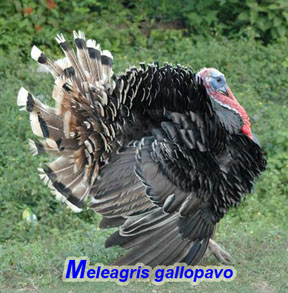
Anyway, that's my hypothesis in brief. Oh, and one more thing: why the turkey at the head of this post? To commemorate Thanksgiving, of course, but also because turkeys are known to exhibit significant numbers of parthenogenesis. That is, a significant proportion of male turkeys are the result of the development of an unfertilized egg. They are male, not female (as would be the case in parthenogenetic mammals) because males are the homogametic sex in birds; they are ZZ, whereas females are ZW (the Z and W chromosomes corresponding in function to the X and Y chromosomes in mammals). It has not escaped my notice that parthenogenesis would greatly facilitate the kind of chromosomal speciation I have outlined above. Hence, the turkey can stand as an emblem of the First-Degree Inbreeding Hypothesis for Chromosomal Speciation in Animals.

Have a great turkey day, folks!

Comments, criticisms, and suggestions are warmly welcomed!

--Allen

Labels: , , ,

Tuesday, June 06, 2006

Random Mutation and Natural Selection Revisited


AUTHOR: Allen MacNeill

SOURCE: Original essay

COMMENTARY: That's up to you...

Promoters of "intelligent design theory" and other forms of creationism often assert that random mutation plus natural selection (RM+NS) are insufficient to explain the diversity of life on Earth. In particular, people like William Dembski assert that RM+NS cannot work fast enough (even given billions of years) to produce the complex living organisms we observe around us.

In so doing, they attack evolutionary theory using a "straw-man argument," because modern evolutionary theory is not limited to RM+NS alone to produce adaptations, nor to explain the diversity of life on Earth. In particular, while there is no empirical evidence that would lead one to believe that mutations are produced by an "intelligent designer," it is also not true that mutations alone must supply the variation necessary for evolution by natural selection.

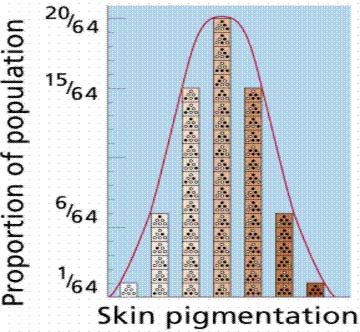
In particular, while it is true that any given mutation is random (as far as we can tell), a series of mutations which are then preserved as the result of natural selection aren't really random at all, at least not in the way that is often depicted by critics of evolutionary theory. In classical evolutionary theory, as first mathematically formalized by R. A. Fisher, the variation that is necessary for the raw material for natural selection is the result of a large number of individual alleles, all producing variations of the same trait, such as height or skin color in humans. In this model, a normal distribution of heights or skin colors are produced by combinations of different alleles, each influencing some fraction of the overall height, producing what Fisher and others called "continuous variation." Selection then preserved one or a few of the various allele combinations by preserving the individuals that carried the controlling alleles.


In this model, evolutionary change would necessarily be slow and gradual, as changes in the overall mean value for any trait would require the gradual accumulation of mutations in each of the many alleles that controlled the trait. Since the observable mutation rate is very low (at least, the rate of mutations that significantly affect most phenotypic traits is very low), the argument was that directional change in any given trait was something like a wagon train: only as fast as its slowest constituent. That is, change in the overall distribution of the trait (such as height) depended on the rate of mutation of all of the alleles controlling it, and required that a sufficient proportion of the alleles that were preserved by selection mutate and then be selected in the same "direction" (e.g. for greater height).

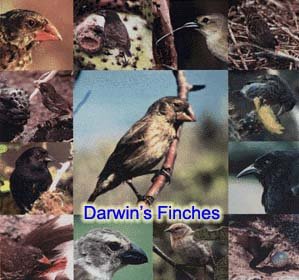
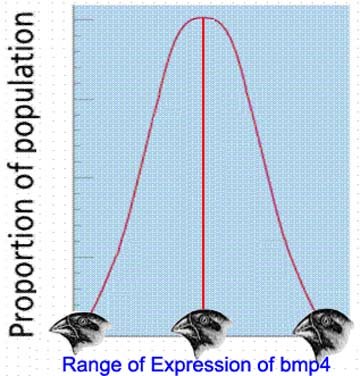
However, subsequent field and laboratory investigations into the genetic and developmental control of such variable traits have shown the multiple allele/continuous variation model upon which the "modern synthesis" was based is, in fact, not the way most traits apparently evolve. For example, consider a mutation that causes an increase in size of a particular anatomical feature (e.g. a finch's beak). Most such features are regulated by a set of genes that are themselves regulated by a homeotic gene (or a few such homeotic genes; in the case of Darwin's finches, the controlling homeotic gene is called bmp4, for "bone morphology protein 4") [1]. Homeotic genes, like many but not all genes, do not produce a purely monotonic trait (i.e a trait with no variation). Instead, they produce a trait that varies somewhat between individuals, in what approximates a normal distribution. In the case of finch beaks, this means that in any population of finches, there are some individuals with small beaks, some with large beaks, and most with intermediate beaks. All of these finches could easily have the same allele for the homeotic gene controlling the trait. The variation in beak size would therefore be the result, not of the expression of different alleles, but rather of the different outcomes of the expression of the same allele of the homeotic gene, developing differently in different individuals as the result of a combination of chance and environmental conditions (this is how humans differ in heights, for example).


Now consider a situation in which an environmental change (for example, a drought), selected for individual finches with larger beaks. At the level of the controlling homeotic gene, this could mean one of two things: either the larger beaks are still within the developmental limits of the original allele, or another allele (i.e a mutant) has arisen, with an overlapping developmental pattern but a higher mean value for beak size. If the former is the case, then a return to the original environment would result in a return to the original mean beak size.

However, if the latter were the case, then there would be a built-in bias toward finches with larger beaks in the resulting population. This would also mean that the "base" allele - i.e. the new mutant allele - would start out producing a larger mean beak size along with the usual normal distribution of beak sizes. If the environmental change persisted, new alleles might arise, but they would begin with a "norm of reaction" that would produce significantly larger mean beak sizes, along with a normal distribution with significantly larger beaks at the upper tail of the distribution.

In other words, the existing alleles for such a trait would bias subsequent mutations in the "direction" of larger beaks, simply because the pool of potential new alleles would already start out biased in that direction. Therefore, the mutations and developmental changes that were available from one generation to the next would be biased in the direction of whatever phenotypic trait resulted in the highest reproductive success.

This process, called genetic accommodation [2], is part of the new science of evo-devo, which renders much of the classical "evolutionary synthesis" obsolete, and at the same time explains how such phenomena as punctuated equilibria can be integrated into a unified theory of evolutionary development. In particular, genetic accommodation and similar processes can explain how natural selection alone can produce both rapid and directional change in phenotypes over time, thereby making any resort to "intelligent design" unnecessary and irrelevant.

REFERENCES CITED:

[1] Pennisi, E. (2004) Bonemaking protein shapes beaks of Darwin's finches. Science, Vol. 305. no. 5689, p. 1383, available at : http://www.sciencemag.org/cgi/content/summary/305/5689/1383

[2] West-Eberhard, M. J. (2003) Developmental Plasticity and Evolution. Oxford, UK, Oxford University Press. See especially pages 147 to 158.

--Allen

Labels: , , , , , ,