Books in Celebration of the 150th Anniversary of the Origin of Species

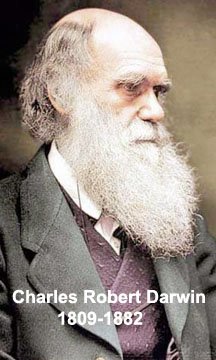
2009 marks several important anniversaries in the science of evolutionary biology. Perhaps the two most important are the 200th anniversary of the birth of Charles Darwin and the 150th anniversary of the publication of his most important book, On the Origin of Species, originally published in November of 1859. Scientific societies around the world are celebrating these two events, with “Darwin Day” observances at hundreds of colleges, universities, and museums, including Cornell University and the Museum of the Earth at the Paleontological Research Institution in Ithaca, New York.
Publishers are also celebrating these two anniversaries, bringing out a flood of books on Darwin and evolution. There isn’t space in this blogpost to note all of these publications, but we can mention some of the most noteworthy and relevant of these publications. Here is an annotated list of some of the best and most comprehensive publications that have come out recently, celebrating the life and work of Charles Darwin and his theory of evolution by natural selection. The full publication information for each work is included in this list, followed by a brief paragraph describing its contents.
DARWIN'S BOOKS (in print)
 Darwin, Charles (Edward O. Wilson, editor) (2005) From So Simple a Beginning: Darwin's Four Great Books. W.W. Norton & Co.: New York, NY, ISBN 0393061345 (hardcover, $39.95), 1706 pages. Available here.
Perhaps the best way to celebrate Darwin’s life and work is to read his most important and influential books. In preparation for the Darwin bicentennial several publishers have brought out various versions of his books. This one is the best, not only because it includes his four most influential publications, but also because the editor, evolutionary biologist Edward O. Wilson, provides a brief but illuminating introduction to each one. Wilson places Darwin’s work in its historical and scientific context, and shows how each of his four great books laid the groundwork for the modern science of biology. If you only have time for one of these books, let this compendium be the one you read this year.

Darwin, Charles (James T. Costa, editor) (2009) The Annotated Origin: A Facsimile of the First Edition of On the Origin of Species. Belknap Press of Harvard University Press: Cambridge, MA, ISBN 0674032810 (hardcover, $35.00), 576 pages. Available here.
Darwin didn’t originally intend to publish the book we now know as the Origin of Species. He was working on a much longer multi-volume work that he intended to call Natural Selection, and rushed to publish an “abstract” of this work in 1859 to forestall losing his priority for the idea to Alfred Russell Wallace. As a consequence, the Origin of Species has no footnotes, endnotes, nor bibliography. This version of the Origin makes up for that lack. Ably edited by James Costa, The Annotated Origin contains many of the annotations that the original Origin of Species lacked, and provides the reader with a comprehensive grounding in the natural history that Darwin marshaled in support of his revolutionary theory.

Darwin, Charles (David Quammen, editor) (2008) On the Origin of Species: The Illustrated Edition. Sterling Publishers: New York, NY, ISBN 1402756399 (hardcover, $35.00), 560 pages. Available here.
Darwin rushed to publish the Origin of Species, and included only one technical illustration in the first edition. This lack of illustrations has been rectified in David Quammen’s beautifully illustrated version of the Origin. Perhaps best known for his masterful book on island biogeography and extinction, The Song of the Dodo, Quammen has chosen a huge selection of images that illuminate Darwin’s theory in ways that Darwin himself would have found both fascinating and extremely valuable for a deeper understanding of his theory.
DARWIN'S BOOKS (online)
The Internet has provided readers and scholars today with an unparalleled opportunity to study the works of Darwin online. By far the best of these electronic resources is a website initiated and maintained by John Van Whye and his colleagues in England. Available online at http://darwin-online.org.uk/, The Complete Works of Charles Darwin includes not only all of Darwin’s books (available in all of their various editions), but also photographic facsimiles of these works side-by-side with searchable full text versions, plus all of Darwin’s scientific publications and a massive and growing collection of his voluminous correspondence. Here is a sampling:

Darwin, Charles (1845) Journal of Researches into the Natural History and Geology of the Countries Visited During the Voyage of H.M.S. Beagle Round the World, Under the Command of Capt. Fitz Roy, R.N. 2d edition. John Murray: London, UK, 536 pages. Text and images available here.
This was Darwin’s first and most popular book for the general public, establishing him as the premier naturalist in England at the time of its publication. Continuously in print since 1845, the Voyage of the Beagle (as it is most often referred to) is both a marvelous compendium of natural history and a fascinating journal of a voyage of discovery almost unparalleled in the literature of science.

Darwin, Charles (1859) On the Origin of Species by Means of Natural Selection, or the Preservation of Favoured Races in the Struggle for Life. John Murray: London, UK, 522 pages. Text and images available here.
Darwin’s most important book, and perhaps the most important book ever published in the science of biology. Indeed, a strong argument could be made that this book single-handedly founded the modern science of biology. This online edition juxtaposes the text of the Origin with photographs of the corresponding pages from the first edition.

Darwin, Charles (1871) The Descent of Man, and Selection in Relation to Sex. John Murray: London, UK, 424 pages. Text and images available here.
Darwin’s second most important book, and perhaps the most controversial of his published works, the Descent of Man (as it is most often referred to) contains Darwin’s proposal that humans have evolved from “lower” primates, and a detailed exploration of what Darwin believed to be the most important mechanism in the evolution of humans: sexual selection. Darwin also speculates on the evolutionary origin of such uniquely human traits as art, language, and morality.

Darwin, Charles (1871) The Expression of the Emotions in Man and Animals. John Murray: London, UK, 374 pages. Text and images available here.
One of Darwin’s lesser-known books, but no less important in its own way, The Expression of the Emotions in Man and Animals is often credited with founding the modern science of animal behavior. In it, Darwin explored the biological basis for the expression of emotions in humans and other animals, with detailed examples (many with accompanying photographs) that show how human emotions are most probably derived from the emotions of other “lower” animals, including dogs as well as monkeys and other primates.
DARWIN'S LIFE AND WORK (adults/general)
Many people (including many evolutionary biologists) not only have never read Darwin's books, but also do not know how Darwin came to write them. Furthermore, opponents of Darwin's theories often portray Darwin's life and personal beliefs in as negative a light as possible, in an attempt to discredit his theories. Perhaps the best antidotes to both of these deficiencies are the books listed here, which together provide a comprehensive view of Darwin's life and work. Most of them are written for non-scientists, and all of them provide a fascinating glimpse into the work of the founder of the science of biology.

Browne, Janet (1996) Charles Darwin: A Biography, Volume 1: Voyaging. Princeton University Press: Princeton, NJ, ISBN 0691026068 (paperback, $25.95), 622 pages. Available here.
Although not explicitly published in celebration of the Darwin bicentennial, Janet Browne’s two-volume biography of Darwin is widely recognized as the premier biography of the founder of evolutionary biology. This first volume covers Darwin’s youth and early career, up to the completion of the voyage of HMS Beagle and the germination of his theory of evolution by natural selection. Using the extensive collection of Darwin’s correspondence along with personal papers and those of his family and scientific associates, Browne draws a detailed and sometimes surprising portrait of the founder of the most comprehensive and controversial theory in the natural sciences.

Browne, Janet (2003) Charles Darwin: A Biography, Volume 2: The Power of Place. Princeton University Press: Princeton, NJ, ISBN 0691114390 (paperback, $25.95), 600 pages. Available here.
In this second volume of Janet Browne’s two-volume biography of Darwin, Janet Browne explores the origin of the Origin of Species and Darwin’s other ground breaking and revolutionary works. Unlike some of Darwin’s other biographers, Browne gets most of the science right in her biography, and illuminates Darwin’s ideas in light of his detailed work in natural history. She also provides insights into Darwin’s personality, including his much-noted reclusive nature, and shows how his scientific work and ideas were influenced by events in his private life.

Darwin, Charles (Nora Barlow, editor) (1993) The Autobiography of Charles Darwin: 1809-1882. W.W. Norton & Co.: New York, NY, ISBN 0393310698 (paperback, $14.95), 224 pages. Available here.
Although Darwin wrote an autobiography, he never intended it to be a comprehensive history of his life or his ideas. Rather, he did it almost on a lark, as a kind of “gift” to the members of his family and closest friends. Despite this, his autobiography provides some fascinating insights into his personality, and especially his views on art, literature, religion, ethics, and philosophy. This edition includes autobiographical material that was suppressed by Darwin’s widow and son, and should be considered to be the definitive edition.

Darwin, Charles (Gordon Chancellor & John Van Wyhe, editors) (2009) Charles Darwin’s Notebooks from the Voyage of the Beagle. Cambridge University Press: New York, NY, ISBN 0521517575 (hardcover, $150.00), 650 pages. Available here.
This is an expensive, but absolutely invaluable publication, brought out by Cambridge University Press as part of this year’s bicentennial celebration and edited by Gordon Chancellor and John Van Whye (the same John Whye who maintains the complete works of Darwin online). It contains the entirety of Darwin’s handwritten journals of the voyage of HMS Beagle, written during the voyage. In it one can trace the development of Darwin’s revolutionary ideas as they first occurred to him, and see how the events of the voyage laid the groundwork for his revolutionary theories. This is a must-have edition for anyone who wants to understand how and when the Darwinian revolution began.

Desmond, Adrian & Moore, James (2009) Darwin's Sacred Cause: How a Hatred of Slavery Shaped Darwin's Views on Human Evolution. Houghton Mifflin Harcourt: New York, NY, ISBN 0547055269 (hardcover, $14.95), 448 pages. Available here.
Charles Darwin was born on February 12, 1809, the same day as Abraham Lincoln. This propinquity of origins is all the more notable when one realizes that Darwin and his family were staunch abolitionists. Darwin himself tells how he became horrified by the institution of slavery while on the voyage of HMS Beagle.
Desmond and Moore, whose 1994 biography of Darwin (Darwin: The Life of a Tormented Evolutionist, available here) is widely recognized as one of the best biographies of Darwin, have in this volume dug deeper into Darwin’s personal history, showing how his views on slavery and its abolition helped shape his views on the evolution of humans, as outlined in his Descent of Man.


McCalman, Iain (2009) Darwin's Armada: Four Voyages and the Battle for the Theory of Evolution. W.W. Norton & Co.: New York, NY, ISBN 0393068145 (hardcover, $29.95), 432 pages. Available here.
Although perhaps the best known, Darwin’s round-the-world voyage aboard HMS Beagle was not by any means the only such voyage of discovery in the 19th century. Three of Darwin’s closest friends and collaborators in evolutionary biology — botanist Joseph Hooker, zoologist Thomas Henry Huxley, and professional collector and naturalist Alfred Russell Wallace — all participated in similar voyages, and all contributed to Darwin’s theories. McCalman describes all four voyages, and shows how the insights and information about natural history gained by these four great naturalists provided the foundation for the science of evolutionary biology in the 19th and early 20th centuries.

Quammen, David) (2007) The Reluctant Mr. Darwin: An Intimate Portrait of Charles Darwin and the Making of His Theory of Evolution. Atlas Books: New York, NY, ISBN 039332995X (paperback, $35.00), 304 pages. Available here.
Quammen’s biography of Darwin’s personal origin of the Origin is a perfect companion to Janet Browne’s two-volume biography of Darwin. Focusing on the period in Darwin’s life leading up to the original publication of the Origin, Quammen shows how Darwin’s personality and early education predisposed him to the intellectual and emotional labor that resulted in the publication of the Origin and its reception by the scientific community.
DARWIN'S LIFE AND WORK (children/school)
All too often people think that the work of great scientists such as Charles Darwin is only accessible to adults, especially scientists. Here is a brief selection of books for children, all published during this bicentennial year, which present Darwin and his work in a way that anyone, including young children, can understand and appreciate.

Heiligman, Deborah (2009) Charles and Emma: The Darwins' Leap of Faith. Henry Holt and Co.: New York, NY, ISBN 0805087214 (hardcover, $18.95), 272 pages. Available here.
Heiligman’s biography of Charles and Emma Darwin begins with Charles drawing up a list of the pros and cons of marriage to his first cousin, Emma. His decision to marry her set in motion an emotional odyssey for Charles and Emma, who had very different views of religion. Charles’ theory of evolution threatened Emma’s deep religious belief, and forced Darwin to thoroughly document his views before publishing them. This sympathetic rendering of their happy, though sometimes turbulent, marriage is a wonderful introduction to the real life of a famous scientist, one that young adults will find particularly relevant to their own lives.

Lasky, Kathryn (2009) One Beetle Too Many: The Extraordinary Adventures of Charles Darwin. Candlewick Press: Somerville, MA, ISBN 076361436X (hardcover, $17.99), 48 pages. Available here.
Lasky’s copiously illustrated account of Darwin’s life and work, focusing especially on his adventures while on the voyage of HMS Beagle, gives younger readers an engaging look at the work of the founder of the theory of evolution by natural selection. Lasky does not shy away from Darwin’s views on evolution and religion, presenting them in Darwin’s own words. The illustrations are particularly charming, rendered in various media in a quirky and engaging style.
McGinty, Alice B. & Azarian, Mary (2009) Darwin, with Glimpses into his Private Journal and Letters. Houghton Mifflin Books for Children: New York, NY, ISBN 0618995315 (hardcover, $18.00), 48 pages. Available here.

Another illustrated account of Darwin’s life and work, this time covering his childhood, his adventures while on the voyage of HMS Beagle, and the subsequent development of his theory of evolution by natural selection. gives younger readers an engaging look at the work of the founder of the theory of evolution by natural selection. Illustrated with woodcuts and watercolor, McGinty and Azarian’s biographical history also touches on Darwin’s views on religion and philosophy in a way that is accessible to younger readers.

Schanzer, Rosalyn (2009) What Darwin Saw: The Journey That Changed the World. National Geographic Children's Books: Des Moines, IA, ISBN 1426303963 (hardcover, $18.00), 48 pages. Available here.
Schanzer’s illustrated account of Darwin’s voyage of HMS Beagle is more limited in scope than the others in this list, but succeeds in presenting Darwin’s natural history investigations in an engaging (and sometimes humorous) way. More like a graphic novel than a standard biography (complete with cartoon-like illustrations and speech balloons), Schanzer presents selected observations that led Darwin to his theory of evolution. Unlike the other three books for younger readers in this list, Schanzer avoids discussion of Darwin’s views on religion and philosophy, sticky strictly to the natural history of his historic voyage and the science that it inspired.
In addition to the books listed and reviewed here, those who are interested in the life and works of Charles Darwin can search Amazon.com, where most of the books listed above can be browsed, along with many others published in connection with the Darwin bicentennial. Books on the subject of evolution are listed here, including books both supportive of Darwin’s theory and critical of it.
I hope this list provides you with some ideas of how to celebrate Darwin's life and work by learning more about it.
************************************************
As always, comments, criticisms, and suggestions are warmly welcomed!
--Allen
Labels: Darwin, Darwin biography, Darwin's autobiography, Descent of Man, Expression of Emotions in Men and Animals, Origin of Species, Voyage of the Beagle
posted by Allen MacNeill @ 11/11/2009 10:55:00 AM
1 comments