Thursday, March 17, 2011

Evolutionary Psychology: The Science of Human Nature


Having been tickled by Google Alert that my name had been mentioned in the comments at Pharyngula (P. Z. Myer's blog), I took a quick look. Just a few comments for now:

1) I became an evolutionary psychologist when studying the behavioral ecology of Microtus pennsylvanicus got boring. Those cute little field voles got boring because their ethology is relatively simple. Human ethology is a lot more interesting, mostly because it is a lot more complex. Should we not try to study it because it is more complex? Or because it might not jibe with some people's political preconceptions?

2) I assign Gould & Lewontin's "spandrels" paper to my students in evolutionary biology, along with various criticisms of it. I also assign Eldredge & Gould's "punk eek" paper and Gould and Vrba's "exaptation" paper (along with close to three dozen others, not to mention the entire Origin of Species, 1st. ed.). I also give them chunks of George William's 1966 classic, Adaptation and Natural Selection, so that they will know exactly how "onerous" the concept of "adaptation" actually is.

3) Here's the definition of "adaptation" I use:
An evolutionary adaptation is any heritable phenotypic character whose frequency of appearance in a population is the result of increased reproductive success relative to alternative versions of that heritable phenotypic character.
4) Here are the criteria I believe are most useful when one is attempting to determine if one is dealing with an "adaptation":
Qualification 1: An evolutionary adaptation will be expressed by most of the members of a given population, in a pattern that approximates a normal distribution;

Qualification 2: An evolutionary adaptation can be correlated with underlying anatomical and physiological structures, which constitute the efficient (or proximate) cause of the evolution of the adaptation;

Qualification 3: An evolutionary adaptation can be correlated with a pre-existing evolutionary environment of adaptation (EEA), the circumstances of which can then be correlated with differential survival and reproduction; and

Qualification 4: An evolutionary adaptation can be correlated with the presence and expression of an underlying gene or gene complex, which directly or indirectly causes and influences the expression of the phenotypic trait that constitutes the adaptation.
To me, it seems reasonable that if one can apply those to a specific human behavior, one can make arguments about its evolutionary derivation. Would anyone disagree?

As for the ridiculous idea that evolutionary psychology only deals with sex, has anyone making such a claim actually read a textbook on the subject? Here are several:

Human Evolutionary Psychology

Evolutionary Psychology: The New Science of the Mind (4th Edition)

Evolution and Human Behavior, 2nd Edition: Darwinian Perspectives on Human Nature

Evolutionary Psychology: The Science of Human Nature

[Full Disclosure Notice: The fourth title is indeed by Yours Truly.]

If you haven't, then please do so, and then we can discuss these questions.

While we're on the subject, Part II of Evolutionary Psychology: The Science of Human Nature (on the ethology of between-group behavior in humans) is coming out in May. My next project is an introductory textbook in evolutionary biology, entitled Evolutionary Biology: The Darwinian Revolutions, again in two parts. Part I (due out in September) is The Modern Synthesis and Part II (due out next May) is The Evolving Synthesis.

After that (if I live that long) will be On Purpose: The Evolution of Design by Means of Natural Selection (won't there be some fireworks when that comes out?), in which I present one of the core arguments for The Metaphysical Foundations of the Biological Sciences, in the spirit of E. A. Burtt's The Metaphysical Foundations of Modern Physical Science. Should be fun!

************************************************

As always, comments, criticisms, and suggestions are warmly welcomed!

--Allen

Labels: , , , ,

Wednesday, October 14, 2009

Memento mori: The Metaphysics of The Game


I just lost the game. And so have you, especially if you know what I'm talking about.

Some background: my eldest son, Conall, attended a highland dance camp this past summer. While he was there, he learned about The Game. Being obsessed with games in general and mind games in particular (like his dad), he came home and told us all about it, and has since reveled in telling us every time he loses the game. Since learning about The Game, I have myself announced the same to several of my classes at Cornell, each time to a chorus of groans.

So, how does The Game work?

The Game has only three rules:

1) Everyone is always playing The Game.

2) Whenever you think of The Game, you lose.

3) Having lost The Game, you must announce this to at least one other person (usually by saying or writing "I just lost The Game").

Some active players of The Game also assert that there are two corollaries:

4) You can lose The Game multiple times.

5) You can only lose The Game once every half hour.

That is, The Game "resets" after half an hour, so that having forgotten that you are playing, you can lose again and again and again...

Having lost The Game many, many times since Conall told me the rules, it has occurred to me that there is a metaphysical dimension to The Game. Thinking about The Game is essentially the same thing as thinking about one's own death. That is, The Game is a kind of memento mori. Most of us go through most of our lives without often thinking about the incontrovertible fact that all of us will, at some point in the indefinite future, cease to exist. We will all, in other words, "lose The Game".

There have been several times in my life when I have become bemused by the thought of my own mortality. The first time it happened I was four years old. We were living in an old farmhouse on Scott Road, east of Homer, New York, and I was walking up the stairs to my bedroom. Between one step and the next, it occurred to me that I would someday die - that I would cease to exist. This realization was very shocking to me, and came back into my mind steadily for some time.

But then, I forgot about it...for a while. Since then, I have gotten caught in the same "becoming aware of mortality loop" several times, and each time it has had the same quality as losing The Game. That is, it comes with a sense of "doubled consciousness", in which I have become conscious of my own stream of consciousness, and its eventual termination.

Many theologians (and some evolutionary biologists) have speculated that the origin of religion is grounded in the realization of personal mortality. From an evolutionary standpoint, the argument is as follows:

1) Individuals who avoid situations in which their lives are threatened survive (and can therefore reproduce) more often than individuals who do not avoid such situations.

2) Individuals who are aware of their own mortality are more likely to avoid situations in which their lives are potentially threatened.

3) Ergo, the cognitive operation in which one becomes conscious of one's mortality has adaptive value; that is, it can increase in frequency among the individuals that make up a population as the result of natural selection.

Some evolutionary psychologists (myself among them) have argued that the capacity for such cognitive operations is the basis for our evolved psychology, and that there is a positive feedback relationship between ideas like "mortality" (and The Game) and the underlying neurological wiring that facilitates the acquisition and transmission of such ideas. This idea, known as "gene-meme coevolution", was first and most rigorously explored by Charles Lumsden and Edward O. Wilson in their 1983 book, Genes, Mind, and Culture: The Coevolutionary Process. The underlying ideas in their work were summarized in non-technical language in Promethean Fire: Reflections on the Origin of Mind.

Having pondered both The Game and mortality, it seems quite plausible to me that our minds are indeed adapted to the kind of mental operation that results in both "losing The Game" and recalling our personal mortality. And so, I expect to go on losing The Game until I lose The Game...and now, having read this, so will you.

************************************************

As always, comments, criticisms, and suggestions are warmly welcomed!

--Allen

Labels: , , , , ,

Thursday, February 12, 2009

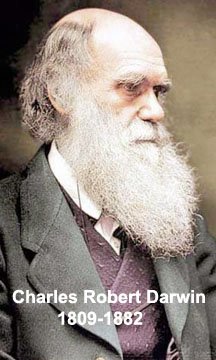
Charles Robert Darwin, Born 12 February 1809


AUTHOR: Charles Darwin

SOURCE: Origin of Species

COMMENTARY: Allen MacNeill (following the excerpt)
"In the distant future I see open fields for far more important researches. Psychology will be based on a new foundation, that of the necessary acquirement of each mental power and capacity by gradation. Light will be thrown on the origin of man and his history.

"Authors of the highest eminence seem to be fully satisfied with the view that each species has been independently created. To my mind it accords better with what we know of the laws impressed on matter by the Creator, that the production and extinction of the past and present inhabitants of the world should have been due to secondary causes, like those determining the birth and death of the individual. When I view all beings not as special creations, but as the lineal descendants of some few beings which lived long before the first bed of the Silurian system was deposited, they seem to me to become ennobled. Judging from the past, we may safely infer that not one living species will transmit its unaltered likeness to a distant futurity. And of the species now living very few will transmit progeny of any kind to a far distant futurity; for the manner in which all organic beings are grouped, shows that the greater number of species of each genus, and all the species of many genera, have left no descendants, but have become utterly extinct. We can so far take a prophetic glance into futurity as to foretell that it will be the common and widely-spread species, belonging to the larger and dominant groups, which will ultimately prevail and procreate new and dominant species. As all the living forms of life are the lineal descendants of those which lived long before the Silurian epoch, we may feel certain that the ordinary succession by generation has never once been broken, and that no cataclysm has desolated the whole world. Hence we may look with some confidence to a secure future of equally inappreciable length. And as natural selection works solely by and for the good of each being, all corporeal and mental endowments will tend to progress towards perfection.

"It is interesting to contemplate an entangled bank, clothed with many plants of many kinds, with birds singing on the bushes, with various insects flitting about, and with worms crawling through the damp earth, and to reflect that these elaborately constructed forms, so different from each other, and dependent on each other in so complex a manner, have all been produced by laws acting around us. These laws, taken in the largest sense, being Growth with Reproduction; Inheritance which is almost implied by reproduction; Variability from the indirect and direct action of the external conditions of life, and from use and disuse; a Ratio of Increase so high as to lead to a Struggle for Life, and as a consequence to Natural Selection, entailing Divergence of Character and the Extinction of less-improved forms. Thus, from the war of nature, from famine and death, the most exalted object which we are capable of conceiving, namely, the production of the higher animals, directly follows. There is grandeur in this view of life, with its several powers, having been originally breathed into a few forms or into one; and that, whilst this planet has gone cycling on according to the fixed law of gravity, from so simple a beginning endless forms most beautiful and most wonderful have been, and are being, evolved."
- Charles Darwin,
On the Origin of Species
[pages 488 to 490]

**********************************************************************************
COMMENTARY:

Today is the 200th anniversary of the birth of Charles Darwin (and Abraham Lincoln). Just a few comments about this anniversary and about the passage, above (from the end of the first edition of the Origin of Species).

• Here is how Darwin felt on the morning of 12 February 1859 (the year the Origin of Species was published), according to a letter he wrote to W. D. Fox:
"I have been extra bad of late, with the old severe vomiting rather often & much distressing swimming of the head…

Doesn't sound much like a man who was about to turn the whole world upside down, does it? Darwin was a chronic hypochondriac, and this account of a "bad morning" was pretty typical.


• Years ago I created, directed, produced, and starred in a one-man play called "An Evening with Charles Darwin," based on excerpts from Darwin's correspondence and autobiography. In it, I had the character of Darwin (in the last year of his life) talk about the coincidence of his birthday falling on the same day as that of Abraham Lincoln. This coincidence is significant from a biographical and historical standpoint because Darwin and his family were firm and outspoken abolitionists, and counted Abraham Lincoln among their moral and political heroes. Although I am not aware that Darwin ever mentioned this coincidence, I found it useful for his character to mention it in the play, as it illustrated a facet of Darwin's personality that is rarely mentioned in popular biographical treatments of his life and character.

• In predicting the future impact of his theory, Darwin mentioned specifically only psychology and human evolutionary history. As a partisan for evolutionary psychology, I find this both gratifying and curious. Gratifying, because we really are beginning (finally!) to base psychology on "a new foundation" (i.e. comparative human ethology) and are starting to investigate how (and even, in some cases, when) "each mental power and capacity" was acquired. It's an exciting and very productive time to be working on these subjects!

• Sharp-eyed readers will note the lack of reference to "the Creator" in the final paragraph. This passage is taken from the first edition of the Origin, published in 1859. In that original edition, Darwin wrote
"There is grandeur in this view of life, with its several powers, having been originally breathed into a few forms or into one..."
Poetic, but more to the point, clearly not theological, as asserted by some creationists, who are motivated to show that even Darwin refers to creation in the Origin.

• However, Darwin does refer to the Creator, even in this first edition:
"To my mind it accords better with what we know of the laws impressed on matter by the Creator, that the production and extinction of the past and present inhabitants of the world should have been due to secondary causes, like those determining the birth and death of the individual."

From this passage, it is clear that the full extent of the intervention in nature by the Creator was to establish the natural laws that govern what happens in nature. Throughout the Origin, Darwin makes it clear that it isn't necessary to ascribe any other kind of intervention into by Creator, for any reason. Therefore, the Creator cited by Darwin in this concluding passage is clearly the kind of God venerated by Deists. And Deism, as Will Provine and others have repeatedly pointed out, is functionally equivalent to atheism. A Creator that is, by His own choice, constrained to function entirely through the laws of nature (which He Himself created) is unnecessary for the creation and implementation of "secondary causes" (i.e. everything that happens after the universe and its governing laws have been created).

• Think of the courage it must have taken for Darwin to publish the Origin:
"Authors of the highest eminence seem to be fully satisfied with the view that each species has been independently created." [emphasis added].

Despite his modest fame among the educated public as author of the
Journal of the Voyages of HMS Beagle
and his reputation among naturalists as the author of four monographs on barnacles, Darwin was essentially an amateur naturalist who dared to propose a theory that was in direct opposition to the publicly stated positions of the most admired professional naturalists and scientists of his time, not to mention two millennia of European history and politics.It is a measure of his confidence in the truth of his own ideas and observations that he went ahead and published the Origin. After that, writing and publishing The Descent of Man... would have been a relative cakewalk.

So, happy birthday, Charles Darwin (and all of his admirers out there in cyberspace) – Many happy returns!

--Allen

Labels: , , , , , , , , ,

Friday, April 18, 2008

Evolution and Ethics: Is Morality Natural?


ANNOUNCEMENT: Seminar in History of Biology

AUTHOR: Allen MacNeill

COMMENTARY: Allen MacNeill

First the announcement, followed by a brief commentary:

I am very excited to announce the following course, to be offered this summer in the six-week summer session at Cornell University:

COURSE LISTING: BioEE 467/B&Soc 447/Hist 415/S&TS 447 Seminar in History of Biology

SEMESTER: Cornell Six-Week Summer Session, 06/24/08 to 07/31/08

COURSE TITLE: Evolution and Ethics: Is Morality Natural?

COURSE INSTRUCTOR: Allen MacNeill, Senior Lecturer in Ecology & Evolutionary Biology, Cornell University

COURSE DESCRIPTION: This seminar addresses, in historical perspective, controversies about the cultural, philosophical, and scientific implications of evolutionary biology. Discussions focus upon questions about gods, free will, foundations for ethics, meaning in life, and life after death. Readings range from Charles Darwin to the present (see reading list, below).

In 1871, Charles Darwin wrote in The Descent of Man "…the first foundation of the moral sense lies in the social instincts…and these instincts no doubt were primarily gained…through natural selection.” A century later, Edward O. Wilson, in
Sociobiology: The New Synthesis
, wrote “The biologist…realizes that self-knowledge is constrained and shaped by…natural selection. This simple statement must be pursued to explain ethics and ethical philosophers….”

And so it has: in the past few years the publication of hypotheses for the evolution of ethics and “the moral sense” has become an explosive growth industry and a hot topic of debate. In this seminar course, we will take up this debate by considering two alternative hypotheses:

(1) that ethics can be derived directly from human evolutionary biology, or

(2) that ethics can only be derived from philosophical principles, which are not directly derivable from evolutionary biology.

Included in this debate will be an extended consideration of the hypothesis that the capacity for ethical behavior is an evolutionary adaptation that has evolved by natural selection among our primate ancestors. We will read from some of the leading authors on the subject, including Frans de Waal, Paul Farber, Marc Hauser, T. H. Huxley, Richard Joyce, Elliott Sober, and David Sloan Wilson. Our intent will be to sort out the various issues at play, and to come to clarity on how those issues can be integrated into a perspective of the interplay between philosophy and the natural sciences.

In addition to in-class discussions, course participants will have the opportunity to participate in online debates and discussions via the instructor's weblog. Students registered for the course will also have an opportunity to present their original research paper(s) to the class and to the general public via publication on the course weblog and via THE EVOLUTION LIST.

INTENDED AUDIENCE: This course is intended primarily for students in biology, history, philosophy, and science & technology studies. The approach will be interdisciplinary, and the format will consist of in-depth readings across the disciplines and discussion of the issues raised by such readings.

PREREQUISITES: None, although a knowledge of philosophical ethics, evolutionary psychology, and general evolutionary theory would be helpful.

DAYS, TIMES, & PLACES: The course will meet on Tuesday and Thursday evenings from 6:00 to 9:00 PM in Mudd Hall, Room 409 (The Whittaker Seminar Room), beginning on Tuesday 24 June 2008 and ending on Thursday 31 July 2008. We will also have an end-of-course picnic on Friday 25 July 2008.

CREDIT & GRADES: The course will be offered for 4 hours of credit, regardless of which course listing students choose to register for. Unless otherwise noted, course credit in BioEE 467/B&Soc 447 can be used to fulfill biology/science distribution requirements and Hist 415/S&TS 447 can be used to fulfill humanities distribution requirements (check with your college registrar's office for more information). Letter grades for this course will be based on the quality of written work on original research papers written by students, plus participation in class discussion.

COURSE ENROLLMENT & REGISTRATION: All participants must be registered in the Cornell Six-Week Summer Session to attend class meetings and receive credit for the course (click here for for more information and to enroll for this course). Registration will be limited to the first 18 students who enroll for credit.

REQUIRED TEXTS (all texts will be available at The Cornell Store):

de Waal, Frans (2006) Primates and philosophers: How morality evolved. Princeton University Press, Princeton, NJ, ISBN #0691124477, $22.95 (hardcover), 230 pages.

Farber, Paul (1998) The temptations of evolutionary ethics. University of California Press, Berkeley, CA, ISBN # 0520213696, $25.00 (paperback). 224 pages.

Hauser, Marc (2006) Moral minds: How nature designed our universal sense of right and wrong. Ecco/Harper Collins, New York NY, ISBN #0060780703, $27.95 (hardcover), 512 pages.

Huxley, T. H. (2004). Evolution and ethics & science and morals. Prometheus Books, Amherst, NY, ISBN #159102126X, $13.00 (paperback), 151 pages. Available free online here.

Joyce, Richard (2007) The evolution of morality. MIT Press, Cambridge, MA, ISBN #0262600722, $18.00 (paperback), 288 pages.

Sober, Elliot and Wilson, David Sloan (1999) Unto others: The evolution and psychology of unselfish behavior. Harvard University Press, Cambridge, MA, ISBN #0674930479, $22.50 (paperback), 416 pages.

OPTIONAL TEXTS:
(all texts will be available at The Cornell Store)

Darwin, Charles (E. O. Wilson, ed.) (2006) From So Simple a Beginning: Darwin's Four Great Books. W. W. Norton, New York, NY, ISBN #0393061345, $39.95 (hardcover), 1,706 pages.

Dawkins, Richard (2006) The selfish gene: Thirtieth anniversary edition. Oxford University Press, Oxford, UK, ISBN # 0199291152, $16.95 (paperback), 384 pages.

Dennett, Daniel (1996) Darwin's dangerous idea: Evolution and the meanings of life. Simon & Schuster, New York, NY, ISBN #068482471X, $16.00 (paperback), 586 pages.

Katz, Leonard (ed.) (2000). Evolutionary origins of morality. Imprint Academic, Charlottesville, VA, ISBN # 090784507X, $29.90 (paperback). 352 pages.

MacKinnon, Barbara (2006) Ethics: Theory and contemporary issues. Wadsworth, Boston , MA, ISBN #0495007161, $95.95 (paperback), 504 pages.

Ridley, Matt (1998) The origins of virtue: Human instincts and the evolution of cooperation. Penguin, New York, NY, ISBN #0140264450, $15.00 (paperback), 304 pages.

Wright, Robert (1995) The moral animal: Why we are the way we are: The new science of evolutionary psychology. Vintage, New York, NY, ISBN #0679763996, $15.95 (paperback), 496 pages.

COMMENTARY:

Perhaps the most common fallacy in philosophy and science is the tendency to assume that because something is “natural” (whatever that means) it must, ipso facto, be “good” (whatever that means) as well. In
last summer’s evolution and history of biology seminar, we talked about this tendency at some length. This summer I intend to make it the primary focus of our discussions.

From a historical standpoint, the tendency to conflate “is” and “ought” statements has been one of the ongoing arguments about the implications of evolution ever since Darwin first proposed his theory in 1859. Indeed, Darwin himself wrote much on the subject, especially in The Descent of Man, and Selection in Relation to Sex, his second most popular (and controversial) book. It has also been one of the sources of both confusion and controversy about evolution today. In particular, evolutionary psychologists (among whom I number myself) have struggled with this problem, not always successfully.

Like last summer and the summer before, this is a fascinating topic and I hope that enough people will sign up for the course with opposing viewpoints on this subject to make for a very interesting and stimulating summer seminar.

So, watch this space; when the course blog goes up, I will announce it here and provide links to all and sundry. And remember:

"… the ethical progress of society depends, not on imitating [nature], still less in running away from it, but in combating it." – T. H. Huxley, Evolution and Ethics (1893)

--Allen

Labels: , , , ,

Wednesday, October 17, 2007

Jerry Fodor on Why Pigs Don't Have Wings


AUTHOR: Jerry Fodor

SOURCE: Why Pigs Don't Have Wings
(London Review of Books 29(20):19-22, 18 October 2007)

COMMENTARY: Allen MacNeill

Cognitive scientist and frequent critic of evolutionary psychology, Jerry Fodor, has a long article in the most recent issue of the London Review of Books in which he attacks what most people think of as the core of evolutionary biology: natural selection and adaptations. Fodor has attacked evolutionary psychology before, and spends most of his ammunition attacking it again in this article. However, he now has bigger (Darwin) fish in his sights: "Darwinism" – yes, he uses exactly the same term as the one so favored by creationists and ID theorists. Indeed, the article under discussion here has been lauded by prominent young-Earth creationist and ID theorist, Paul Nelson.

This isn't the first time left-leaning philosophers such as Fodor have joined forces with creationists, nor will it be the last. However, what I would like to discuss (in later posts) is Fodor's serious misrepresentations of evolutionary biology in general, and evolutionary psychology in particular. But, before I do that, you should go and read Why Pigs Don't Have Wings, paying special attention to Fodor's criticisms of natural selection and its role in evolutionary biology. And while you're at it, you might check out this essay by Fodor as well: Against Darwinism.

Then come back here (in a day or two), and I'll get started fisking both articles.

--Allen

Labels: , , , ,

Thursday, March 22, 2007

Evolution and Religion: Is Religion Adaptive?


ANNOUNCEMENT: Seminar in History of Biology

AUTHOR: Allen MacNeill

COMMENTARY: Allen MacNeill

First the announcement, followed by a brief commentary:

I am very excited to announce the following course, to be offered this summer in the six-week summer session at Cornell University:

COURSE LISTING: BioEE 467/B&Soc 447/Hist 415/S&TS 447 Seminar in History of Biology

SEMESTER: Cornell Six-Week Summer Session, 06/26/07 to 08/02/07

COURSE TITLE: Evolution and Religion: Is Religion Adaptive?

COURSE INSTRUCTOR: Allen MacNeill, Senior Lecturer in Ecology & Evolutionary Biology, Cornell University

COURSE DESCRIPTION: This seminar addresses, in historical perspective, controversies about the cultural, philosophical, and scientific implications of evolutionary biology. Discussions focus upon questions about gods, free will, foundations for ethics, meaning in life, and life after death. Readings range from Charles Darwin to the present (see reading list, below).

In 1871, Charles Darwin wrote in The Descent of Man that “…a belief in all-pervading spiritual entities seems to be universal.” A century later, Donald Brown, in his encyclopedic analysis of human universals, noted the same thing: that the capacity for religion is a universal trait, found in all human cultures. However, there is considerable individual variation in this capacity, ranging from people whose entire lives revolve around their religious beliefs to those who entirely lack them.

To an evolutionary biologist, such pan-specificity combined with continuous variation strongly suggests that one is dealing with an evolutionary adaptation. And indeed, in the past few years the publication of hypotheses for the evolution of the capacity for religion has become an explosive growth industry and a hot topic of debate. In this seminar course, we will take up this debate by considering three alternative hypotheses: that the capacity for religion is (1) an evolutionary adaptation, (2) a side-effect of an evolutionary adaptation, or (3) a “mind virus” with no direct evolutionary implications. We will read from some of the leading authors on the subject, including Scott Atran, Pascal Boyer, Richard Dawkins, Daniel Dennett, Andrew Newberg, and David Sloan Wilson. Our intent will be to sort out the various issues at play, and to come to clarity on how those issues can be integrated into the perspective of the natural sciences as a whole.

In addition to in-class discussions, course participants will have the opportunity to participate in online debates and discussions via the instructor's weblog. Students registered for the course will also have an opportunity to present their original research paper(s) to the class and to the general public via publication on the course weblog and via THE EVOLUTION LIST.

INTENDED AUDIENCE: This course is intended primarily for students in biology, history, philosophy, and science & technology studies. The approach will be interdisciplinary, and the format will consist of in-depth readings across the disciplines and discussion of the issues raised by such readings.

PREREQUISITES: None, although a knowledge of comparative anthropology, evolutionary psychology, and general evolutionary theory would be helpful.

DAYS, TIMES, & PLACES: The course will meet on Tuesday and Thursday evenings from 6:00 to 9:00 PM in Mudd Hall, Room 409 (The Whittaker Seminar Room), beginning on Tuesday 26 June 2007 and ending on Thursday 2 August 2007. We will also have an end-of-course picnic at a location TBA.

CREDIT & GRADES: The course will be offered for 4 hours of credit, regardless of which course listing students choose to register for. Unless otherwise noted, course credit in BioEE 467/B&Soc 447 can be used to fulfill biology/science distribution requirements and Hist 415/S&TS 447 can be used to fulfill humanities distribution requirements (check with your college registrar's office for more information). Letter grades for this course will be based on the quality of written work on original research papers written by students, plus participation in class discussion.

COURSE ENROLLMENT & REGISTRATION: All participants must be registered in the Cornell Six-Week Summer Session to attend class meetings and receive credit for the course (click here for for more information and to enroll for this course). Registration will be limited to the first 18 students who enroll for credit.

REQUIRED TEXTS (all texts will be available at The Cornell Store):

Atran, Scott (2004) In Gods we trust: The evolutionary landscape of religion. Oxford University Press, paperback, 388 pages, ISBN #0195178033

Boyer, Pascal (2002) Religion explained: The evolutionary origins of religion. Vintage Books, paperback, 448 pages, ISBN #0099282763

Dawkins, Richard (2006) The God delusion. Houghton Mifflin, hardcover, 416 pages, ISBN #0618680004.

Dennett, Daniel (2007) Breaking the spell: Religion as a natural phenomenon. Penguin Books, paperback, 464 pages, ISBN #0143038338

Newberg, Andrew & D'Aquili, Eugene (2001) Why god won't go away: Brain science and the biology of belief. Ballantine Books, paperback, 240 pages, ISBN #034544034X

Wilson, David Sloan (2003) Darwin's cathedral: Evolution, religion, and the nature of society. University of Chicago Press, paperback, 268 pages, ISBN #0226901351

OPTIONAL TEXTS (all texts will be available at The Cornell Store):

Darwin, Charles (E. O. Wilson, ed.) (2006) From So Simple a Beginning: Darwin's Four Great Books. W. W. Norton, hardcover, 1,706 pages, ISBN #0393061345

Eibl-Eibesfeldt, Irenaus & Salter, Frank (1998) Indoctrinability, ideology, and warfare: Evolutionary perspectives. Berghahn Books, hardcover, 490 pages, ISBN #1571819231

Fitzduff, Marie & Stout, Chris (2006) The psychology of resolving global conflicts: From war to peace: Volume 1: Nature vs nurture. Praeger Security International, hardcover, 354 pages, ISBN #0275982084

Guthrie, Stewart (1995) Faces in the clouds: A new theory of religion. Oxford University Press, paperback, 336 pages, ISBN #0195098919

Hamer, Dean (2005) The God gene: How faith is hardwired into our genes. Anchor, 256 pages, ISBN #0385720319

Newberg, A. & Waldman, M. (2006) Why we believe what we believe: Uncovering our biological need for meaning, spirituality, and truth. Free Press, hardcover, 336 pages, ISBN # 0743274970

Persinger, Michael (1987) Neuropsychological bases of god beliefs. Praeger Publishers, 175 pages, ISBN #0275926486

Wolpert, Lewis (2006) Six impossible things before breakfast: The evolutionary origins of belief. W. W. Norton, 243 pages, ISBN #0393064492

COMMENTARY:

I realize that putting myself in between such formidable opponents is perhaps asking for trouble...but I couldn't possibly get into any more trouble than I did last summer, could I? Once again, we shall rush in where angels fear to tread, and consider a very topical topic. As was the case last year, I invite anyone with an interest in the question posed as the title of this blog to consider taking this course, or at least sitting in on our discussion online. We will have an online course blog, where any and all comments, criticisms, suggestions, and other trivia will be roasted and toasted...so long as they are civil. As for accusations that I'm biased, let me say upfront that I (like almost everyone else) have an opinion on the question: I believe (based on my research into this question) that the answer is "Yes" and that the specific context within which the capacity for religious experience has evolved is warfare...but we'll talk all about that this summer.

We may also talk about whether or not God (or gods, or whatever) exist, but that will not be the primary focus of the course, nor will I allow it to become the primary focus of our discussions. This course isn't about the existence or non-existence of God (or Darwin or me). It's about whether or not the ability to believe in things like God (or gods, or whatever) has adaptive consequences. It's a fascinating topic and I hope that enough people will sign up for the course with opposing viewpoints on this subject to make for as interesting a summer seminar as last year's was.

So, watch this space; when the course blog goes up, I will announce it here and provide links to all and sundry. And remember:

"If God did not exist, it would be necessary to invent him." – Voltaire

--Allen

Labels: , , , , , ,

Tuesday, April 11, 2006

Polygamy, De Facto and De Jure


AUTHOR: Charles Krauthammer
SOURCE: Pandora and Polygamy

AUTHOR: Jonathan Rauch
SOURCE: One Man, Many Wives, Big Problems

COMMENTARY: Allen MacNeill

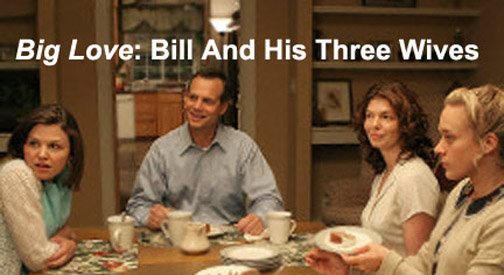
Polygamy has suddenly entered the national consciousness, thanks to HBO's new series, Big Love. We don't have television at my house, so I haven't seen it, but the national news websites have been all over it, and generally gushing with praise. For example, the New York Times recently ran a preview of Big Love , in which the reviewer made generally positive comments about the series.

Now the reaction is setting in. Charles Krauthammer, national columnist for the Washington Post, has a column in which he makes the following comment:

What is historically odd is that as gay marriage is gaining acceptance, the resistance to polygamy is much more powerful. Yet until this generation, gay marriage had been sanctioned by no society that we know of, anywhere at any time in history. On the other hand, polygamy was sanctioned, indeed common, in large parts of the world through large swaths of history, most notably the biblical Middle East and through much of the Islamic world.


Generally a very conservative columnist, Krauthammer's column is surprisingly non-judgmental about the series and the growing social movement for the legalization of polygamy that it reflects. Krauthammer's logic is, in my opinion, difficult to dispute:

I'm not one of those who see gay marriage or polygamy as a threat to, or assault on, traditional marriage. The assault came from within. Marriage has needed no help in managing its own long, slow suicide, thank you. Astronomical rates of divorce and of single parenthood (the deliberate creation of fatherless families) existed before there was a single gay marriage or any talk of sanctioning polygamy. The minting of these new forms of marriage is a symptom of our culture's contemporary radical individualism -- as is the decline of traditional marriage -- and not its cause.


And he's right. As I have often told my students (and usually very much to their consternation), polygyny is the accepted social norm in somewhere around 85% of all known human cultures, according to the Human Relations Area Files. Now, polygyny is what most people mistake for polygamy: that is, one male with more than one female. Polygamy simply means having more than one mate, regardless of sex. There is also polyandry, in which a female has more than one male mate, and polygynandry, in which more than one female mate with more than one male. During the past few decades, ethologists have had to become a lot more careful about how they use these terms. in particular, they now distinguish between reproductive polygamy, in which one individual mates with and produces genetically identifiable offspring with more than one mate, and social polygamy, in which the reproductively polygamous individual is behaviorally associated for extended lengths of time with each of her/his mates.

This distinction is necessary because both females and males in what appear to be monogamous relationships are, when the DNA of their offspring is tested, reproductively polygamous. The phenomenon that produces this pattern of behavior is called "extra-pair matings", and is ubiquitous among vertebrates (especially birds and mammals) and may be the overwhelmingly predominant pattern in all animals previously considered to be "monogamous." Both females and males engage in "extra-pair matings", although for somewhat different evolutionary reasons (more on this in a later post).

Which leads me to another article posted in reaction to the debut of Big Love. This one, by Jonathan Rauch, is much more negative in its evaluation of the HBO series and the social movement it reflects:

The social dynamics of zero-sum marriage are ugly. In a polygamous world, boys could no longer grow up taking marriage for granted. Many would instead see marriage as a trophy in a sometimes brutal competition for wives. Losers would understandably burn with resentment, and most young men, even those who eventually won, would fear losing. Although much has been said about polygamy's inegalitarian implications for women who share a husband, the greater victims of inequality would be men who never become husbands.


By this point it should be obvious that polygamy is, structurally and socially, the opposite of same-sex marriage, not its equivalent. Same-sex marriage stabilizes individuals, couples, communities, and society by extending marriage to many who now lack it. Polygamy destabilizes individuals, couples, communities, and society by withdrawing marriage from many who now have it.


Here is where I believe "full disclosure" is necessary, and where Rauch has been less than forthright. As this link indicates, Rauch is a gay activist whose most recent book, Gay Marriage: Why It Is Good For Gays, Good For Straights, And Good For America is a closely argued political endorsement of gay marriage from the standpoint of a gay man. His diatribe against polygamy is not so much motivated by a concern for the institution of marriage, but rather for the fact that polygamy is usually lumped together with gay marriage as "things not to be borne" by conservatives (but not, apparently, by Krauthammer). Gay activists see their hopes for legalization of gay marriage being undermined by the movement to legalize polygamy.

Which gets me to the real topic of this post. In the real world, both gay marriage and polygamy are already widespread, with or without legal recognition. Indeed, the latter is the norm in America, and probably the rest of the world as well.

Yep, you read that right: polygamy is the numerical norm, not the behavior of some religious nutcases in Utah. How can I say this? Because I've been collecting data on the subject for almost three decades. What Americans and many other people around the world call their marriage system is monogamy. However, in reality it is serial monogamy; that is, most people are married to more than one person during their lifetime, but in series rather than simultaneously. Serial monogamy is the predominant form of marriage in the United States, and has been for several decades.

What my research has indicated is that serial monogamy isn't monogamy at all; as I tell my students, "if it's 'serial', it may be breakfast food, but it sure ain't monogamy." From the standpoint of reproductive success (the ultimate criterion for evolution by natural selection), having offspring with more than one mate is polygamy, regardless of whether one has them in sequence or simultaneously. What my research has shown so far is that approximately half of all of the people in my study cohort have been divorced at least once (with slightly more females than males being divorced):


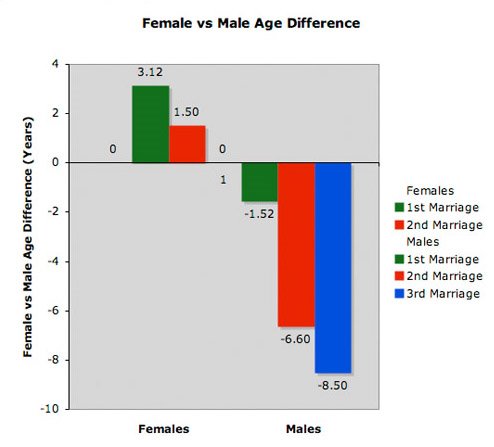
Among those who have divorced, there is a striking asymmetry between the ages and reproductive successes of females and males. That is, males remarry approximately twice as often as females, and have significantly more children than females who do not remarry. Furthermore, the average age difference between females and males decreases in females with second marriages (from about three years to a year and a half), whereas the age differences between females and males increases dramatically in males with second and subsequent marriages (from about a year and a half to greater than eight years):


in other words, when females remarry (which they do much less often than males), they marry a male closer to their age than their first husband. By contrast, when males remarry, (which they do several times, according to my study), they marry a female significantly younger than they are, and this difference increases with each subsequent marriage.

More interesting still is the differences in the number of children per individual:


Females have an average of 1.74 offspring with their first husbands, but only 0.03 with their second (in my study, the number of females marrying more than twice was too small to include in the sample). By contrast, males who have 1.73 offspring with their first wives, have 0.30 offspring with their second wives (i.e. ten times as many), and 0.03 offspring with their third wives (again, the number of males marrying more than three times was too small to include in my study).

What does all this mean? If one considers cumulative numbers of offspring, it means that males who divorce and remarry have almost twice the overall reproductive success of females who do so:


This asymmetry is striking, and argues very strongly for a biologically based cause for the differences in mating patterns in females and males.

I should hasten to add that I haven't submitted the results of this study for publication yet. One problem with it as it currently stands is that the sample size (less than 300 individuals so far) isn't large enough to draw definite conclusions about American society as a whole. Furthermore, as several people who have seen the data have pointed out, my figures seriously underestimate the degree to which such asymmetries may actually exist. The reason for this underestimate is that (for practical reasons having to do mostly with ease of data collection) I have limited my analysis to legal marriages and divorces. As most people are aware, the frequency of cohabitation in the United States is very large and still growing. If I were to include "extra-legal relationships" and breakups, and include the data from those that result in the production of offspring, I'm fairly confident that the patterns I've found so far would be even more significant.

So, what are we to conclude from all this? Several things:
• The "undermining" of traditional marriage has been done by married people, not gays nor polygamists
• The average person in America is already a de facto polygamist
• The political movement to legalize polygamy, like the movement to legalize gay marriage, will continue to grow as more and more people realize the logic of the movement and its application to their own lives

It is clear to me that we will not return to the "golden age" of traditional heterosexual monogamy, not as long as people are allowed to live their lives in private without excessive governmental interference. Somewhere around the turn of the 20th century something changed in American life, something that set in motion the transition through which we are currently passing. That transition accelerated following the two world wars of the 20th century, and shows every sign of accelerating today. That we will eventually reach some new equilibrium in these behaviors is virtually certain. What that new equilibrium will be is anybody's guess.

Labels: , , , , ,

Monday, March 13, 2006

Evolutionary Psychology and Historical Contingency


AUTHOR: Nicholas Wade

SOURCE: New York Times Magazine

COMMENTARY: Allen MacNeill

I usually like Nicholas Wade's columns, but this one leaves me feeling uncomfortable. Read it, and then we'll talk:
"The Twists and Turns of History, and of DNA"

********************************************************************************

COMMENTARY:

Let's start with the very first paragraph:
East Asian and European cultures have long been very different, Richard E. Nisbett argued in his recent book "The Geography of Thought." East Asians tend to be more interdependent than the individualists of the West, which he attributed to the social constraints and central control handed down as part of the rice-farming techniques Asians have practiced for thousands of years.

Yes, I know, Ernst Mayr claimed that evolutionary biologists use "population thinking," but sweeping statements about whole groups of people are not generally what evolution is about. The most salient feature of natural populations of individual organisms is the fact that there are significant differences between those individuals. It is precisely such differences that provide the raw material for natural selection. As R. A. Fisher first pointed out, natural selection requires traits that display "continuous variation:" that is, a normal distribution of values for whatever trait is under consideration. For example, if beak size in finches is to undergo natural selection, there must a normal distribution of beak sizes from small to large, with a peak prevalence at some intermediate value.

So where does this leave us? Is "interdependence" the trait being selected for in the article under discussion? If so, I'm extremely skeptical. How would "interdependence" be mediated, at the level of biological processes that could be related to changes in allele frequencies or modifications of developmental pathways? These, after all, are the mechanisms that must be modified for biological evolution to occur, and especially if a biological adaptation is to evolve via natural selection.

True, the article does go on to suggest that there is empirical evidence that selection is happening:
Humans have continued to evolve throughout prehistory and perhaps to the present day, according to a new analysis of the genome reported last week by Jonathan Pritchard, a population geneticist at the University of Chicago.

Fine, so far: what Pritchard & Co. have found are segments of DNA (i.e. "genes") whose frequencies in different populations have changed in ways that are consistent with what one would expect as the result of natural selection. But then comes the punchline:
So human nature may have evolved as well.

It's like that famous Sidney Harris cartoon: "And then a miracle happens..." The logical step from changes in allele frequencies in the human genome to changes in "human nature" is one for which no empirical evidence is presented, and for which such evidence may be impossible to obtain.

Why is this important? Wade goes on to note:
Evolutionary changes in the genome could help explain cultural traits that last over many generations as societies adapted to different local pressures. Trying to explain cultural traits is, of course, a sensitive issue. The descriptions of national character common in the works of 19th-century historians were based on little more than prejudice. Together with unfounded notions of racial superiority they lent support to disastrous policies.

What disasterous policies? Well, those of the Nazis during World War II, for starters. Ascribing "general characteristics" to "societies" is precisely what the Nazis did. Jews as a group were venal, grasping, self-interested, conniving, dishonest, etc. etc. No matter that individual Jews might express such traits to varying degrees; what mattered in Nazi racial policy was the "biological" traits of whole groups of people.

Wade gives a nod to this caveat:
...the concept of national character could turn out to be not entirely baseless, at least when applied to societies shaped by specific evolutionary pressures.

Indeed. Is there any biological sense in calling "national character" an adaptation? Even the question seems laughable, and the answer is, of course, no. Evolutionary biologists can't actually agree on what constitutes an adaptation; if they could, no one would have read nor given any credence to Lewontin and Gould's famous "spandrels" paper. Evolutionary biologists with a proven track record, like Lynn Margulis (of "serial endosymbiosis" fame) have railed against the "pan-adaptationism" of most evolutionary biologists. Furthermore, the work of Jukes, Kimura, Ohta, and others have shown that the vast majority of DNA (and many of the proteins for which it codes) have evolved via "neutral" mechanisms that produce nothing like adaptations in the classical sense.

So, is there anything to this report beyond the recapitulation of long-ago discredited social prejudice? Let's see:
In a study of East Asians, Europeans and Africans, Dr. Pritchard and his colleagues found 700 regions of the genome where genes appear to have been reshaped by natural selection in recent times. In East Asians, the average date of these selection events is 6,600 years ago. Many of the reshaped genes are involved in taste, smell or digestion, suggesting that East Asians experienced some wrenching change in diet. Since the genetic changes occurred around the time that rice farming took hold, they may mark people's adaptation to a historical event, the beginning of the Neolithic revolution as societies switched from wild to cultivated foods.

In other words, the frequencies of certain regions of the genome have changed out of synch with other regions. The inference, therefore, is that the altered regions (e.g. "genes") have changed in frequency as the result of natural selection. So far, I have no problem with this. But look at what these genes/regions code for: physiological processes, virtually all of them mediated by enzymes or regulatory proteins of some kind (i.e. taste, smell, digestion, etc.) No problem: genes do, indeed, code for proteins, and therefore there is nothing particularly controversial about inferring that the non-conserved regions identified by Pritchard & Co. have evolved as the result of selection for altered diet, etc.

But can one then extrapolate from resultsand inferences like these to "national character?" Consider:
Some of the genes are active in the brain and, although their role is not known, may have affected behavior. So perhaps the brain gene changes seen by Dr. Pritchard in East Asians have some connection with the psychological traits described by Dr. Nisbett.

Now hold one, here: how do you get from changes in allele frequencies to changes in behavior? E. O. Wilson cautioned that we can't do this until the architecture of the brain can be broken down and its relationship to behavior studied in detail. Are we at that point? Hardly; cognitive psychologists can't even agree on how "thoughts" are related to behavior. Wade states this uncertainty clearly: "...their role is not known..." Exactly.

So can we make confident statements about changes in alleles being related to changes in "national character?" I don't think so, but clearly other folk do:
Some geneticists believe the variations they are seeing in the human genome are so recent that they may help explain historical processes. "Since it looks like there has been significant evolutionary change over historical time, we're going to have to rewrite every history book ever written," said Gregory Cochran, a population geneticist at the University of Utah. "The distribution of genes influencing relevant psychological traits must have been different in Rome than it is today," he added. "The past is not just another country but an entirely different kind of people."

Yeah, but do you rewrite the history books before or after you've shown the actual connections between the alleles and the relevent behaviors? And even when you do this (assuming you can), do you then extrapolate from that to "national character?" Not unless you believe that individual variations in "character" amount to virtually nothing.

But natural selection acts primarily at the level of individuals, or so the overwhelming majority of evolutionary biologists from Charles Darwin to G. C. Williams have asserted. Yes, Hamilton's "kin selection" seems to displace the focus of selection from individuals to their shared alleles, but in the real world it is still individual organisms that live and die, reproduce or fail to, and therefore remain the ultimate locus of action of natural selection.

But the article suggests that these recent findings might provide a kind of Seldonian theory of "psychohistory" by means of which we could understand and even predict the behavior of human groups (a la Isaac Asimov's Foundation series). In science fiction, that's fine, but we're talking about science here. The problem with historical processes is that they are stubbornly resistant to mathematicization. You can't formulate an equation that describes (much less predicts) something like the fall of the Roman Empire or the invention of gunpowder. In an earlier posting to this list, I pointed out that historical contingency is the root of the problem of macroevolutionary theory, in that historical events by definition can't be described nor predicted by mathematical models.

Isn't that exactly the unstated assumption what underlies statements like these? Seems so to me:
John McNeill [no relation, BTW], a historian at Georgetown University, said that "it should be no surprise to anyone that human nature is not a constant" and that selective pressures have probably been stronger in the last 10,000 years than at any other epoch in human evolution. Genetic information could therefore have a lot to contribute, although only a minority of historians might make use of it, he said.

The only way in which "genetic information" could contribute to an understanding of human history would be if:
1) there is a one-to-one correlation between genes and human behaviors,
2) there is a one-to-one correlation between sets of genes and "national characters",
3) individual differences within "societies" are swamped by the "national character" of such societies, and
4) the contingency that seems to affect historical processes can be shown to be entirely reducible to the foregoing.

Does anyone anywhere suggest that we are even remotely close to demonstrating any of these conditions? If so, I want to know where such results have been peer-reviewed and published. All I've seen so far is a lot of airy hypothesis spinning.

But wait, it gets weirder:
The political scientist Francis Fukuyama has distinguished between high-trust and low-trust societies, arguing that trust is a basis for prosperity. Since his 1995 book on the subject, researchers have found that oxytocin, a chemical active in the brain, increases the level of trust, at least in psychological experiments. Oxytocin levels are known to be under genetic control in other mammals like voles. It is easy to imagine that in societies where trust pays off, generation after generation, the more trusting individuals would have more progeny and the oxytocin-promoting genes would become more common in the population. If conditions should then change, and the society be engulfed by strife and civil warfare for generations, oxytocin levels might fall as the paranoid produced more progeny.

Notice that key phrase: It's easy to imagine... Indeed it is. Doing real science is hard work. So far, I don't see any evidence of it having been done, here. True, some people have done a lot of field work on human behavior:
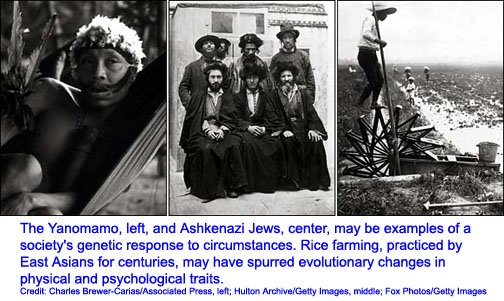
Napoleon Chagnon for many decades studied the Yanomamo, a warlike people who live in the forests of Brazil and Venezuela. He found that men who had killed in battle had three times as many children as those who had not. Since personality is heritable, this would be a mechanism for Yanomamo nature to evolve and become fiercer than usual.

But Chagnon's work shows quite explicitly that the patterns of behavior he has described can be explained by natural selection at the level of individuals. That's precisely what Chagnon's point was about unokais (the men who had killed other men in battle): their reproductive success could be directly linked to their behavior in a way that supported the concept of individual selection. That is, most individual Yanomami men are "fierce" because they are the offspring of individual men who were "fierce." "Fierceness," therefore, is a trait of individual Yanomami men, and only secondarily (and by analogy) of Yanomamo society.

All of the foregoing seems to me to be arguing that "societies" have "genomes," and that changes in those genomes can be directly linked to changes in those societies. In the following quote, a tendency to confuse the "genomes" of individuals and groups becomes glaringly obvious, at least to me:
Since the agricultural revolution, humans have to a large extent created their own environment. But that does not mean the genome has ceased to evolve. The genome can respond to cultural practices as well as to any other kind of change. Northern Europeans, for instance, are known to have responded genetically to the drinking of cow's milk, a practice that began in the Funnel Beaker Culture which thrived 6,000 to 5,000 years ago. They developed lactose tolerance, the unusual ability to digest lactose in adulthood. The gene, which shows up in Dr. Pritchard's test, is almost universal among people of Holland and Sweden who live in the region of the former Funnel Beaker culture.

But societies can't have genomes; only individuals do. There is a distressing tendency these days to equate the genome of individuals with the elements that are shared between individuals in "societies" (i.e. reproductively panmictic populations). When people make this equation, they are in effect reinventing Platonic idealism in its most pernicious form. The "national character" becomes the "ideal form" which is coded for by the "genome" of the society, and along the way all individual differences (the raw material upon which all selection depends) are brushed aside.

And finally, of course, the Jews are explicitly mentioned:
The most recent example of a society's possible genetic response to its circumstances is one advanced by Dr. Cochran and Henry Harpending, an anthropologist at the University of Utah. In an article last year they argued that the unusual pattern of genetic diseases found among Ashkenazi Jews (those of Central and Eastern Europe) was a response to the demands for increased intelligence imposed when Jews were largely confined to the intellectually demanding professions of money lending and tax farming. Though this period lasted only from 900 A.D. to about 1700, it was long enough, the two scientists argue, for natural selection to favor any variant gene that enhanced cognitive ability.

One theme in their argument is that the variant genes perform related roles, which is unlikely to happen by chance since mutations hit the genome randomly. A set of related mutations is often the mark of an evolutionary quick fix against some sudden threat, like malaria. But the variant genes common among the Ashkenazi do not protect against any known disease. In the Cochran and Harpending thesis, the genes were a response to the demanding social niche into which Ashkenazi Jews were forced and the nimbleness required to be useful to their unpredictable hosts.

And then comes the kicker:
No one has yet tested the Cochran-Harpending thesis, which remains just an interesting though well worked out conjecture. But one of its predictions is that the same genes should be targets of selection in any other population where there is a demand for greater cognitive skills. That demand might have well have arisen among the first settled societies where people had to deal with the quite novel concepts of surpluses, property, value and quantification. And indeed Dr. Pritchard's team detected strong selection among East Asians in the region of the gene that causes Gaucher's disease, one of the variant genes common among Ashkenazim.

That is, all we have here is a correlation between alleles, traits at the level of individuals, and a suggested correlation with "societal" traits. But as every good scientist knows, correlation is not proof of causation. On the contrary, valid arguments for causation always rely on analysis of mechanisms, and here the foregoing studies are completely mute. There are no actual mechanisms by which the correlations can be shown to have worked. Indeed, how exactly would one test the "Cochran-Harpending thesis" other than to collect more data supporting the suggested correlation?

I call myself an evolutionary psychologist, and must admit that I have suggested hypotheses such as those described in this article. But, when I have done so, I have tried to be careful to emphasize that what I have been doing is suggesting a hypothesis, not validating a theory. It may be that E. O. Wilson is correct and that we may have to wait until we can show the connections between alleles, neural circuitry, behaviors, and social patterns. If so, I'd rather wait than have our theories co-opted by yet another totalitarian regime bent on the "improvement" of our "national character."

--Allen

********************************************************************************
ORIGINAL PUBLICATION REFERENCE:

Location Online: New York Times
URL: http://www.nytimes.com/2006/03/12/weekinreview/12wade.html?_r=1&oref=slogin

Original posting/publication date timestamp:
Published: March 12, 2006

Labels: , , , ,

Monday, March 06, 2006

The Reinvention Of The Self


AUTHOR: Jonah Lehrer

SOURCE: Seed Magazine

COMMENTARY: Allen MacNeill (following the excerpt)

It has been received dogma for about a century that our cognitive potential (i.e. our "intelligence") is essentially fixed at birth or shortly thereafter, and that whatever debate has swirled around this topic has had primarily to do with how much influence very early environmental conditions have on our "innate" intelligence. What Gould's work shows is that the primate brain is continuously remodeled throughout life, in response to shifting environment pressures:

********************************************************************************
EXCERPT:

Eight years after Gould defied the entrenched dogma of her science and proved that the primate brain is always creating new neurons, she has gone on to demonstrate an even more startling fact: The structure of our brain, from the details of our dendrites to the density of our hippocampus, is incredibly influenced by our surroundings. Put a primate under stressful conditions, and its brain begins to starve. It stops creating new cells. The cells it already has retreat inwards. The mind is disfigured.

The social implications of this research are staggering. If boring environments, stressful noises, and the primate’s particular slot in the dominance hierarchy all shape the architecture of the brain—and Gould’s team has shown that they do—then the playing field isn’t level. Poverty and stress aren’t just an idea: they are an anatomy. Some brains never even have a chance.

********************************************************************************

But it isn't all bad news; the process can go the other way, as well, making new pathways and connections:

********************************************************************************
EXCERPT:

Chronic stress, predictably enough, decreases neurogenesis. As Christian Mirescu, one of Gould’s post-docs, put it, “When a brain is worried, it’s just thinking about survival. It isn’t interested in investing in new cells for the future.”

On the other hand, enriched animal environments—enclosures that simulate the complexity of a natural habitat—lead to dramatic increases in both neurogenesis and the density of neuronal dendrites, the branches that connect one neuron to another. Complex surroundings create a complex brain.

********************************************************************************

To understand how revolutionary this finding is, consider the following statements about this process from the pre-eminent researcher in this field twenty years ago:

********************************************************************************
EXCERPT:

“All neurons of the rhesus monkey brain are generated during pre-natal and early post-natal life,” Rakic wrote in his 1985 paper, “Limits of Neurogenesis in Primates.” “Not a single” new neuron “was observed in the brain of any adult animal.” While Rakic admitted that his proof was limited, he persuasively defended the dogma. He even went so far as to construct a plausible evolutionary theory as to why neurons can’t divide: Rakic imagined that at some point in our distant past, primates had traded the ability to give birth to new neurons for the ability to retain plasticity in our old neurons. According to Rakic, the “social and cognitive” behavior of primates required the absence of neurogenesis. His paper, with its thorough demonstration of what everyone already believed, seemed like the final word on the matter. No one bothered to verify his findings.

********************************************************************************

And Gould's findings have political and economic implications:

********************************************************************************
EXCERPT:

Gould’s research inevitably conjures up comparisons to societal problems. And while Gould, like all rigorous bench scientists, prefers to focus on the strictly scientific aspects of her data—she is wary of having it twisted for political purposes—she is also acutely aware of the potential implications of her research.

“Poverty is stress,” she says, with more than a little passion in her voice. “One thing that always strikes me is that when you ask Americans why the poor are poor, they always say it’s because they don’t work hard enough, or don’t want to do better. They act like poverty is a character issue.”

Gould’s work implies that the symptoms of poverty are not simply states of mind; they actually warp the mind. Because neurons are designed to reflect their circumstances, not to rise above them, the monotonous stress of living in a slum literally limits the brain.

********************************************************************************

That the architecture of the brain actually changes over time should not come as a complete surprise. Neuroscientists have known for a while that synapses can change, for example as the result of antidepressant drugs:

********************************************************************************
EXCERPT:

For the last 40 years, medical science has operated on the understanding that depression is caused by a lack of serotonin, a neurotransmitter that plays a role in just about everything the mind does, thinks or feels. The theory is appealingly simple: sadness is simply a shortage of chemical happiness. The typical antidepressant—like Prozac or Zoloft—works by increasing the brain’s access to serotonin. If depression is a hunger for neurotransmitter, then these little pills fill us up.

Unfortunately, the serotonergic hypothesis is mostly wrong. After all, within hours of swallowing an antidepressant, the brain is flushed with excess serotonin. Yet nothing happens; the patient is no less depressed. Weeks pass drearily by. Finally, after a month or two of this agony, the torpor begins to lift.

But why the delay? If depression is simply a lack of serotonin, shouldn’t the effect of antidepressants be immediate?

The paradox of the Prozac lag has been the guiding question of Dr. Ronald Duman’s career....When Duman began studying the molecular basis of antidepressants back in the early 90s, the first thing he realized was that the serotonin hypothesis made no sense. A competing theory, which was supposed to explain the Prozaz lag, was that antidepressants increase the number of serotonin receptors. However, that theory was also disproved. “It quickly became clear that serotonin wasn’t the whole story,” Duman says. “Our working hypothesis at the time just wasn’t right.”

But if missing serotonin isn’t the underlying cause of depression, then how do antidepressants work? As millions will attest, Prozac does do something. Duman’s insight, which he began to test gradually, was that a range of antidepressants trigger a molecular pathway that has little, if anything, to do with serotonin. Instead, this chemical cascade leads to an increase in the production of a class of proteins known as trophic factors. Trophic factors make neurons grow. What water and sun do for trees, trophic factors do for brain cells. Depression was like an extended drought: It deprived neurons of the sustenance they need.

Duman’s discovery of a link between trophic factors and antidepressant treatments still left the essential question unanswered: What was causing depressed brains to stop producing trophins? Why was the brain hurting itself? It was at this point that Duman’s research intersected the work of Robert Sapolsky and Bruce McEwen (Gould’s advisor at Rockefeller), who were both studying the effects of stress on the mammalian brain. In an influential set of studies, Sapolsky and McEwen had shown that prolonged bouts of stress were devastating to neurons, especially in the hippocampus. In one particularly poignant experiment, male vervet monkeys bullied by their more dominant peers suffered serious and structural brain damage. Furthermore, this neural wound seemed to be caused by a decrease in the same trophic factors that Duman had been studying. From the perspective of the brain, stress and depression produced eerily similar symptoms. They shared a destructive anatomy.

Just as Duman was beginning to see the biochemical connections between trophins, stress, and depression, Gould was starting to document neurogenesis in the hippocampus of the primate brain. Reading Altman’s and Kaplan’s papers, Gould had realized that her neuron-counting wasn’t erroneous: She was just witnessing an ignored fact. The anomaly had been suppressed. But the final piece of the puzzle came when Gould heard about the work of Fernando Nottebohm, who was, coincidentally, also at Rockefeller. Nottebohm, in a series of beautiful studies on birds, had showed that neurogenesis was essential to birdsong. To sing their complex melodies, male birds needed new brain cells. In fact, up to 1% of the neurons in the bird’s song center were created anew, every day.

********************************************************************************
EXCERPT:

Perhaps the time lag of antidepressants was simply the time it took for new cells to be created....In December 2000, Duman’s lab published a paper in the Journal of Neuroscience demonstrating that antidepressants increased neurogenesis in the adult rat brain. In fact, the two most effective treatments they looked at—electroconvulsive therapy and fluoxetine, the chemical name for Prozac—increased neurogenesis in the hippocampus by 75% and 50%, respectively. Subsequent studies did this by increasing the exact same molecules, especially trophic factors, that are suppressed by stress.

Duman was surprised by his own data. Fluoxetine, after all, had been invented by accident. (It was originally studied as an antihistamine.) “The idea that Prozac triggers all these different trophic factors that ultimately lead to increased neurogenesis is just totally serendipitous,” Duman says. “Pure luck.”

********************************************************************************
EXCERPT:

Several major drug companies and a host of startups are now frantically trying to invent the next generation of antidepressants (a $12-billion-a-year business). Many expect these future drugs to selectively target the neurogenesis pathway. If these pills are successful, they will be definitive proof that antidepressants work by increasing neurogenesis. Depression is not simply the antagonist of happiness. Instead, despair might be caused by the loss of the brain’s essential plasticity. A person’s inability to change herself is what drags her down.

********************************************************************************
COMMENTARY:

It would be difficult to overemphasize how revolutionary Gould's findings are to the fields of evolutionary psychology and psychology in general. That we had a limited ability to do this has been increasingly recognized over the past two decades, as neuroscientists discovered that new synapses could be formed, not just by altering the quantities of neurotransmitters released by existing synapses, but also by building new receptors or eliminating existing ones. However, until this new work by Gould and her colleagues, it was assumed that the underlying neural architecture of the brain was essentially predetermined by genetics, and that all the environment could do was to downgrade that architecture as a result of malnutrition, under-stimulation, and other environmental injuries and insults.

Now, however, it looks like the brain can be remodeled throughout life, with whole new neurons being added along with multiple synapses, thereby fundamentally altering the cognitive potential of individuals throughout life. In other words, the nervous system is much more plastic than heretofore suspected, and can therefore respond much more robustly to environmental changes, in both positive and negative directions.

This discovery has political ramifications, as well as scientific ones. Programs like Head Start and other early educational "interventions" have all been premised on the idea that such remediation only works if instituted very early in development, and even then probably have little effect. However, if the architecture of our brains is modifiable throughout life, it may be possible to successfully intervene at nearly any stage of cognitive development. Therefore, withholding such intervention as the result of economic or political exigencies becomes even more egregious than it is at present.

As far as evolutionary psychology is concerned, it would seem on reflection that discoveries like these make perfect evolutionary sense. Primates are known for our behavioral plasticity; it's our most obvious (and most valuable) adaptive trait. Finding out that this plasticity goes all the way down to the neural architecture itself shouldn't be that surprising. However, it does cast even more doubt on the "hard inheritance" stance of people like Herrnstein, Murray, et al, and even the "hard hereditarian" position of E. O. Wilson and other "genetic sociobiologists." If Gould's findings hold up, and even moreso if they are expanded, it seems as though the environmental plays an even more important role in altering primate behavior and "intelligence" than formerly thought.

And so the pendulum swings again...

--Allen

********************************************************************************
ORIGINAL PUBLICATION REFERENCE:

Location Online: Seed Magazine
URL: http://www.seedmagazine.com/news/2006/02/the_reinvention_of_the_self.php

Original posting/publication date timestamp:
February 23, 2006 12:37 AM

Labels: , , , , ,