AUTHOR:
Larry ArnhartSOURCE:
Darwinian ConservatismCOMMENTARY:
Allen MacNeill (following the excerpt)
Larry Arnhart has written an incisive commentary on the relationship between Platonic philosophy and "intelligent design theory." Here's the core of his argument:
**********************************************************************************
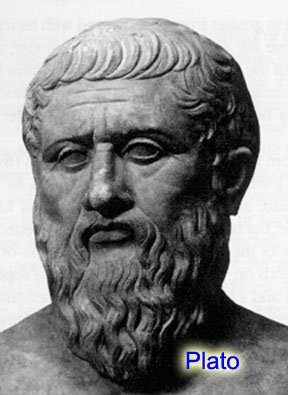
In Plato's dialogue, the Athenian character warns against those natural philosophers who teach that the ultimate elements in the universe and the heavenly bodies were brought into being not by divine intelligence or art but by natural necessity and chance. These natural philosophers teach that the gods and the moral laws attributed to the gods are human inventions. This scientific naturalism appeared to subvert the religious order by teaching atheism. It appeared to subvert the moral order by teaching moral relativism. And it appeared to subvert the political order by depriving the laws of their religious and moral sanction. Plato's Athenian character responds to this threat by developing the reasoning for the intelligent design position as based on four kinds of arguments: a scientific argument, a religious argument, a moral argument, and a political argument.
His scientific argument is that the complex, functional order of the cosmos shows an intentional design by an intelligent agent that cannot be explained through the unintelligent causes of random contingency and natural necessity. His religious argument is that this intelligent designer must be a disembodied intelligence, which is God. His moral argument is that this divine designer is a moral lawgiver who supports human morality. His political argument is that to protect the political order against scientific atheism and immorality, lawgivers must promote the teaching of intelligent design as the alternative to scientific naturalism. Two thousand years later, William Jennings Bryan developed these same four arguments for intelligent design as superior to Darwinian naturalism. Recent intelligent design proponents such as Phillip Johnson, Michael Behe, and Bill Dembski have elaborated these same four arguments.
**********************************************************************************
COMMENTARY:
I think that Arnhart is right on the money, here. I have already written about the connection between Platonic philosophy and "intelligent design." Here's what I wrote:
**********************************************************************************
To
Plato, the world of nature that we can perceive with our senses is not “reality” at all. Instead, the truest reality can only be found in what Plato called “ideal forms.” These were essentially ideas or concepts that were related to actual, natural objects, but existed in the mind rather than in nature. Who's mind? To Plato, the ideal forms ultimately existed in the mind of a supernatural entity or entities, which he often equated with the Greek gods or with a creator he referred to as the “demiurge”.
Plato's clearest expression of this relationship between natural objects and ideal forms is contained in the
Phaedo, which Plato presents as a record of a discussion between
Socrates and several of his followers on the day of his execution. In the
Phaedo, Socrates (and, by extension, Plato) argues that the natural objects and processes we observe around us are crude reflections of an underlying ideal reality, one that does not exist in the natural world. He argues that most people perceive these ideal forms dimly if at all. However, philosophers should dedicate their lives to identifying these ideal forms or “essences”, and demonstrating their reality to others.
This philosophical worldview has been called
essentialism, because it emphasizes the “essences” of things, rather than their differences. Central to this worldview is the idea that such “essences”, including the human soul, are eternal and unchanging. In the Platonic worldview, the most “real” things - the “essences” - cannot be perceived with the senses at all, but only with the mind, imperfect as it might be in any individual person. Whereas, in the worldview of the natural sciences, and especially
naturalism, only natural objects and processes that can be either directly sensed or inferred indirectly from sensory observation are assumed to exist - to be “real”.
Notice here, too, the emphasis on the unchanging, eternal quality of the “essences”, as opposed to natural objects and processes. Natural phenomena (i.e. the non-essential) are always changing, but “real” phenomena are not. Here we see the root of the opposition between the evolutionary worldview - one based on continuous change in nature - and the Platonic worldview - one based on unchanging, timeless, and universal “essences”.
The Platonic essentialist worldview largely replaced the earlier
Ionian naturalist worldview, partly because of the predominance of Athens and Athenian culture in the ancient Mediterranean world. This replacement had a serious and long-lasting effect on the development of the natural sciences in western culture. This was because Plato didn't restrict his essentialist doctrine to emotional or abstract philosophical ideals as implied in the
Phaedo, such as truth, beauty, and the human “soul”. In other dialogues and in his lectures, he applied the concept of “essences” to natural phenomena as well, arguing that all natural phenomena are imperfect representations of “ideal forms” that exist outside of nature. According to Plato, these “ideal forms” are universal and necessarily unchanging and unchangeable.
Plato also argued that the universe formed a complete and harmonious whole, in which any real change could only result in the annihilation of everything. As noted earlier, he also asserted that the ideal forms that participate in this harmony did not arise spontaneously from nature, but rather were originally created by a supernatural entity often translated as the “
demiurge”. Plato taught that the
demiurge created the universe and the ideal forms with a purpose in mind, and that all things (i.e. all “essences” and their imperfect representations) were therefore the product of a preexisting plan. Finally, Plato argued for the existence of a human soul, which cannot be perceived with the senses at all, but which is the “real essence” of each person.
**********************************************************************************
This is why I have asserted that Darwin's most "dangerous" idea was his recognition of the reality of the variations that exist between individuals in populations. This variation is produced by various genetic processes, including mutation, recombination, and developmental/phenotypic plasticity, and is the source of all evolutionary innovations (i.e. it is the "creative force" in evolution). Natural selection simply weeds out all of the variations that don't work, and preserves the ones that do (which is why Darwin wanted to call this process "natural preservation", but the term "natural selection" had already gotten stuck to the process).
But to Plato (and his most important student, Aristotle) the variations don't matter; it is the "ideal form" of which those variations are only imperfect representations that really matters. That is, the variations aren't "real," and so for almost three centuries they were ignored. Furthermore, since the "ideal forms" are eternal and unchanging, things like species are as well. Indeed, I believe that the concept of biological species can be traced back directly to Plato's "ideal forms," and that this explains much of the resistance to Darwin's theory. In essence, Darwin argued in the
Origin of Species that species aren't fixed entities, but rather can change over time. Furthermore, this change is "real," implying that the variant forms upon which such change depends are "real" as well. Darwin doesn't take his ideas to their logical conclusion, however: that "species" are purely figments of the human imagination (especially as trained in Platonic philosophy, as all of us are).
To believe that "species" don't really exist in nature, and that the only "real" entities in biology are individual organisms is pretty radical stuff. Most taxonomists would bristle at the very suggestion. However, this idea has a long and honorable pedigree as well; it is a variety of
nominalism, a philosophical position often said to have been founded by
William of Ockham (of "
Occam's Razor" fame). Nominalism directly challenges the fundamental basis of Platonic philosophy in the same way that darwinism challenges it in biology. In the long run, I believe that the paradigm shift to the darwinian worldview has been and will continue to be the most important one since the founding of Platonic philosophy (and therefore of the dominant position in western philosophy).
--
Allen**********************************************************************************
ORIGINAL PUBLICATION REFERENCE:
Location Online:
Darwinian ConservatismURL: http://darwinianconservatism.blogspot.com/2006/02/leo-strauss-darwinian-natural-right.html
Original posting/publication date timestamp:
Saturday, February 25, 2006
Labels: culture war, design, design in nature, formal cause, ideal form, idealism, intelligent design, Plato, Platonic realism