Wednesday, April 08, 2009

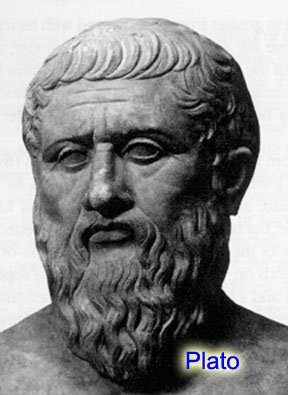
Platonic Ideal Forms Versus Evolutionary Developmental Biology


In a recent thread at Uncommon Descent,
Salvador Cordova
wrote:
"[The existence of] platonic forms would strongly suggest that [evolutionary] transitional [form]s don’t exist. And if there are only lawful morphological forms, transitional forms, even in principle, couldn’t exist. Transitional forms and Platonic Forms don’t fit well together in any theory. It appears the two are mutually exculsive.

In engineering we have many platonic forms. As engineers we are taught to recognize and implement certain canned architectures. A lot of systems biology is mapping biological forms to the forms engineers recognize.

[The] quest for “correct designs” ... makes sense in a world of ideal forms, platonic forms. We instinctively have platonic forms in our mind. We have a sense that a defect is a defect, that an error is an error.

In the Darwinian world, it’s all about selective advantage. A blind cave fish is “selectively advantaged”. Defect is only a relative term. However in the eyes of plato, a blind cave fish is less than the ideal, it is a broken form. In such case, natural seleciton helped to infuse the defect in the population and thus introduce a defect that is not consistent with the ideal pattern.

The notion of platonic forms does not seem to be compatible with Darwinian evolution. [Emphasis added]

The idea of Platonic ideal forms in biology is an old one. The now mostly defunct tradition of orthogenesis is essentially a version of Platonic ideal forms applied to biology (and an argument can also be made that Lamarck’s progressive theory of evolution by means of the inheritance of acquired characteristics is as well). However, and contrary to what some might expect, applying the concepts of orthogenesis to "intelligent design theory" ("ID") is problematic, because in its early 20th century form, orthogenesis was considered to be progressive, but not goal oriented (i.e. teleological).

In addition to the early orthogenesists, two other names stand out in this tradition: D’Arcy Thompson and Stephen Jay Gould. Both were primarily concerned with the origin and evolution of form, and both developed theories of evolution based on this. Even J.B.S. Haldane (one of the founders of the “modern evolutionary synthesis”) wrote in this tradition in his essay "On Being the Right Size". Haldane’s musings on the relationship between size and constraints on form have become known as “Haldane’s Principle”, and have recently been applied to urban planning.

The newly emerging science of evolutionary developmental biology (”evo-devo”) has some similarities to orthogenesis, especially insofar as both are attempts to explain why the evolution of overall form (i.e. phenotype) appears to be constrained to certain types of forms, rather than all possible forms. The orthogenesists asserted that there are certain forms that are much more likely than others. These forms are similar in some ways to Platonic forms, in that there is no necessarily materialistic explanation for the predominance of certain forms, at least according to the theory of orthogenesis.

Evo-devo explains the similarities within “formal types” with reference to shared developmental programs, especially among eukaryotes. This shared developmental programming is based on the hierarchical gene regulation systems, most of which are based on homeotic gene regulatory mechanisms. Similar developmental constrains appear to exist among plants and fungi, but not so much among prokaryotes and multicellular protists. So, looking for things that resemble Platonic ideal forms in biology will probably involve identifying and categorizing the various developmental “channels” which are produced by these homeotic gene regulatory systems.

None of this, of course, says how the various hierarchical gene regulation systems originally evolved. This is another of those “deep time” problems, such as the origin of life and the origin of the genetic code. As I have commented repeatedly in the past, I believe that questions about such origins are almost certainly unanswerable using current empirical methods.

I also personally believe that the question of the origin of Platonic ideal forms (if such things exist and are empirically distinguishable from the various “channels” produced by the action of homeotic gene regulatory mechanisms) is both an open question and one that is almost certainly not answerable using empirical methods.

For more on the question of Platonic forms in biology, see this and this.

For a critique of my analysis of Platonic ideal forms in biology, see this.

************************************************

As always, comments, criticisms, and suggestions are warmly welcomed!

--Allen

Labels: , , , , , , , ,

Wednesday, January 07, 2009

Natural Theology, Theodicy, and The Name of the Rose


AUTHOR: Allen MacNeill

SOURCE: Original essay

COMMENTARY: That's up to you...
"Before, we used to look to heaven, deigning only a frowning glance at the mire of matter; now we look at the earth, and we believe in the heavens because of earthly testimony."
- Jorgé of Burgos, The Name of the Rose, by Umberto Eco (William Weaver, translator)

It's a new year and a new administration (in more ways than one), and over at Uncommon Descent (the former weblog of mathematician and theologian William Dembski), social epistemologist and "intelligent design" apologist Steve Fuller has begun a series of posts on the subject of theodicy.

I read his first post on the subject with some interest, as I have just finished re-reading (for the fifth time) Umberto Eco's novel, The Name of the Rose. When I was a kid, it was inconceivable to me that a person could re-read a book. That was like seeing a movie over again; it just never happened. But now I often re-read books, and any movie or television show can be viewed as many times as one can possibly stand it.

One of the reasons I re-read books is that I've found that I often discover new things in the book on re-reading. What I had never noticed before about The Name of the Rose is that one of its main themes is the relationship between empirical evidence (that is, evidence that we can observe, either directly or indirectly) and faith, as exemplified by the epigram for this blogpost.

What Jorgé of Burgos (a thinly veiled portrait of Jorgé Luis Borges) is speaking about is the relationship between empirical evidence and faith. He laments that in past times one's belief was entirely justified by faith, but now (in the 14th century) one's belief was grounded in empirical observation; that is, evidence derived from the observation of "base matter". Jorgé's theology, which could be called revealed theology, was based on scripture and religious experiences of various kinds (especially as portrayed in the Holy Bible and the biographies of the Christian saints).

The "new" way of thinking that Jorgé laments is natural theology, a branch of theology based on reason and ordinary experience, according to which the existence and intentions of God are investigated rationally, based on evidence from the observable physical world. Natural theology has a long history, reaching back to the Antiquitates rerum humanarum et divinarum of Marcus Terentius Varro (116-27 BC). However, for almost two millennia natural theology was a minority tradition in Christian theology.

The replacement of revelation theology by natural theology represents a fundamental shift in the the theological basis of belief in the existence of God, which began in the 1st century BCE, but which reached the tipping point in the early 19th century. In 1802 the Reverend William Paley published Natural Theology: or, Evidences of the Existence and Attributes of the Deity, Collected from the Appearances of Nature. Charles Darwin himself praised Paley's work, and it had a profound effect on the direction of Christian theology, especially in England and America.

Paley's argument in Natural Theology is that one can logically infer the existence and attributes of God by the empirical study of the natural world (hence the name "natural" theology). Paley's famous argument of the "watch on the heath" was based on the idea that complex entities (such as a pocketwatch) cannot come about by accident, the way simple "natural" objects such as boulders do. Rather, Paley observes that a pocketwatch clearly has a purpose (i.e. to indicate the time) and is composed of a set of designed, complex, interactive parts (the gears, springs, hands, face, case, and crystal of the watch) which we know for a fact are designed. He then argues by means of analogy that living organisms are even more clearly purposeful entities that must have a designer.

I have already pointed out the weaknesses of arguments of analogy. I have also criticized Steve Fuller's arguments vis-a-vis "intelligent design theory" (see here as well).

What I want to do in this blogpost is to analyze Fuller's first blogpost at Uncommon Descent on "ID and the Science of God". Fuller begins with a recapitulation of the definition of "intelligent design" contained in the mission statement of Uncommon Descent:
ID is the the science of design detection — how to recognize patterns arranged by an intelligent cause for a purpose [emphasis added]

Fuller takes this definition quite seriously, arguing that the "intelligence" that does the designing in ID exists "outside of matter" (i.e. outside of the natural, physical universe). He then points out that this "intelligence" is "...a deity who exists in at least a semi-transcendent state. But then he poses the crucial question: "[H]ow can you get any scientific mileage from that?"

I would extend Fuller's question by turning it around: How can one get any theological mileage out of the idea that the existence and attributes of the deity can be inferred from observations of the natural, physical universe? This is precisely the program of natural theology, and it is the reason that I believe that natural theology is both intellectually bankrupt and ultimately destructive of belief in God. And, I am apparently not alone in this second belief; several of the comments on Fuller's post express essentially the same misgivings.

The problem here is the problem of theodicy. Fuller asserts that theodicy was originally a much broader topic than it is today. According to him,
Theodicy exists today as a boutique topic in philosophy and theology, where it’s limited to asking how God could allow so much evil and suffering in the world.

However, according to Fuller, theodicy once encompassed
"...issues that are nowadays more naturally taken up by economics, engineering and systems science – and the areas of biology influenced by them: How does the deity optimise, given what it’s trying to achieve (i.e. ideas) and what it’s got to work with (i.e. matter)? This broader version moves into ID territory, a point that has not escaped the notice of theologians who nowadays talk about theodicy. [emphasis in original]

Setting aside Fuller's historical analysis of the meaning(s) of theodicy (which I believe is both incorrect and the reverse of the actual historical evolution of the idea), I believe that Fuller gives Christians who still believe in the primacy of revelation over reason good reason to be concerned about the theological implications of ID:
"[Some theists are] uneasy about concepts like ‘irreducible complexity’ for being a little too clear about how God operates in nature. The problem with such clarity, of course, is that the more we think we know the divine modus operandi, the more God’s allowance of suffering and evil looks deliberate, which seems to put divine action at odds with our moral scruples. One way out – which was the way taken by the original theodicists – is to say that to think like God is to see evil and suffering as serving a higher good, as the deity’s primary concern is with the large scale and the long term.

I have pointed out in an earlier blogpost that this line of reasoning necessarily leads to the conclusion that God (i.e. the "intelligent designer" of ID theory) is a utilitarian Whose means are justified by His ends. As I have pointed out, this conclusion is both morally abhorrent and contrary to Christian doctrine. Fuller agrees, pointing out that "...religious thinkers complained about theodicy from day one":
"...a devout person might complain that this whole way of thinking about God is blasphemous, since it presumes that we can get into the mind of God – and once we do, we find a deity who is not especially loveable, since God seems quite willing to sacrifice His creatures for some higher design principle."

This was precisely my point in my earlier post, and it parallels Darwin's feeling about the more negative attributes of the deity.

However, Fuller takes a different tack in his analysis of theodicy:
"...it’s blasphemous to suppose that God operates in what humans recognise as a ‘rational’ fashion. So how, then, could theodicy have acquired such significance among self-avowed Christians in the first place...and...how could its mode of argumentation have such long-lasting secular effects...in any field [such as evolutionary theory] concerned with optimisation?

He then goes on to make essentially the same argument as that put forth by almost all ID supporters, an argument by analogy:
We tend to presume that any evidence of design is, at best, indirect evidence for a designer. But this is not how the original theodicists thought about the matter. They thought we could have direct (albeit perhaps inconclusive) evidence of the designer, too. Why? Well, because the Bible says so. In particular, it says that we humans are created in the image and likeness of God. At the very least, this means that our own and God’s beings overlap in some sense. (For Christians, this is most vividly illustrated in the person of Jesus.)

And how, precisely, is this an argument by analogy? Here it is:
The interesting question, then, is to figure out how much of our own being is divine overlap and how much is simply the regrettable consequence of God’s having to work through material reality to embody the divine ideas ‘in’ – or, put more controversially, ‘as’ — us. Theodicy in its original full-blooded sense took this question as its starting point. [emphasis added]

By "overlap" Fuller clearly means "analogy"; that is, how analogous is the "design" of nature (presumably brought about by the "intelligent designer", i.e. God) to human (and therefore divine) "design"? This inquiry, therefore, is based on the assumption that finding such analogies is prima facie proof that "design" in nature is the result of "intelligence" (and therefore, by extension, "divine intelligence").

But, as any undergraduate in elementary logic has learned, arguments by analogy alone are not valid evidence for anything. This is because there is nothing intrinsic to analogies that can allow us to determine their validity. As I have pointed out in an earlier blogpost, all analogies are false to some degree: the only "true" analogy to a thing is the thing itself.

Fuller lists four reasons why theodicy became important at about the same time as natural theology. These are:
• that the widespread publication of the Holy Bible not only facilitated the rise of Protestantism, it also made possible "individual confirmation" of one's "overlap" (i.e. analogy) with the deity;

• that "...theodicists...read the Bible as the literal yet fallible word of God. There is scope within Christianity for this middle position because of known problems in crafting the Bible, whose human authorship is never denied...."

• that "...theodicists...claimed legitimacy from Descartes, whose ‘cogito ergo sum’ proposed an example of human-divine overlap, namely, humanity’s repetition of how the deity establishes its own existence. After all, creation is necessary only because God originally exists apart from matter, and so needs to make its presence felt in the world through matter...."; and

• that the Scientific Revolution shifted the focus of theology from revelation to empirical investigation, grounding belief in God and His intentions in observable reality via arguments by analogy.

Let's summarize all of this before going on. According to Fuller, theodicy entails that:
1) the Holy Bible illustrates the analogies between humans and God;

2) the Holy Bible is an imperfect document, written by imperfect humans (and, by extension, should not necessarily be taken literally);

3) the Cartesian cogito ergo sum provides a paradigm of the analogy between human and divine "intelligence" by pointing to the connections between "supernatural" ideas and "natural" phenomena, and

4) the scientific method, fundamentally grounded in empirical verification, provides the most valid paradigm for understanding reality.

Here is where I find the connection to The Name of the Rose. Umberto Eco has pointed out that the title of his novel has several allusions, including Dante's mystic rose, "go lovely rose", the War of the Roses, "rose thou art sick", too many rings around Rosie, "a rose by any other name", "a rose is a rose is a rose", the Rosicrucians...there are probably as many meanings as there are readers, and more. Eco asserts that the concluding Latin hexameter,
stat rosa pristina nomine, nomina nuda tenemus ("and what is left of the rose is only its name")

points to a nominalist interpretation of his novel (see "Accuracy, Precision, Nominalism, and Occam's Razor".

And I agree with his assessment; the name of the rose is not the rose. Or, as Korbzybski put it, the map is not the territory. However, this conclusion can be taken in one of two ways. According to the first (which is based on Platonic idealism), the idea of the rose is what "matters". That is, the idea of the rose pre-exists the rose, and therefore brings the rose into existence. The idea of the rose, therefore, is what is real (hence "Platonic realism"). This is the approach taken by revelation theologists, natural theologists, and ID supporters: that the "design" of the rose (i.e. the "idea" in the "mind" of the "intelligent designer") comes first, and is made manifest in the actual, physical rose.

However, an alternative interpretation is that the rose comes first; our name for the entities which exhibit "roseness" is based on our perception of the analogies between those observed entities we come to call "roses". This is the approach taken by virtually all natural scientists, especially evolutionary biologists. As I have pointed out elsewhere, the "designer" in this case is nature itself; the environment (both external and internal) of the phylogenetic lineage of the entities we call "roses". The "design" produced by this "designer" is encoded within the genome of the rose, and expressed within its phenotype, which is made manifest by an interaction between the rose's genome and its environment.

This view is perhaps most succinctly expressed by Darwin himself, in the concluding paragraph of the Origin of Species:
It is interesting to contemplate an entangled bank, clothed with many plants of many kinds, with birds singing on the bushes, with various insects flitting about, and with worms crawling through the damp earth, and to reflect that these elaborately constructed forms, so different from each other, and dependent on each other in so complex a manner, have all been produced by laws acting around us. [emphasis added]

Darwin saw the physical world as being entirely regulated by a set of natural laws, including laws which had the effect of producing the "origin of species" and evolutionary adaptations. In his published writings, he declined to attribute the authorship of such laws to a deity, and in his private correspondence he generally refused to speculate on it as well.

This is precisely the same position taken by almost all evolutionary biologists, and is echoed in the words of William of Baskerville, Umberto Eco's protagonist in The Name of the Rose, who at the conclusion of the book says:
"It's hard to accept the idea that there cannot be an order in the universe because it would offend the free will of God and His omnipotence."
- William of Baskerville, The Name of the Rose, by Umberto Eco (William Weaver, translator)


REFERENCES CITED:

Eco, U. (Weaver, W., translator) (1983) A Postscript to The Name of the Rose. Harcourt, Brace, Jovanovitch Publishers, New York, NY, ISBN #015173156X, 84 pages.

For those who are interested, I will be keeping up with Steve Fuller's later posts on this subject at Uncommon Descent. For now, have a happy new year!

As always, comments, criticisms, and suggestions are warmly welcomed!

--Allen

Labels: , , , , , , ,

Tuesday, May 16, 2006

The Resurrection of Formal and Final Causes


SOURCE: Telic Thoughts

COMMENTARY: Allen MacNeill

Over at Telic Thoughts, g arago commented:

"It would perhaps help to bring in Aristotle's causes again, to the effect that final causes are virtually eliminated from modern science. Postmodernity enables the case for formal causality to re-emerge as a legitimate source of (scientific or non-scientific) knowledge."


It's interesting that this should be proposed, as that is precisely what I will be doing during the very first meeting of my "purpose in nature" seminar at Cornell this summer. It is a sad fact that most undergraduates (and an alarming number of philosophers and scientists) do not know anything about Aristotle's doctrine of causes, nor how they relate to the work they are doing.

Aristotle identified four causes for every phenomenon:

Material Cause: What the object in question is composed of (e.g. a house is composed of boards, bricks, mortar, etc.;

Formal Cause: What formal category the object is an exemplar of (e.g. any particular house is a "house" or dwelling place for people);

Efficient Cause: What immediate processes bring about the existence of the object (e.g. the carpenters, etc. are the efficient cause of the house); and

Final Cause: The purpose of the object (e.g. carpenters et al build houses "in order to" provide dwelling places for people).

In modern science, both formal and final causes are considered to be unnecessary, and are therefore not generally included in scientific explanations of natural objects and processes. However, it is not strictly true that formal causes have been completely eliminated from science. Much of physics, for example, has taken on some of the characteristics of "formal cause" insofar as physical processes are describable and predictable using formal mathematics. This is particularly the case for physicists who believe that actual physical phenomena are "the working out of underlying mathematical relationships."

The same could be said for evolutionary theory insofar as the "modern evolutionary synthesis" initiated R. A. Fisher, J.B.S. Haldane, and Sewall Wright sought to lay a formal mathematical foundation for biological evolution.

The problem for "intelligent design theory" therefore is to show (if possible) that final causes are necessary (i.e. not just psychologically gratifying or theologically convenient) for evolutionary explanations of natural objects and processes. Final causes (or "purposes") are not entirely missing from evolutionary biology, as shown by the work of Colin Pittendrigh, Francisco Ayala, and Ernst Mayr, all of whom debated the appropriateness of teleological language when referring to adapations. However, no evolutionary biologist has resorted to teleological explanations for the existence or operation of natural selection, speciation, evolutionary development, or other central processes in evolution, at least not recently. The reason for such exclusion has not been an antipathy to theologically based explanations per se, but rather the simple fact that teleological explanations for evolutionary processes have been shown repeatedly to be unnecessary, and therefore irrelevant (notice that I did not say "untrue," as "truth" is also irrelevant in this context).

What W. Dembski and M. Behe and other ID theorists have attempted to do (in my opinion, so far unsuccessfully) is to re-integrate teleology into evolutionary processes. The more recent discussion by some ID theorists of "'front-loaded' intelligent design" is simply a reinvention of Aristotelian formal cause, and as such is indistinguishable from classical deism. Neither of these approaches to "design or purpose in nature" has yet been successful as scientific enterprises because they have not been shown to be indispensible to scientific explanations. Until they are, they will not be integrated into mainstream science. While I personally do not believe they can be, I am willing to be shown otherwise by people who use direct empirical evidence and strong inference to show how teleological explanations are necessary for scientific explanations.

--Allen

Labels: , , , , , , , , , , ,

Tuesday, February 28, 2006

The Platonic Roots of Intelligent Design Theory


AUTHOR: Larry Arnhart

SOURCE: Darwinian Conservatism

COMMENTARY: Allen MacNeill (following the excerpt)

Larry Arnhart has written an incisive commentary on the relationship between Platonic philosophy and "intelligent design theory." Here's the core of his argument:

**********************************************************************************

In Plato's dialogue, the Athenian character warns against those natural philosophers who teach that the ultimate elements in the universe and the heavenly bodies were brought into being not by divine intelligence or art but by natural necessity and chance. These natural philosophers teach that the gods and the moral laws attributed to the gods are human inventions. This scientific naturalism appeared to subvert the religious order by teaching atheism. It appeared to subvert the moral order by teaching moral relativism. And it appeared to subvert the political order by depriving the laws of their religious and moral sanction. Plato's Athenian character responds to this threat by developing the reasoning for the intelligent design position as based on four kinds of arguments: a scientific argument, a religious argument, a moral argument, and a political argument.

His scientific argument is that the complex, functional order of the cosmos shows an intentional design by an intelligent agent that cannot be explained through the unintelligent causes of random contingency and natural necessity. His religious argument is that this intelligent designer must be a disembodied intelligence, which is God. His moral argument is that this divine designer is a moral lawgiver who supports human morality. His political argument is that to protect the political order against scientific atheism and immorality, lawgivers must promote the teaching of intelligent design as the alternative to scientific naturalism. Two thousand years later, William Jennings Bryan developed these same four arguments for intelligent design as superior to Darwinian naturalism. Recent intelligent design proponents such as Phillip Johnson, Michael Behe, and Bill Dembski have elaborated these same four arguments.

**********************************************************************************
COMMENTARY:

I think that Arnhart is right on the money, here. I have already written about the connection between Platonic philosophy and "intelligent design." Here's what I wrote:

**********************************************************************************

To Plato, the world of nature that we can perceive with our senses is not “reality” at all. Instead, the truest reality can only be found in what Plato called “ideal forms.” These were essentially ideas or concepts that were related to actual, natural objects, but existed in the mind rather than in nature. Who's mind? To Plato, the ideal forms ultimately existed in the mind of a supernatural entity or entities, which he often equated with the Greek gods or with a creator he referred to as the “demiurge”.

Plato's clearest expression of this relationship between natural objects and ideal forms is contained in the Phaedo, which Plato presents as a record of a discussion between Socrates and several of his followers on the day of his execution. In the Phaedo, Socrates (and, by extension, Plato) argues that the natural objects and processes we observe around us are crude reflections of an underlying ideal reality, one that does not exist in the natural world. He argues that most people perceive these ideal forms dimly if at all. However, philosophers should dedicate their lives to identifying these ideal forms or “essences”, and demonstrating their reality to others.

This philosophical worldview has been called essentialism, because it emphasizes the “essences” of things, rather than their differences. Central to this worldview is the idea that such “essences”, including the human soul, are eternal and unchanging. In the Platonic worldview, the most “real” things - the “essences” - cannot be perceived with the senses at all, but only with the mind, imperfect as it might be in any individual person. Whereas, in the worldview of the natural sciences, and especially naturalism, only natural objects and processes that can be either directly sensed or inferred indirectly from sensory observation are assumed to exist - to be “real”.

Notice here, too, the emphasis on the unchanging, eternal quality of the “essences”, as opposed to natural objects and processes. Natural phenomena (i.e. the non-essential) are always changing, but “real” phenomena are not. Here we see the root of the opposition between the evolutionary worldview - one based on continuous change in nature - and the Platonic worldview - one based on unchanging, timeless, and universal “essences”.

The Platonic essentialist worldview largely replaced the earlier Ionian naturalist worldview, partly because of the predominance of Athens and Athenian culture in the ancient Mediterranean world. This replacement had a serious and long-lasting effect on the development of the natural sciences in western culture. This was because Plato didn't restrict his essentialist doctrine to emotional or abstract philosophical ideals as implied in the Phaedo, such as truth, beauty, and the human “soul”. In other dialogues and in his lectures, he applied the concept of “essences” to natural phenomena as well, arguing that all natural phenomena are imperfect representations of “ideal forms” that exist outside of nature. According to Plato, these “ideal forms” are universal and necessarily unchanging and unchangeable.

Plato also argued that the universe formed a complete and harmonious whole, in which any real change could only result in the annihilation of everything. As noted earlier, he also asserted that the ideal forms that participate in this harmony did not arise spontaneously from nature, but rather were originally created by a supernatural entity often translated as the “demiurge”. Plato taught that the demiurge created the universe and the ideal forms with a purpose in mind, and that all things (i.e. all “essences” and their imperfect representations) were therefore the product of a preexisting plan. Finally, Plato argued for the existence of a human soul, which cannot be perceived with the senses at all, but which is the “real essence” of each person.

**********************************************************************************

This is why I have asserted that Darwin's most "dangerous" idea was his recognition of the reality of the variations that exist between individuals in populations. This variation is produced by various genetic processes, including mutation, recombination, and developmental/phenotypic plasticity, and is the source of all evolutionary innovations (i.e. it is the "creative force" in evolution). Natural selection simply weeds out all of the variations that don't work, and preserves the ones that do (which is why Darwin wanted to call this process "natural preservation", but the term "natural selection" had already gotten stuck to the process).

But to Plato (and his most important student, Aristotle) the variations don't matter; it is the "ideal form" of which those variations are only imperfect representations that really matters. That is, the variations aren't "real," and so for almost three centuries they were ignored. Furthermore, since the "ideal forms" are eternal and unchanging, things like species are as well. Indeed, I believe that the concept of biological species can be traced back directly to Plato's "ideal forms," and that this explains much of the resistance to Darwin's theory. In essence, Darwin argued in the Origin of Species that species aren't fixed entities, but rather can change over time. Furthermore, this change is "real," implying that the variant forms upon which such change depends are "real" as well. Darwin doesn't take his ideas to their logical conclusion, however: that "species" are purely figments of the human imagination (especially as trained in Platonic philosophy, as all of us are).

To believe that "species" don't really exist in nature, and that the only "real" entities in biology are individual organisms is pretty radical stuff. Most taxonomists would bristle at the very suggestion. However, this idea has a long and honorable pedigree as well; it is a variety of nominalism, a philosophical position often said to have been founded by William of Ockham (of "Occam's Razor" fame). Nominalism directly challenges the fundamental basis of Platonic philosophy in the same way that darwinism challenges it in biology. In the long run, I believe that the paradigm shift to the darwinian worldview has been and will continue to be the most important one since the founding of Platonic philosophy (and therefore of the dominant position in western philosophy).

--Allen

**********************************************************************************
ORIGINAL PUBLICATION REFERENCE:

Location Online: Darwinian Conservatism
URL: http://darwinianconservatism.blogspot.com/2006/02/leo-strauss-darwinian-natural-right.html

Original posting/publication date timestamp:
Saturday, February 25, 2006

Labels: , , , , , , , ,

Thursday, February 23, 2006

Incommensurate Worldviews


AUTHOR: Allen MacNeill

SOURCE: Original essay

COMMENTARY: That's up to you...

I am beginning to understand more about the differences between the physical sciences (such as astronomy, chemistry, and physics) and the biological sciences, and why the worldview of a physical scientist with a strongly mathematical predilection is apparently so different from mine and that of most other biologists (at least, of those biologists of whom I have personal and/or reputable knowledge). Furthermore, it seems to me that these differences are central to the apparent inability of non-biologists to fully comprehend the "darwinian" worldview upon which much of biology (and all of evolutionary theory) has been constructed (and vice versa, of course).

To me, these appear to be the basic differences that inform our worldviews:

1) CONTINGENCY: The biological sciences (i.e. anatomy & physiology, parts of biochemistry, botany, development & embryology, ecology, ethology, evolution, genetics, marine biology, neurobiology, and the allied subdisciplines), like the "earth sciences" (i.e. atmospheric sciences, geology, etc.) are both contingent and historical. That is, they cannot be derived from "first principles" in the way that algebra, calculus, geometry (both euclidean and non-euclidean), probability, symbolic logic, topology, trigonometry, and other "non-empirical" sciences can be. As both Ernst Mayr and Karl Popper have pointed out, historical contingency is inextricably intertwined with biological causation, in a way that it is not in mathematics and the physical sciences. This would appear to be true, by the way, for both "darwinist" and ID models of biological evolution and the fields derived from them. Indeed, even the Judeo-Christian-Muslim worldview is contingent and historical, in ways antithetical to both mathematics and pre-"big bang" cosmological physics.

2) UNIVERSALITY: The biological sciences are also not "universal" in the way that chemistry and physics are. We assume that the processes described by physical "laws" are universal and ahistorical. that is, we assume that they are the same regardless of where, when, and by whom they are investigated. Furthermore, it is tacitly assumed by physical scientists that the "laws" they discover apply everywhere and everywhen, without empirical verification that this is, in fact, the case. It seems to me that this assumption is reinforced by the mathematical precision with which physical processes can be analyzed and described.

By contrast, the entities and processes studied by biologists are necessarily "messy" and often "non-quantifiable," in the sense that they cannot be entirely reduced to purely mathematical abstractions. The great beauty and elegance of Newton's physics and Pauling's chemistry are that the objects and processes they describe can be so reduced, and when they are, they reveal an underlying mathematical regularity, a regularity so precise and so elegant that one is tempted to believe that the mathematical formalism is what is "real" and the physical entities and processes that they describe are, at best, somewhat imperfect expressions of the underlying perfect regularities.

To me, however, what has always been appealing about biology is its very "messiness." As the so-called Law of Experimental Psychology states "Under carefully controlled conditions, the organism does whatever it damn well pleases." Biological entities and processes are not quantifiable in the same way that physical ones are. This is probably due to the immensely greater complexity of biological entities and processes, in which causal mechanisms are tangled and often auto-catalytic.

3) STOCHASTICITY: The biological sciences are irreducibly statistical/stochastic, in ways that neither the physical nor mathematical sciences generally are (although they are becoming moreso as they intrude deeper into biology). R. A. Fisher was not only the premier mathematical modeler of evolution, he was also the founder of modern statistical biometry. This is no accident: both field and laboratory biology (but not 19th century natural history) depend almost completely on statistical analysis. Again, this is probably because the underlying causes for biological processes are so multifarious and intertwined.

Physicists, chemists, and astronomers can accept hypotheses at confidence levels that biologists can never aspire to. Indeed, until recently the whole idea of "confidence levels" was generally outside the vocabulary of the physical sciences. When you repeatedly drop a rock and measure its acceleration, the measurements you get are so precise and fit so well with Newton's descriptive formalism that the idea that one would necessarily need to statistically verify that they do not depart significantly from predictions derived from that formalism seems superfluous. Slight deviations from the predicted behavior of non-living falling objects are considered to be just that: deviations (and most likely the result of observer error, rather than actual deviant causation). Rarely does any physical scientist look at such deviations as indicative of some new, perhaps deeper formalism (but consider, of course, Einstein's explanation of the precession of the orbit of Mercury, which did not fit Newton's predictions).

4) FORMALIZATION: There are many processes in biology, and especially in organismal (i.e. "skin out" biology) that are so resistant to quantification or mathematical formalization that there is the nagging suspicion that they cannot in principle be so quantified or formalized. It is, of course, logically impossible to "prove" a negative assertion like this - after all, our inability to produce a Seldonian "psychohistory" that perfectly formalizes and therefore predicts animal (and human) behavior could simply be the result of a deficiency in our mathematics or our ability to measure and separately analyze all causative factors.

However, my own experience as a field and laboratory biologist (I used to study field voles - Microtus pennsylvanicus - and now I study people) has instilled in me what could be called "Haldane's Suspicion:" that biology "is not only queerer than we imagine, but queerer than we can imagine." That is, given the complexity and interlocking nature of biological causation, it may be literally impossible to convert biology into a mathematically formal science like astronomy, chemistry, or physics.

But that's one of the main reasons I love biology so much. Mathematical formalisms, to me, may be elegant, but they are also sterile. The more perfect the formalism, the more boring and unproductive it seems to me. The physicists' quest for a single unifying "law of everything" is apparently very exciting to people who are enamored of mathematical formalism for its own sake. But to me, it is the very multifariousness – one could even say "cussedness" – of biological organisms and processes that makes them interesting to me. That biology may not have a single, mathematical "grand unifying theory" (yes, evolution isn't it ;-)) means to me that there will always be a place for people like me, who marvel at the individuality, peculiarity, and outright weirdness of life and living things.

5) PLATONIC VS. DARWINIAN WORLDVIEWS: It seems to me that many ID theorists come at science from what could be called a "platonic" approach. That is, a philosophical approach that assumes a priori that platonic "ideal forms" exist and are the basis for all natural forms and processes. To a person with this worldview, mathematics are the most "perfect" of the sciences, as they literally deal only with platonic ideal forms. Astronomy, chemistry, and physics are only slightly less "prefect," as the objects and processes they describe can be reduced to purely mathematical formalisms (without stochastic elements, at least at the macroscopic level), and when they are so reduced, the predictive precision of such formalisms increases, rather than decreases.

By contrast, I come at science from what could be called a "darwinian" approach. Darwin's most revolutionary (and subversive) idea was not natural selection. Indeed, the idea had already been suggested by Edward Blythe. Rather, Darwin's most "dangerous" idea was that the variations between individual organisms (and, by extension, between different biological events) were irreducibly "real." As Ernst Mayr has pointed out, this kind of "population thinking" fundamentally violates platonic idealism, and therefore represents a revolutionary break with mainstream western philosophical traditions.

I am and have always been partial to the "individualist" philosophical stance represented by darwinian variation. It informs everything I think about reality, from the idea that every individual living organism is irreducibly unique to the idea that my life (and, by extension, everybody else's) is irreducibly unique (and non-replicible). Such a philosophical position might seem to lead to a kind of radical "loneliness," and indeed there have been times when that was the case for me. But since all of us are equal in our "aloneness," it paradoxically becomes one of the things we universally share.

And so, I don't think a "darwinian worldview" applies to the physical sciences (and certainly does not apply to non-empirical sciences, such as mathematics), for the reasons I have detailed above. In particular, it seems clear to me that although it may be possible to mathematically model microevolutionary processes (as R. A. Fisher and J. B. S. Haldane first did back in the early 20th century), it is almost certainly impossible to mathematically model macroevolutionary processes. The reason for this impossibility is that macroevolutionary processes are necessarily contingent on non-repeatable (i.e. "historical") events, such as asteroid collisions, volcanic eruptions, sea level alterations, and other large-scale ecological changes, plus the occurrence (or non-occurrence) of particular (and especially major) genetic changes in evolving phylogenies. While it may be possible to model what happens after such an event (e.g. adaptive radiation), the interactions between events such as these are fundamentally unpredictable, and therefore cannot be incorporated in prospective mathematical models of macroevolutionary changes.

It's like that famous cartoon by Sidney Harris: "Then a miracle occurs..." The kinds of events that are often correlated with major macroevolutionary changes (such as mass extinctions and subsequent adaptive radiations) are like miracles, in that they are unpredictable and unrepeatable, and therefore can't be integrated into mathematical models that require monotonically changing dynamical systems (like newtonian mechanics, for example).

So, to sum up, I believe that the "darwinian worldview" applies only to those natural sciences that are both contingent and intrinsically historical, such as biology, geology, and parts of astrophysics/cosmology. Does this make such sciences less "valid" than the non-historical (i.e. physical) sciences? Not at all; given that physical laws now appear to critically depend on historical/unrepeatable events such as the "big bang," it may turn out to be the other way around. In the long run, even the physical sciences may have to be reinterpreted as depending on contingent/historical events, leaving the non-empirical sciences (mathematics and metaphysics) as the only "universal" (i.e. non-contingent/ahistorical) sciences.

To summarize it in a bullet point:

• Platonic/physical scientists describe reality with equations, whereas darwinian/biological scientists describe reality with narratives.

--Allen

P.S. Alert readers may recognize some of the hallmarks of the so-called Apollonian vs. Dionysian dichotomy in the preceding analysis. That such characteristics are recognizable in my analysis is not necessarily an accident.

P.P.S. It is also very important to keep in mind, when considering any analysis of this sort, that sweeping generalizations are always wrong ;-)

Labels: , , , , , , , , , , , ,