The Modern Synthesis is Dead - Long Live the Evolving Synthesis!

It has been almost exactly a century and a half since Darwin's Origin of Species was first published, and half a century since the conference at the University of Chicago where the "triumph" of the "modern evolutionary synthesis" was celebrated. So, isn't it a little odd that some well-respected scientists and historians of science are proclaiming in this celebratory year that the modern evolutionary synthesis is dead?
For example, Eugene Koonin, senior investigator at the National Center for Biotechnology Information, National Library of Medicine, and National Institutes of Health in Bethesda, Maryland, has published two essays on the current status of the "modern evolutionary synthesis":
The Origin at 150: Is a new evolutionary synthesis in sight?
Trends in Genetics, 25(11), November 2009, pp. 473-475.
Abstract: The 200th anniversary of Charles Darwin and the 150th jubilee of the On the Origin of Species could prompt a new look at evolutionary biology. The 1959 Origin centennial was marked by the consolidation of the modern synthesis. The edifice of the modern synthesis has crumbled, apparently, beyond repair. The hallmark of the Darwinian discourse of 2009 is the plurality of evolutionary processes and patterns. Nevertheless, glimpses of a new synthesis might be discernible in emerging universals of evolution.
and
Darwinian evolution in the light of genomics.
Nucleic Acids Research, 37(4), 2009, pp. 1011-1034.
ABSTRACT: Comparative genomics and systems biology offer unprecedented opportunities for testing central tenets of evolutionary biology formulated by Darwin in the Origin of Species in 1859 and expanded in the Modern Synthesis 100 years later. Evolutionary-genomic studies show that natural selection is only one of the forces that shape genome evolution and is not quantitatively dominant, whereas non-adaptive processes are much more prominent than previously suspected. Major contributions of horizontal gene transfer and diverse selfish genetic elements to genome evolution undermine the Tree of Life concept. An adequate depiction of evolution requires the more complex concept of a network or 'forest' of life. There is no consistent tendency of evolution towards increased genomic complexity, and when complexity increases, this appears to be a nonadaptive consequence of evolution under weak purifying selection rather than an adaptation. Several universals of genome evolution were discovered including the invariant distributions of evolutionary rates among orthologous genes from diverse genomes and of paralogous gene family sizes, and the negative correlation between gene expression level and sequence evolution rate. Simple, non-adaptive models of evolution explain some of these universals, suggesting that a new synthesis of evolutionary biology might become feasible in a not so remote future.
A big deal, right? Well, not really. Will Provine and I have been saying that “the modern evolutionary synthesis is dead” for years. Indeed, Will Provine coined the phrase “the hardening of the synthesis” to describe the narrowing of focus in evolutionary theory during the first half of the 20th century to concepts entirely reducible to mathematical models, especially theoretical population genetics.
Ironically, Dr. John Sanford and Dr. William Dembski (among others in the ID camp) have not moved beyond this narrow focus on theoretical population genetics, and so have apparently missed the fact that evolutionary biology has evolved far beyond the narrow theoretical focus of the mid-20th century. Some ID supporters have also suggested that Dr. Koonin might be taking a “big career risk” in stating the obvious. I don't think so. On the contrary, what Dr. Koonin has pointed out is that evolutionary biology today is broader, more generally applicable, and less narrowly focused than at any time since the publication of the Origin of Species 150 years ago. Being an evolutionary biologist today is like being a physicist in 1905 — a whole new world of theoretical and practical empirical research is opening up, with new discoveries being made every day.
As just one example, Kyoto-prize-winning evolutionary biologists Peter and Rosemary Grant have reported on something that Darwin could only speculate about: the systematic empirical documentation of the “origin” of a new species (reported here yesterday). Creationists have of course moved the goalposts, arguing that they accepted all along that new species could arise from existing ones, it’s just microevolution, which of course everyone accepts. This, despite the fact that speciation has always been considered to be the first (and perhaps most important) stage in macroevolution, and that less than two decades ago creationists were confidently stating that “true” speciation had not only never been observed, it couldn’t ever be observed because it can’t happen.
Now the leaders of the ID movement — people like Dr. Michael Behe and Dr. William Dembski — publicly state that they fully accept that descent with modification from common ancestors (i.e. evolution) has happened, that microevolution (i.e. natural selection, sexual selection, and genetic drift) are also fully supported by the evidence, and that the “real” focus of disagreement is over the “engines of variation” that produce the raw material upon which the “engines of evolution” operate. They’ve come a long way, but they’ve missed the parade by a couple of decades. So it goes…
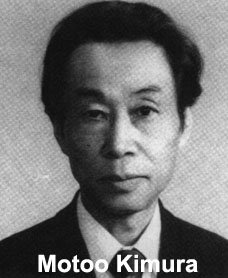
I would say that Dr. Koonin's essays on where evolutionary biology is today are quite close to the the mark. The concept of natural selection as the foundation of evolutionary change has been largely superseded, mostly through the work of Motoo Kimura, Tomoko Ohta, and others, who have shown both theoretically and empirically that natural selection has little or no effect on the vast majority of the genomes of most living organisms.
However, ID supporters should find this sea change in evolutionary biology to be cold comfort. The overall effect of the advances in our understanding of how genomes and phenotypes change over time has had the same effect on evolutionary theory that the rise of quantum mechanics had on classical physics. Einstein famously asserted that “God does not play dice”, but a century of physics research has shown him to be more wrong about how the universe works at the quantum level than ever.
The same is true for the “evolving synthesis”. Rather than revert to a neo-Paleyan paradigm (as proposed by Behe, Dembski, and their supporters), evolutionary biology has gone in the opposite direction, the same direction that quantum mechanics has taken. According to the “modern synthesis” of the last century, the genome was “homeostatic”, “organized”, and “regulated” primarily by natural selection. Sure there were purely random processes also going on (such as genetic drift), but most evolutionary change was both adaptive and coherent over time.
Here's what Dr. Koonin writes (see above):
"There is no consistent tendency of evolution towards increased genomic complexity, and when complexity increases, this appears to be a nonadaptive consequence of evolution under weak purifying selection rather than an adaptation."
Kimura, Ohta, Jukes, and Crow dropped a monkey wrench into the "engine" at the heart of the modern synthesis — natural selection — and then Gould and Lewontin finished the job with their famous paper on “the spandrels of San Marco and the Panglossian paradigm”. The rise of evo-devo over the past two decades has laid the groundwork for a completely new and empirically testable theory of macroevolution, a theory that is currently facilitating exponential progress in our understanding of how major evolutionary transitions happen. And iconoclasts like Lynn Margulis, Eva Jablonka, Marian Lamb, Mary Jane West-Eberhard, and David Sloan Wilson are rapidly overturning our understanding of how evolutionary change happens at all levels, and how it is inherited.
So, as I have said many times before, when ID supporters set their sights on “neo-Darwinism” as a target for criticism, they set their sights on a model that has been all but abandoned. The carnival has moved on and ID supporters are fighting battles that evolutionary biologists left behind a half century and more ago.
And so, on this 150th anniversary of the publication of Darwin's Origin of Species, evolutionary biologists can raise a frosty glass and say
The modern synthesis is dead — long live the evolving synthesis!
************************************************
As always, comments, criticisms, and suggestions are warmly welcomed!
--Allen
Labels: genomics, intelligent design, modern synthesis, Motoo Kimura, neutral molecular evolution, Origin of Species, Tomoko Ohta, William Provine
posted by Allen MacNeill @ 11/19/2009 09:47:00 PM
9 comments